Ripe dark-red yangmei offers a small fresh-fruit course beside baked high-altitude Andean trout, quinoa, and cooked vegetables. Its textured surface remains visible, while the stone is removed for a comfortable prepared serving.
An illustrated serving concept in an Andean hotel setting.
A separate yangmei serving beside a high-altitude Andean trout lunch
Keep the fresh fruit on a separate small plate, with its seeds or central stone removed from the prepared portions. A simply baked high-altitude Andean trout and cooked vegetables can form the main course. This is a proposed serving arrangement, with fruit identity and supply confirmed before service.
Explore High-altitude Andean trout in the ingredient guide. Confirm the actual preparation and availability with the kitchen.
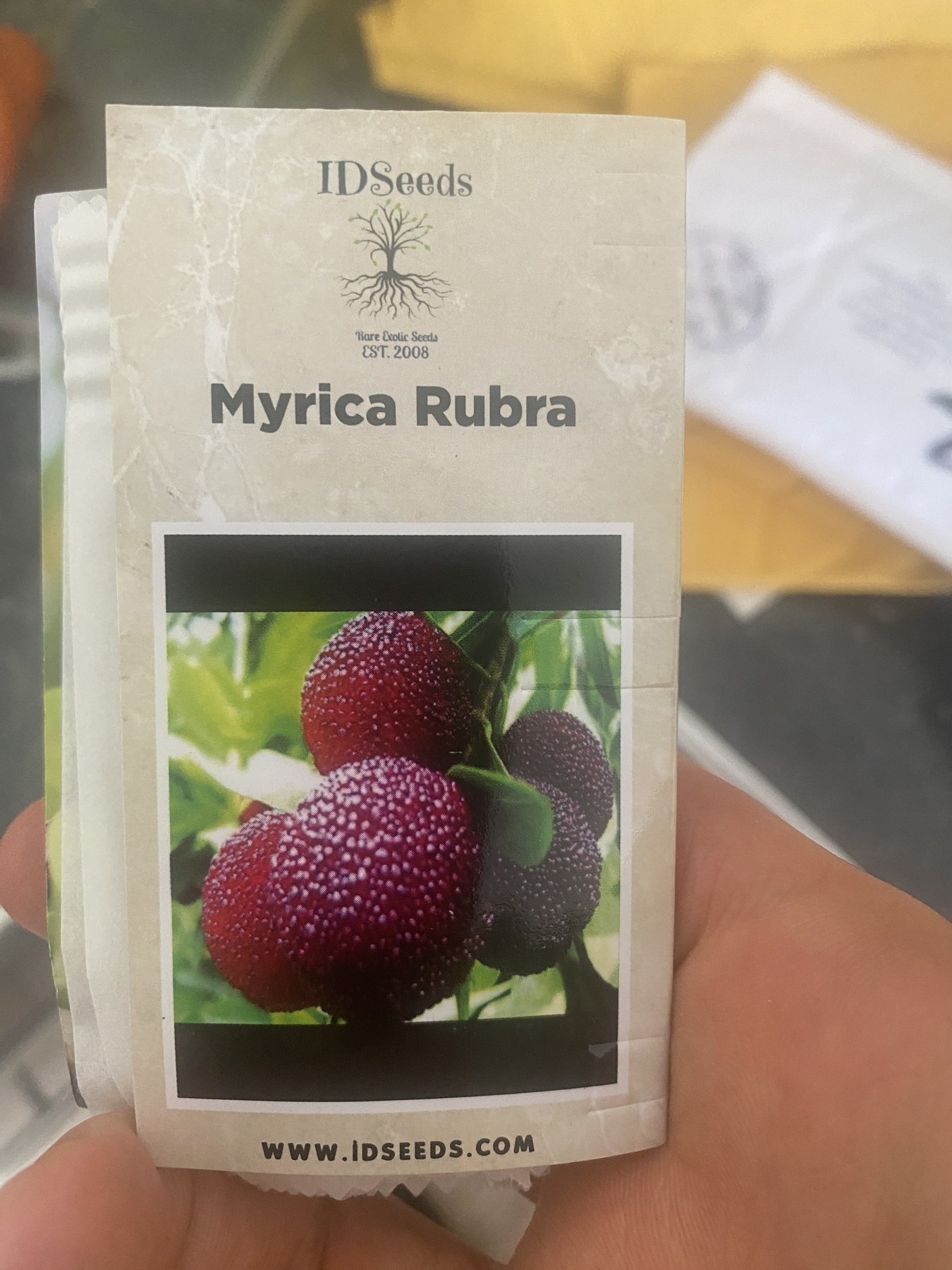
The packet names Myrica rubra, also called yangmei or Chinese bayberry and treated as Morella rubra by some botanical authorities. Oregon State documents edible ripe fruit. A possible serving uses verified food-grade fruit with the hard central stone excluded, separate from an ordinary baked-high-altitude Andean trout meal.
The featured ingredient, served on its own.
Illustrated serving concepts and an imagined Sacred Valley garden. These are not photographs of a named restaurant, a current harvest, or a tested recipe.
Preserve Myrica rubra on the seed record
The photographed IDSeeds packet says Myrica rubra. Yangmei, Chinese bayberry, and red bayberry are among the names used for its fruit. Morella rubra appears in other botanical sources, including Oregon State and UPOV. Keeping both scientific names available helps a supplier and a kitchen recognize the intended species.
Taxonomic references do not all use the same treatment. Kew currently lists Morella rubra as a synonym of Myrica rubra, while UPOV uses Morella rubra as its principal name. This guide preserves the photographed wording rather than announcing one universally accepted replacement. A common name alone does not verify an actual fruit.
Oregon State describes a drupe that ripens dark red or purple-red and has edible flesh. Its textured exterior helps explain why it is sometimes compared visually with a berry. It is not a raspberry made of easily separated hollow segments, and the central stone needs attention in a prepared serving.
The proposed bowl contains ripe flesh with the hard stone excluded. That is a kitchen preparation choice intended to make the fruit comfortable to eat, not a medicinal or toxicological claim about the seed. Do not grind the stone into a dressing or present planting seeds as a food ingredient.
Fresh fruit, frozen fruit, dried snacks, and sweetened drinks are different purchases. This meal concept stays with sound ripe culinary fruit, served as a small separate portion. The supplier should identify the species and intended food use, and the kitchen should inspect the condition of the batch it receives.
A dark color does not prove that fruit has been handled well. Obvious deterioration calls for rejection. Nor should a soft ornamental fruit from an unknown tree replace the product simply because its surface looks similar. The photographed seed packet is the starting point for an ingredient investigation, not proof of a ready harvest.
Wash fresh produce under potable running water using clean hands and equipment. Yangmei's textured surface calls for careful handling, while the flesh should remain intact enough for the intended serving. Use the actual supplier's handling directions when they are available, especially for a product that has been frozen.
This guide offers no special cleansing soak, universal shelf life, or claim that washing sterilizes fruit. Prepare a manageable quantity, keep it appropriately chilled, and bring it to the table near service. A small shallow bowl makes the portion easy to see and avoids hiding damaged pieces in a deep mixed-fruit arrangement.
Baked high-altitude Andean trout, quinoa, and familiar cooked vegetables provide the ordinary lunch. A few prepared yangmei pieces can arrive alongside in their own bowl. The contrast comes from a fresh fruit portion beside warm savory food; it does not require a sugary glaze, a syrup, or an untested fruit sauce.
A guest can enjoy the fruit between courses or after the fish, according to preference. The kitchen can explain what goes into the fish sauce and whether any sweetening is used. Plain water is sufficient as the drink, leaving the fruit's actual flavor to make its own impression.
An evergreen nursery tree needs a site assessment
Oregon State describes an evergreen tree with leathery leaves and separate male and female flowers on different plants. Those are useful clues for an imagined nursery study and a reason not to promise fruit from a single unidentified seedling. The image should show a tree's habit rather than a low strawberry-like plant.
A sheltered, warm nursery setting is an editorial possibility. Growing decisions require assessment of the actual temperature range, soil, drainage, exposure, and long-term room for the tree. Neither a photograph of seeds nor a species' success elsewhere establishes a present Sacred Valley crop or future kitchen supply.
Ask for verified culinary yangmei, prepared without the central stone and served plain. If the hotel cannot source it, a familiar fresh fruit can accompany the same high-altitude Andean trout meal. The ingredient does not need a superfood story, a supplement claim, or a promise that it suits every guest.
The SoulSearching Experience is a five-day retreat and seminar for 8-15 people with no plant medicine. This fresh-fruit meal is an editorial possibility, not a confirmed inclusion. Availability and individual dietary arrangements should be resolved with the actual kitchen before service, leaving the guest free to enjoy a straightforward lunch.
A table within a longer stay
Food can give the days around Machu Picchu a welcome sense of place. If you would also like time for reflection, explore a Sacred Valley retreat before or after your visit. Florian Rolke offers The SoulSearching Experience, a five-day seminar for 8-15 participants, with no plant medicine.
Ask for the current dates, venue, price and inclusions before arranging the rest of your trip. These dishes, restaurant visits and garden visits are ideas to explore; they are not confirmed seminar inclusions.
Questions about this dish
Adapted from public cooking questions and published FAQs. Answer sources are linked below each response. Broader ingredient questions are included where they help with this serving.
What does ripe yangmei taste like?
Oregon State describes the ripe fruit as sweet and edible. The proposed plain serving lets the actual fruit determine the experience, rather than adding syrup or promising that every batch will taste identical.
Season depends on where the crop is grown and how it is supplied. No current Sacred Valley harvest or hotel supplier is verified. The kitchen should confirm the actual product and condition rather than rely on a general overseas season.
Use verified food-grade ripe fruit and prepare the flesh without its hard central stone. Serve it plain in a separate bowl beside the complete cooked high-altitude Andean trout meal. Planting seeds and an improvised fruit sauce are outside this concept.
Oregon State describes dark-red or purple-red ripe fruit. Color is a botanical clue, not a complete quality or safety test. The kitchen should inspect the actual culinary fruit and reject deteriorated or unidentified material.
Is a salt-water soak required in this serving guide?
This guide does not validate a special salt-water cleansing method. Use potable running water, clean equipment, and reliable food-supplier handling directions. Washing does not sterilize fruit or make a deteriorated batch suitable.
Does the name bayberry or strawberry tree establish yangmei identity?
No. Common names overlap. Anchor the ingredient to Myrica rubra, with Morella rubra as another botanical treatment. Do not substitute another bayberry, Arbutus, or a merely similar-looking fruit on the strength of an English nickname.
Should a hotel confirm a fresh yangmei supplier before offering it?
Yes. This guide verifies no local retailer, import arrangement, or restaurant supplier. A kitchen must confirm a reliable food source and the actual product. A dried snack or sweetened drink is not the fresh-fruit serving described here.
How long can this guide promise fresh yangmei will keep?
It provides no validated universal shelf life. Condition, temperature, handling, and the actual product matter. Follow reliable supplier instructions, keep the prepared serving appropriately chilled, and use a manageable amount near service.
Are yangmei seeds included in the proposed serving?
No. The hard central stone is excluded so the guest receives prepared flesh. This is a preparation boundary, not a claim about a specific poisoning threshold. Do not crush the stone into food or use planting seeds as an ingredient.
Use a clean covered food container and appropriate refrigeration until service. Handle the ripe fruit gently. Storage directions for dried snacks or unopened drinks do not establish how to hold a freshly prepared fruit portion.
Is frozen yangmei the same preparation as fresh yangmei?
It is a different product and may have a different texture after thawing. This guide makes no species-specific freezing claim. Follow the actual food supplier's handling and cooking directions, and choose the serving to suit that product.
Why do sources use both Myrica rubra and Morella rubra?
They are alternative taxonomic treatments of the species discussed here. Kew currently treats Morella rubra as a synonym of Myrica rubra; UPOV uses Morella rubra as its principal name. The seed record retains the photographed Myrica rubra wording.
Does this guide verify a nursery currently selling yangmei trees?
No current nursery stock or delivery is verified here. The source records a real grower's availability question, not a live shopping recommendation. Any purchase needs the actual supplier, plant identity, and destination requirements checked.
Yes, assess the actual soil rather than adopt an unverified number from a forum. Oregon State gives a broad cultivation description, but this guide sets no universal pH prescription for a Sacred Valley nursery.
Does a published hardiness zone prove local yangmei suitability?
No. Oregon State gives a hardiness context for the species, but a local site also needs assessment of exposure, soil, drainage, and the growing season. A zone label cannot guarantee a fruit harvest.
Does a different rootstock change which fruit the yangmei scion represents?
The identity of a grafted plant and its scion needs reliable supplier records. Do not infer a rootstock or graft combination from the photographed seeds. A proposed grafting system requires horticultural evidence beyond this culinary guide.
Which yangmei cultivar is established by the packet?
None is named in the photographed record. The packet gives Myrica rubra as the species. A named fruit selection or clone should not be assigned without further evidence.
Yes. Oregon State's botanical record explicitly documents edible ripe fruit for the species. That does not establish the identity of an unknown plant, a current local harvest, or the suitability of every plant part.
Can a pot be assumed sufficient for a mature yangmei tree?
No. Oregon State describes a woody evergreen tree of substantial mature size. A container system needs a long-term assessment of roots, drainage, water, and space; a small nursery pot is not proof of a productive permanent setup.
Should yangmei seeds receive another plant's scarification treatment?
Do not transfer a canna-seed method to yangmei on analogy alone. Follow reliable species-specific supplier or horticultural guidance for the actual seed lot. This guide supplies no tested germination protocol.