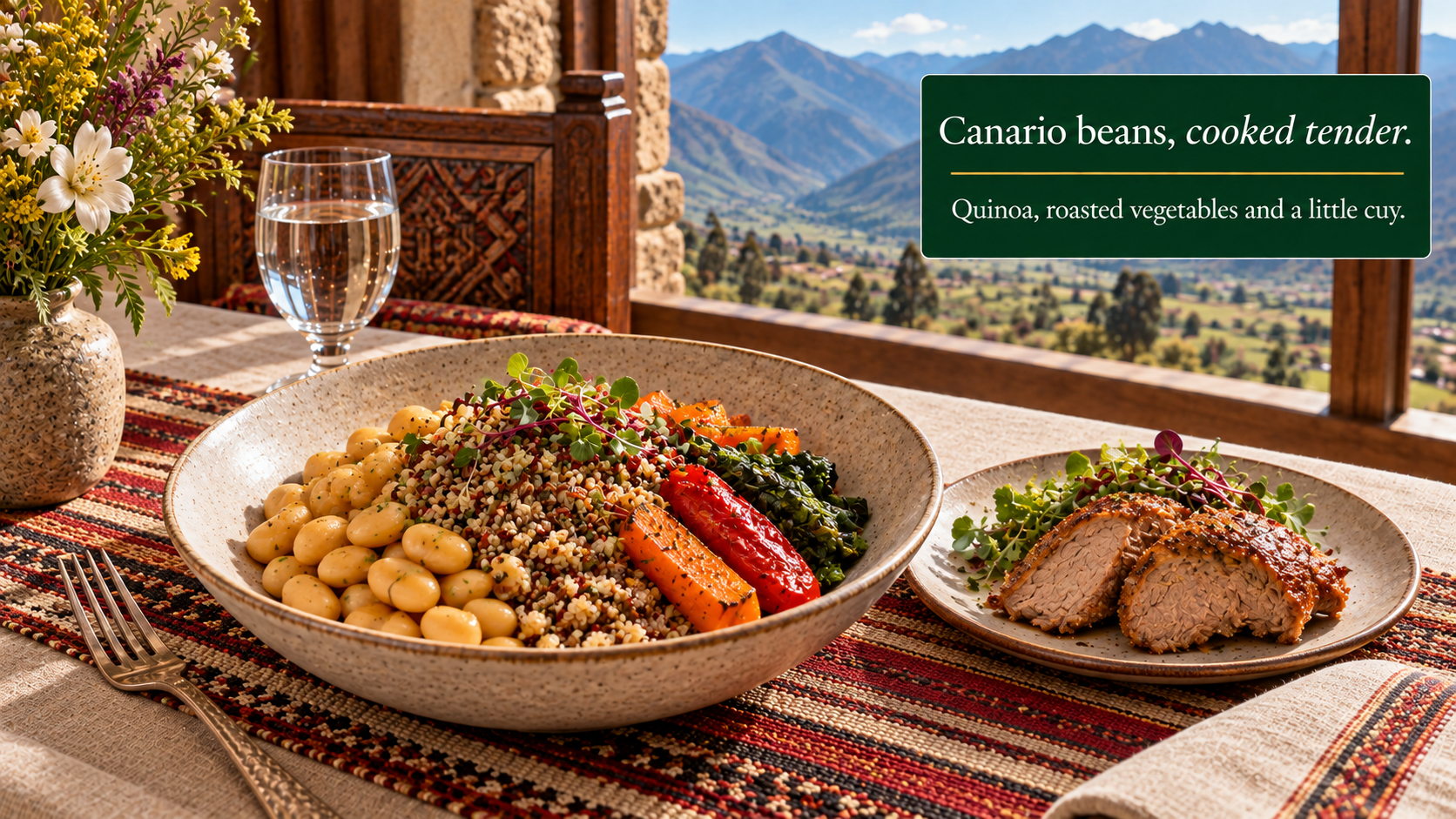
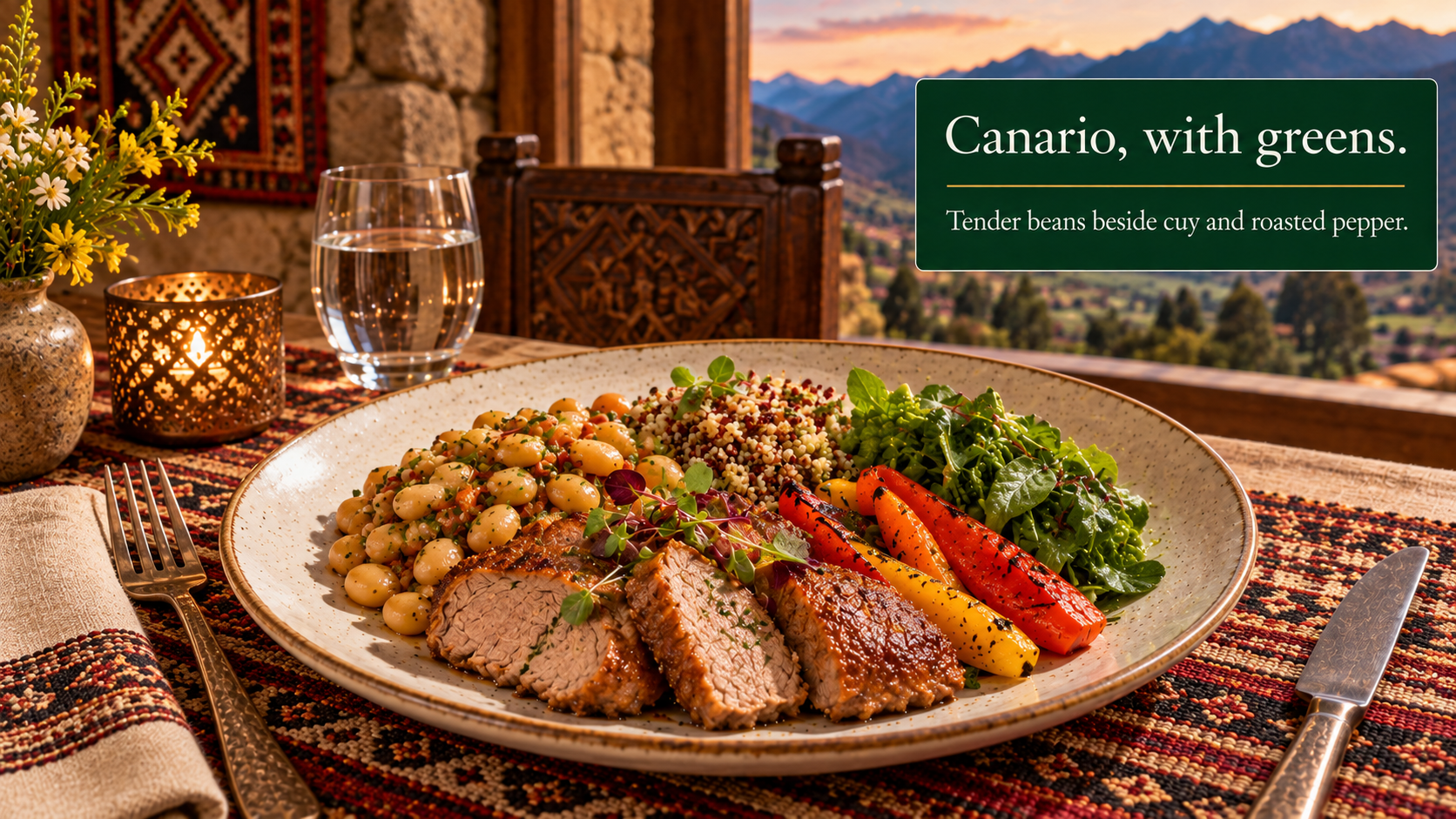
Tender canario beans sit beside a small boneless roast cuy portion, quinoa, oven-roasted pepper and carrot, and greens. The vegetables add sweetness, the grain stays separate, and a little bean liquid keeps the bowl moist.
Canario beans with roast cuy, quinoa and vegetables
Use labeled food-grade canario beans, cook them completely, and spoon them beside quinoa, roasted pepper and carrot, with greens for freshness. Keep enough bean liquid to make the bowl moist.
Taste and texture on the plate
Aim for beans with a soft, creamy center and just enough liquid to coat them. Roasted pepper and carrot bring a sweeter bite, while greens keep the bowl fresh. A small boneless portion of roast cuy gives it a savory meat center without crowding out the beans. Quinoa is best served as a smaller neighboring scoop so its grain texture remains noticeable.
Try a plain bean first, then a bite with the vegetables and meat. If the bowl feels dry, add a spoonful of bean liquid before considering a strong dressing. Offer citrus at the side. A mild bean can be satisfying without a large amount of heat or seasoning.
Choosing the serving while traveling
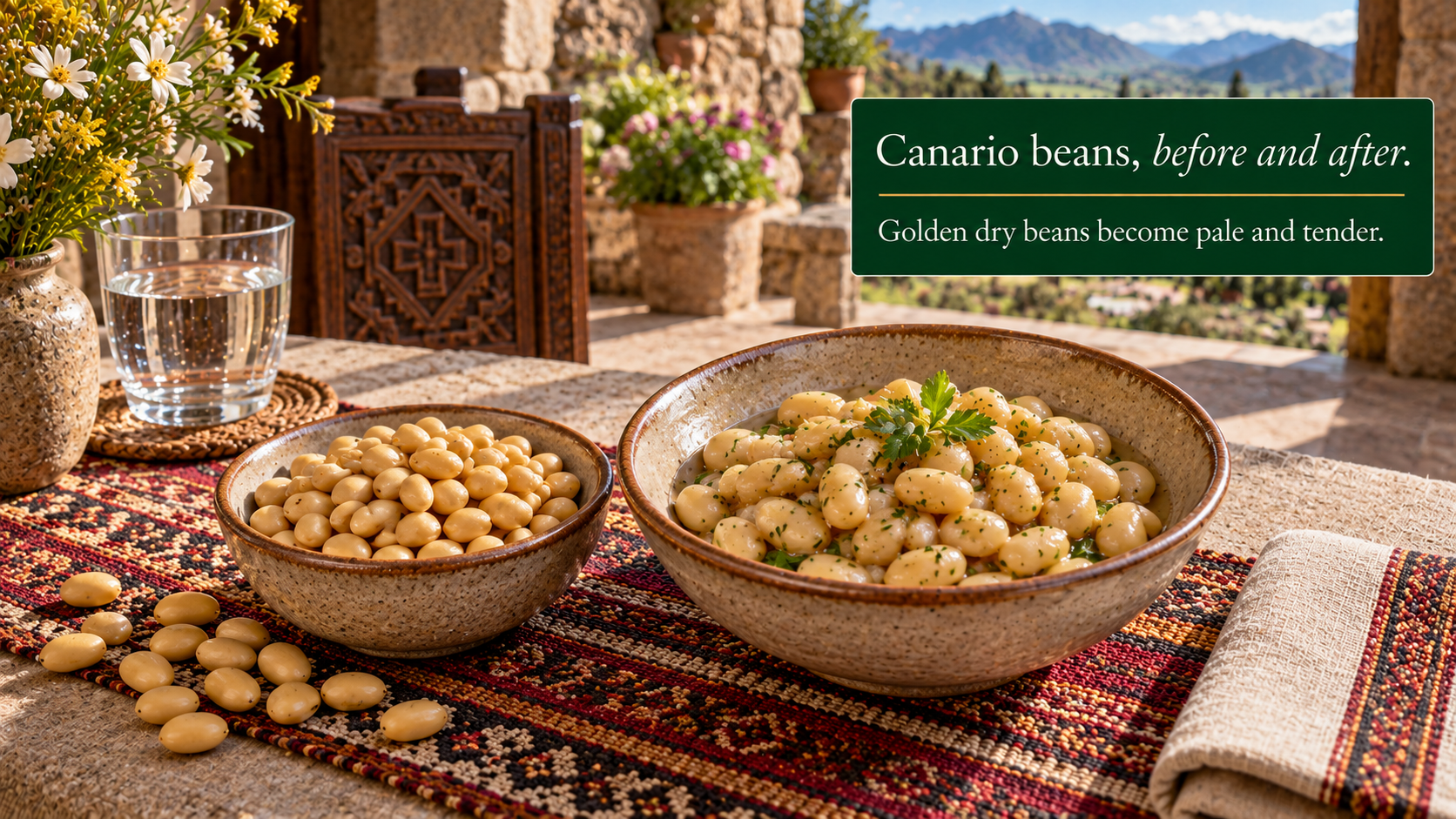
Ask whether the canario beans are whole, mashed or served in a thick sauce, and whether the pepper and carrot are roasted. Request the cuy roasted, with a manageable boneless portion if available, and keep citrus or herb sauce at the side. A small bean portion is a comfortable starting point when a large legume serving is unfamiliar.
The word canario does not guarantee the same preparation in every kitchen. Check whether a menu's bowl already includes grain before adding another side. Beans contribute plant protein and fiber, while the meat, quinoa and vegetables broaden the meal. This is an ordinary mixed plate rather than a special nutritional treatment.
Read the bag before choosing the recipe
INIA documents Canario Camanejo within the common bean, Phaseolus vulgaris. A bag labeled only canario may contain a different named variety. Compare the separate castilla cowpea guide before treating similarly colored dry pulses as interchangeable. Look for the supplier's product name, country of origin and cooking directions. Pale yellow dry beans can look similar, so keep the supplier label when comparing products.
Buy beans intended for food. Seed packets and loose planting seed belong to a different supply chain and may have treatments unsuitable for eating. If a seller uses mayocoba, peruano and canario interchangeably, ask what the actual lot is labeled. Use the product name on the bag when asking for the same beans again.
Cook the center completely
Follow a validated preparation for the actual dry-bean product and cooking method, including its soaking and cooking directions, and cook the beans fully. Utah State's cited ten-minute preliminary boil appears within its kidney-bean guidance for slow cookers and microwaves; it is not a universal timetable for every common-bean variety. Do not substitute an unverified low-temperature process.
Take several beans from different parts of the pot and check them. Once safely cooked, a bean should mash easily rather than reveal a hard or chalky center. Keep it covered with sufficient water while cooking. Add citrus or vinegar after tenderness is established, because acidic ingredients can delay softening. A browned vegetable does not compensate for an undercooked pulse.
Utah State University Extension: cooking dry common beans safely · NDSU Extension: All About Beans
Give pepper and carrot their own tray
Cut the carrots into small batons or half-moons and the pepper into broad strips. Keeping the carrot pieces smaller helps them reach tenderness without turning the pepper into scraps. Roast on a parchment-lined tray, starting covered with a splash of water if the carrots need a moist beginning. Uncover toward the end. Check a thick carrot piece with a fork.
This preparation needs no frying or sweet glaze. The vegetables already supply a sweet contrast to the beans. Avoid packing the tray tightly enough that everything sits in released liquid. If the pepper is ready first, lift it out and return the carrots to the oven. Their different cooking times are a reason to check, not a reason to serve crunchy carrots.
Let quinoa stay separate
Cook quinoa according to the package and let excess steam escape before fluffing it. Spoon it beside the beans rather than stirring the whole batch together. The grain gives the bowl a separate texture, and keeping it visible makes it easier to adjust the portion. Beans and quinoa do not need equal shares.
As a starting serving suggestion, try a generous scoop of beans, a smaller scoop of quinoa, and enough roasted vegetables to be present in most bites. These are ordinary kitchen proportions, not a nutritional prescription. Add more grain for appetite or less when the beans already feel substantial. A shallow bowl allows the components to meet without burying them.
Use greens and acidity with restraint
Wash the greens, remove tough stems as appropriate, and dry them well if they will be served fresh. Put them at the edge of the warm bowl so the diner can mix them in gradually. If you prefer cooked greens, wilt them separately and drain before serving. Waterlogged greens can thin the bean coating into a puddle.
Taste a spoonful of beans with carrot before adding acid. A little lemon or lime can brighten the finished bowl, but a heavy pour may dominate the mild beans. Start on one portion instead of seasoning the entire pot. Add chopped culinary herbs only after deciding what is missing. The bowl should still taste clearly of the beans you chose.
Adjust thickness without adding a rich sauce
Reserve some cooking liquid when you drain the beans. Fold a few spoonfuls back into the warm serving portion, crushing a small number of fully cooked beans if you want a thicker texture. Add liquid gradually. The result should settle around the grain without flooding it.
If the beans are already very soft, embrace that texture and serve them as a loose mash beside the vegetables. If most remain intact, handle them with a broad spoon rather than vigorous stirring. This gives two useful versions from the same ingredient: a bowl with separate beans or a bowl with a creamy bean foundation. Neither needs butter, cream or a fried topping.
Add a roast meat portion if desired
For a meat accompaniment, add a small boneless portion of food-grade roast cuy, cooked through using an appropriate verified process. Keep it beside the beans and quinoa so the bowl still offers separate textures. Prevent raw-meat juices and utensils from touching the cooked food.
The images are editorial illustrations of ingredients and serving ideas. They do not document a named restaurant, a current harvest or an included retreat meal. Preparation guidance is not a tested recipe.
Leave room for the Sacred Valley
A visit to Machu Picchu can leave time for a good meal and a quieter stay in the valley. Ask Florian about The SoulSearching Experience, his five-day Sacred Valley seminar for 8-15 participants. Discuss dates, venue and meal arrangements directly.
Questions readers ask
Should I soak dry canario beans?
Follow the product directions. A refrigerated overnight soak is a useful starting method for dry common beans. Drain afterward and complete the cooking process; soaking alone does not make them ready to eat.
NDSU Extension: All About Beans · NDSU Extension: refrigerated overnight bean soaking
Where should an overnight soak happen?
Use the refrigerator for an overnight soak. Do not leave a warm bowl of hydrated beans on the counter all day. If the handling history is uncertain, replace the batch instead of trying to fix it with seasoning.
NDSU Extension: All About Beans · NDSU Extension: refrigerated overnight bean soaking
Should I cook in the soaking water?
For this preparation, drain and rinse the soaked beans and use fresh cooking water. Keep later cooking liquid separately if you want to moisten the finished serving. Soaking water and finished cooking liquid are different stages.
Can a low slow cooker replace the directed boiling process?
Use a validated process for the exact dry-bean product and cooking method, follow its required soaking and cooking steps, and cook the beans fully. A long period on low heat does not by itself validate the preparation.
Utah State University Extension: cooking dry common beans safely
What if the centers remain hard?
Keep cooking with adequate water until the beans are fully tender. Older stock and cooking conditions can affect the result. Save acidic additions for after softening. Do not serve hard centers simply to preserve the outer shape.
How can I keep more beans intact?
After completing the validated cooking process for the actual beans, handle them gently and avoid vigorous stirring. Check tenderness before draining. A few broken beans are useful for thickening their liquid, and are preferable to an intact bean with an undercooked center.
NDSU Extension: All About Beans · Utah State University Extension: cooking dry common beans safely
Do canario, mayocoba and peruano always mean an identical product?
These market names overlap: Goya lists canary beans with mayocoba and Peruvian names. Ask what the actual bag contains and keep its product name. A shared market name does not establish the same cultivar, growing origin or cooked texture across suppliers.
Goya Foods: Canary Beans product names · INIA: Frijol Canario Camanejo
How do I prepare the quinoa beside the canario beans?
Follow the quinoa package's rinsing directions and use a fine enough strainer to retain the grains. Cook it separately so you can keep a modest fluffy scoop beside the moist beans rather than turning everything into one thick mixture.
What quinoa texture suits the canario bowl?
Aim for a separate, fluffed grain accompaniment. Let excess steam escape after cooking. Spoon beans beside it with only enough liquid to keep the bowl moist, leaving the roasted vegetables recognizable rather than burying them in a wet base.
Can dry beans replace a ready-cooked product directly?
No. Prepare and fully cook the dry beans before using them in the finished meal. A canned bean has already been processed as a cooked food, while a dry seed needs its own complete cooking process.
NDSU Extension: All About Beans · Penn State Extension: Dried Beans Versus Fresh Shelled Beans
Should cooked beans be frozen with a little liquid?
A little finished cooking liquid is useful for reheating a moist serving. Cool and freeze meal-sized portions promptly, label them, and keep herbs or dressing separate. Do not freeze a partly cooked batch with the expectation that reheating will complete a safety process.
NDSU Extension: All About Beans · USDA FSIS: Leftovers and Food Safety
How long can I keep the cooked canario beans serving refrigerated?
USDA generally recommends three to four days for refrigerated leftovers. Refrigerate promptly in shallow containers within two hours, or one hour above 90°F. Freeze portions you will not use in that period and reheat hot leftovers to 165°F.
How can I make this meal for one?
Cook a manageable batch and portion it after cooking. Use a comfortable scoop for the meal and freeze the extra promptly with a little liquid. Keep vegetables and fresh herbs separate so the next plate can have a fresh accompaniment.
NDSU Extension: All About Beans · USDA FSIS: Leftovers and Food Safety
What if the beans break down too much?
If they have been safely cooked and are simply very soft, use them as a coarse mash or loose puree. Add reserved cooking liquid gradually. A softer serving can work well beside vegetables; it does not need to be presented as a whole-bean salad.
Can I ask for a cuy portion that is easier to eat?
Yes. Ask whether the kitchen can provide a small carved or boneless roast portion and confirm the presentation before ordering. Keep the cuy beside the bean bowl, and leave any bones aside. Availability of a boneless portion depends on the kitchen.
Should the greens be dressed before entering the bowl?
For a fresh serving, dry the washed leaves well and add only a small amount of dressing near the meal, or offer citrus separately. The canario cooking liquid already adds moisture, so wet greens can make the bowl unnecessarily loose.
Can the bowl's quinoa be cooked a day ahead?
Yes, with prompt cooling and refrigeration in a shallow container. Store it apart from the beans and greens. Reheat a hot serving to 165°F, then assemble the bowl, keeping fresh leaves out of the reheating step.
Can dried herbs replace the fresh finish?
Use a smaller amount and taste a serving first, because a dried herb is a different product with a different intensity. For huacatay, prepared paste also has its own ingredients and salt level. Do not exchange them spoon for spoon.
How do I keep the accompanying vegetables tender?
Cut dense vegetables smaller, give them a moist covered start, and uncover only after they begin to soften. Remove ready pieces while thicker ones continue cooking. A dark outside does not establish that the center is pleasant to eat.
What makes the complete plate enjoyable?
Start with fully tender beans and keep the accompaniments recognizable. Use a little cooking liquid to prevent dryness, offer the vegetables beside them, and taste a combined bite before adding a strong dressing. Adjust the portions to appetite.