An ayahuasca retreat is a multi-day stay centered on group ceremonies with a brewed tea from Amazonian plants. To choose one, compare the operator's identity, the people leading ceremonies, the screening process, cost against published averages, and the law where it operates. This guide explains what happens, what it costs and what to check before paying.

How do I choose a safe ayahuasca retreat?
A safe ayahuasca retreat shows documented medical and psychiatric screening before payment, named facilitators whose training you can verify, small groups with sober staff on duty overnight, a written emergency plan naming the nearest hospital, written consent and conduct policies, and integration support after the retreat. Instant booking with no health questionnaire is the clearest warning sign. ICEERS states that minimum admission standards, ceremony supervision and integration support significantly reduce ayahuasca's risks.
- Screening: a health intake reviewed before you pay, covering medical history, medications and psychiatric history. ICEERS notes that the more time spent screening, the lower the chance someone with contraindications attends.
- Facilitators: real names, verifiable training and a stated lineage or apprenticeship. Ask who will actually be present on your dates.
- Supervision: multiple trained, sober staff during and after ceremony. The Temple of the Way of Light states three facilitators support inside the maloka and two bathroom assistants stay outside every ceremony, and all five do not partake in ayahuasca themselves.
- Emergency plan: ICEERS' AyaSafe protocol covers likely physical and psychological emergencies and ambulance procedures. Ask for the operator's written version and the distance to a hospital.
- Boundaries: written consent, touch and complaint policies, with an alternative contact if a concern involves your usual contact.
- Integration: scheduled follow-up. In the Global Ayahuasca Survey, 55.9% reported adverse mental health effects in the weeks or months after use, so aftercare is not optional.
- Reviews: cross-check independent reviews and search the operator's name with terms like incident, hospitalization and refund before paying.
Sources, checked November 15, 2026: Ayahuasca Tourism In-Depth: Revealing the Who, How, and Where, Ayahuasca - Alcohol and Drug Foundation, AyaSafe: Free Ayahuasca Safety Documents by ICEERS, Ayahuasca Retreat Safety, Adverse effects of ayahuasca: Results from the Global Ayahuasca...
What questions should I ask an ayahuasca retreat before paying a deposit?
Before paying any deposit, ask an ayahuasca retreat in writing: who reviews my medical intake and before or after payment, what medications and conditions exclude me, who leads ceremonies and with what verifiable training, how many guests and sober staff per ceremony, what the written emergency plan says and how far the hospital is, what the consent and complaint policies are, what integration support is included, what the price covers, and what happens to my deposit if I am screened out. Screening should happen before money changes hands or the deposit should be refundable on medical grounds.
- Who screens, and when: Soltara states every guest completes a medical and psychological questionnaire and a one-to-one intake call before a place is confirmed, with a licensed psychologist reviewing each application.
- Deposit protection if declined: the Temple of the Way of Light begins the application process with a $100 reservation deposit; ask in writing whether it is refunded if you are not approved after screening.
- Medication handling: ask whether the center expects you to stop medication and on whose instruction. Operators themselves state you should never stop prescribed medication without consulting a physician.
- Emergency coverage: ask for distance to the nearest hospital, transport, and who decides to escalate. The Alcohol and Drug Foundation advises verifying emergency protocols, proximity to medical care and supervision arrangements.
- Consent and complaints: request the written consent, touch, conduct and complaint policies.
- Integration: ask what preparation and follow-up is included and what costs extra.
- Terms: request an itemized quote, inclusions, exclusions, cancellation rules and what happens financially if you withdraw for health reasons.
Sources, checked November 15, 2026: Ayahuasca - Alcohol and Drug Foundation, How Much Does an Ayahuasca Retreat Cost?, Is Ayahuasca Legal in Costa Rica?, Your First Ayahuasca Retreat: What To Know Before You Go, The Temple Of The Way Of Light
What red flags should I look for in an ayahuasca retreat?
Red flags at an ayahuasca retreat include instant booking with no medical screening, being told to stop antidepressants without a doctor, guaranteed-cure claims, facilitators with no verifiable names or training, no written emergency plan, no consent or touch policy, pressure to book fast or drink more, no follow-up after the final ceremony, and secrecy demands or discouragement of outside medical help. A retreat that frames your safety questions as resistance or ego is itself a warning sign. ICEERS states screening, supervision and integration support significantly reduce risks, so their absence is the pattern to watch.
- No screening, or a form nobody reviews. ICEERS' safety work treats the pre-interview and health questionnaire as the base of safe practice.
- Instructions to stop psychiatric medication on the operator's authority. Operators themselves publish the warning to never stop prescribed medication without a physician.
- Claims that ayahuasca is safe for everyone. Even operators that market safety, such as the Temple of the Way of Light, state it is not suitable for everyone.
- Unnamed or unverifiable facilitators, or team pages that do not say who attends your dates.
- No written emergency plan, no first aid, no stated distance to a hospital.
- No consent, touch or complaint policy in writing, or no alternative contact for reporting misconduct.
- Pressure tactics: urgency discounts, non-refundable terms with no medical-decline exception, pushing extra ceremonies.
- No integration support. Given that 55.9% of surveyed users reported adverse mental health effects afterward, an operator offering nothing after the last ceremony is cutting the phase where problems surface.
Sources, checked November 15, 2026: Ayahuasca Tourism In-Depth: Revealing the Who, How, and Where, AyaSafe: Free Ayahuasca Safety Documents by ICEERS, 7 Days Transformational Ayahuasca Retreat near Medellin, Colombia -..., Ayahuasca Retreat FAQ: Safety, Cost, Preparation & Travel, Adverse effects of ayahuasca: Results from the Global Ayahuasca...
Is a one-week ayahuasca retreat enough, or should I stay longer?
A one-week retreat with three to four ceremonies is a common format. For example, Soltara's most popular 7-night retreat includes 4 ayahuasca ceremonies over 7 nights and 8 days with 2 full integration days, and costs from $4,275. What you do after returning home matters more than the number of ceremonies.
| Length | Typical ceremonies | Typical price | Example (operator-stated) |
|---|---|---|---|
| 5 to 6 nights | 3 | Soltara: from $3,975 | Soltara 5-night, 3 ceremonies |
| 7 to 8 nights | 4 | Soltara: from $4,275 | Soltara 7-night, 4 ceremonies |
| 12 to 13 nights | 6 to 7 | Soltara: from $6,900; Temple 12-day: $4,440 | Soltara 12-night, 7 ceremonies |
| 14 nights | Second full program cycle | Contact operator | Rythmia 14-night extended stay |
Longer is not automatically safer or better. In the Global Ayahuasca Survey, 55.9% of 10,836 respondents reported adverse mental health effects in the weeks or months after consumption, so adding ceremonies without adding rest and integration raises exposure without adding support. A practical pattern: book one well-run week, confirm the operator's screening and aftercare, and extend only if the extra days add rest and follow-up rather than more ceremonies.
Sources, checked November 15, 2026: Adverse effects of ayahuasca: Results from the Global Ayahuasca..., Ayahuasca Retreats in Costa Rica, Ayahuasca Retreat FAQ: Safety, Cost, Preparation & Travel, How Much Does Rythmia Cost? Pricing, Packages & What's Included
Where is the safest place to take ayahuasca?
No country or retreat is provably the safest place to take ayahuasca. Safety comes from the specific facility's screening, supervision, consent policies and emergency access, not from geography. The Alcohol and Drug Foundation advises verifying screening, brew preparation, emergency protocols, proximity to medical care and supervision at any retreat, in any country.
One measurable factor is time to a hospital. Sacred Valley centers are reached by road from Cusco, while centers near Iquitos are reached by boat and rely on staged evacuation: Iquitos is the world's largest city not reachable by road. The Temple of the Way of Light states its evacuation runs by hammock to the port of Santa Clara with ambulance collection within 30 to 45 minutes. Neither setting is inherently safe; the difference is one variable you can ask about in writing.
| Setting | Access to hospital | What to verify |
|---|---|---|
| Sacred Valley, Peru | Road access from Cusco | Written emergency plan, on-site medical role |
| Amazon near Iquitos | Boat then ambulance; operator states 30-45 min evacuation | Evacuation plan, first-aid training, clinic contract |
| Costa Rica | Soltara publishes an on-site doctor and a paramedic at every ceremony | Whether medical staff attend every ceremony |
| United States | DMT is Schedule I under the Controlled Substances Act | Legal status of the specific group |
Sources, checked November 15, 2026: Ayahuasca - Alcohol and Drug Foundation, FAQ - Etnikas - Safe and authentic Ayahuasca retreats in Cusco Peru., Ayahuasca Retreat FAQ: Safety, Cost, Preparation & Travel, Ayahuasca Retreat Safety, Is Ayahuasca Legal in Costa Rica?
What is a safe participant-to-facilitator ratio at an ayahuasca retreat?
Operators that publish ratios describe roughly one healer or facilitator per four to six guests, with several sober staff on hand during ceremony. There is no independent standard, so treat published ratios as claims to verify, not guarantees. What matters is whether trained staff who do not drink ayahuasca supervise every ceremony and remain available until morning.
| Operator | Published staffing | Group size |
|---|---|---|
| Rythmia (Costa Rica) | Minimum 1 healer per 4 guests | Not stated in a single figure |
| Temple of the Way of Light (Peru) | 4 Shipibo healers plus 3 facilitators and 2 assistants, none of whom drink during ceremony | Maximum 23 guests |
| Soltara (Costa Rica) | 2 Shipibo healers, facilitator team, medical staff | Average 15, capped at 22 |
| LaWayra (Colombia) | 1 facilitator per 2-3 guests; team of 12 on site | About 20 participants |
| Etnikas (Peru) | 2-4 healers, doctor and psychologist present | Capped at 18 per ceremony |
Sources, checked November 15, 2026: Ayahuasca Retreat Safety, Our Healing Journey & Vision, Ayahuasca Retreat FAQ: Safety, Cost, Preparation & Travel, Choosing an Ayahuasca Retreat: The Questions Worth Asking, Is Ayahuasca Legal in Costa Rica?
What should an ayahuasca retreat emergency plan include?
An ayahuasca retreat emergency plan should state, in writing, the distance and travel time to the nearest suitable hospital, the transport available at night, which staff hold first-aid training, who decides to call for evacuation, and what happens after a participant is hospitalized. ICEERS' AyaSafe emergency protocol covers likely physical and psychological emergencies, ambulance guidelines, and a document that explains ayahuasca to emergency medical personnel. Ask for the operator's version before paying, not after arrival.
- Distance and route to the nearest hospital that can handle cardiac and psychiatric emergencies.
- Night transport: boat, road or ambulance, and realistic timing. The Temple states hammock evacuation to an ambulance within 30 to 45 minutes.
- Named on-site roles: who holds first-aid training, who leads escalation, who stays with the group.
- On-site equipment and medical presence. Etnikas states a doctor with emergency equipment attends every ceremony and monitors guests overnight.
- A handover document for local medical staff, mirroring the ICEERS approach of briefing emergency personnel about ayahuasca.
Sources, checked November 15, 2026: AyaSafe: Free Ayahuasca Safety Documents by ICEERS, Ayahuasca - Alcohol and Drug Foundation, Ayahuasca Retreat Safety, 7 days Ayahuasca retreat and visit to Machu Picchu, Safety protocols - Etnikas - Safe and authentic Ayahuasca retreats in...
What is an ayahuasca retreat?
Ayahuasca is a hallucinogenic tea made by boiling a mixture of plants. Its main active chemical is DMT. The brew combines a DMT-containing plant (Psychotria viridis) with the Banisteriopsis caapi vine, which contains a monoamine oxidase inhibitor (MAOI) that prevents the rapid breakdown of DMT.
The practice comes from Indigenous use across Brazil, Peru, Bolivia, Colombia and Ecuador, where ayahuasca has been used for over a thousand years in shamanic practice and to help with medical, psychological or spiritual problems. What most travelers encounter today is a commercial format: a study of the sector describes ayahuasca tourism as nonindigenous tourists on all-inclusive trips to take part in shaman-led ceremonies. ICEERS, which studies ayahuasca globally, estimates the world has about four million consumers and that only about 10% belong to Indigenous groups with traditional use. For a plain-language overview of the tea itself, see what is ayahuasca.
Sources: Ayahuasca: What It Is and Risks, Ayahuasca - Alcohol and Drug Foundation, Ayahuasca Therapy Information- UC Berkeley BCSP, Ayahuasca: Psychological and Physiologic Effects, Pharmacology and...
Where can I get ayahuasca?
Most retreat centers serving travelers are in Peru, Costa Rica, Colombia, Ecuador, Brazil and Bolivia, with a smaller number in the United States, Mexico and Europe. ICEERS estimated at least 232 retreat centers operating across the Amazonian countries and Costa Rica in 2019, receiving roughly 62,000 people that year. Peru alone was estimated to have 173 centers receiving over 36,000 people in 2019, concentrated in Iquitos.
The United States is different. A study of psychedelic retreat providers found 130 of 440 distinct retreat locations inside the U.S., even though all classic psychedelics, including DMT, remain federally illegal under the Controlled Substances Act. U.S. options are limited to specific religious exemptions, such as the União do Vegetal following a 2006 Supreme Court ruling. Most Peruvian centers are located in Iquitos, while Sacred Valley centers sit near Cuzco. Compare settings in Sacred Valley or Amazon and read our page on U.S. retreats.
Sources: Ayahuasca Tourism In-Depth: Revealing the Who, How, and Where, A landscape analysis of psychedelic retreat organizations advertising..., Ayahuasca: Psychological and Physiologic Effects, Pharmacology and...
What happens during an ayahuasca retreat?
A retreat typically pairs several nighttime group ceremonies with daytime rest and sharing circles. Effects usually begin within about 30 to 60 minutes of drinking, peak between 60 and 120 minutes, and resolve by about four hours. Nausea and vomiting are common and expected in traditional contexts; in the Global Ayahuasca Survey of more than 10,000 people, about 70% reported physical side effects, most often nausea and vomiting.
A typical pattern reported in research describes changing perceptions, shaking and vulnerability about 30 minutes after ingestion, with vomiting preceding a shift to an expansive state. The day after, talking circles are typically held, and the AyaSafe safety documents treat them as a distinct part of the process requiring their own guidance. What a specific center actually does should be confirmed in writing before you book.
Sources: Ayahuasca: pharmacology, safety, and therapeutic effects - PMC, Ayahuasca: What It Is and Risks, Ayahuasca: Psychological and Physiologic Effects, Pharmacology and..., AyaSafe: Free Ayahuasca Safety Documents by ICEERS
How long is an ayahuasca retreat?
A typical retreat lasts about one week and includes three to four ayahuasca sessions, according to ICEERS. Formats vary widely, from single-day offerings to stays of several weeks. Group size also varies, and some centers publish caps; Soltara, for example, states its groups average 15 guests and are capped at 22. A weeklong format with several ceremonies and rest days between them is the common pattern for first-time visitors.
Sources: Ayahuasca Tourism In-Depth: Revealing the Who, How, and Where, Is Ayahuasca Legal in Costa Rica?
How much does an ayahuasca retreat typically cost?
Published research on 648 retreat experiences found one-day retreats averaged 668 USD, three-day retreats averaged 980 USD, and seven-day retreats averaged 2,665 USD. ICEERS reported the typical price for a one-week retreat was around 1,000 USD in 2019. Prices within each length vary enormously, and roughly a fifth of listed experiences published no cost at all.
| Retreat length | Average price | Published range | Experiences in study |
|---|---|---|---|
| 1 day, no overnight | 668 USD | 20 to 3,625 USD | 58 |
| 3 days, 2 nights | 980 USD | 200 to 3,333 USD | 77 |
| 4 days, 3 nights | 2,218 USD | 295 to 10,000 USD | 46 |
| 7 days, 6 nights | 2,665 USD | 780 to 11,250 USD | 85 |
| Over 2 weeks | 7,179 USD | 850 to 150,000 USD | 50 |
These figures cover the retreat price only. Flights, transfers, tips, tests and extra services sit outside most quotes, so budget for the full trip. Our trip budget worksheet and the detailed cost guide walk through the line items.
Sources: A landscape analysis of psychedelic retreat organizations advertising..., Ayahuasca Tourism In-Depth: Revealing the Who, How, and Where
Are ayahuasca retreats legal?
It depends on the country, and the picture is uneven. In the United States, ayahuasca use is illegal because DMT is a Schedule I controlled substance, with narrow religious exemptions such as the União do Vegetal under a 2006 Supreme Court decision. Peru is described by ICEERS as one of the only countries where ayahuasca is legal, and in 2008 Peru recognized traditional use as national cultural heritage.
Costa Rica is a gray area. Its drug law controls DMT but does not name ayahuasca or its source plants, and no retreat-specific regulation exists. At the same time, Costa Rica's Ministry of Public Health has stated there are no health registries authorizing any person or organization to commercially operate ayahuasca retreats in the country. Internationally, DMT is scheduled under the 1971 Convention, but the plants and the brewed decoction are not under international control. This is general information, not legal advice. See our legality guide and the Costa Rica page.
Sources: Ayahuasca Therapy Information- UC Berkeley BCSP, Ayahuasca: Psychological and Physiologic Effects, Pharmacology and..., Peru, Is Ayahuasca Legal in Costa Rica?
What is the best country to do ayahuasca in?
There is no single best country, but the choice narrows by law, access and official advice. ICEERS estimated Peru's 173 centers received over 36,000 individuals and facilitated more than 160,000 ayahuasca experiences in 2019, making it the largest documented retreat sector. In Costa Rica, ayahuasca retreats operate openly; the country's drug law controls DMT but does not name ayahuasca or its source plants, and there is no specific regulation for retreat centers. Separately, the U.S. Embassy in Lima issued a health alert in January 2025 recommending U.S. citizens not use ayahuasca or kambo in Peru, stating facilities offering them are not regulated by the Peruvian government, and noting that in 2024 several U.S. citizens died or suffered severe illness after consuming ayahuasca. Weigh that official advice independently of any operator's marketing.
For a structured comparison of destinations, see Peru versus Costa Rica, Portugal and the Netherlands and the destinations overview.
Sources: Health Alert: Do Not Use Ayahuasca/Kambo - U.S. Embassy Lima (January..., Is Ayahuasca Legal in Costa Rica?, Ayahuasca Tourism In-Depth: Revealing the Who, How, and Where
Who should not do ayahuasca?
People with a personal or family history of mental health conditions should avoid ayahuasca, according to the Alcohol and Drug Foundation, which states ayahuasca can trigger or worsen conditions such as anxiety, schizophrenia or psychosis. A review of ayahuasca safety literature concludes acute use in healthy volunteers has an acceptable safety profile with a narrow safety margin, and should be avoided by people with certain pre-existing mental conditions and by pregnant women.
- Medications that raise serotonin, when combined with ayahuasca, carry a risk of serotonin syndrome, which can range from mild to life-threatening.
- A prospective study of 40 ceremony participants found 7 with extremely challenging psychological reactions, 4 of whom had prior psychiatric diagnoses.
- A case report describes a 30-year-old man with bipolar disorder who developed a manic episode after a 4-day ritual in Brazil.
- Only a licensed clinician who knows your history can assess your suitability. Bring medication and diagnosis questions to a doctor, not to a retreat's sales team.
Sources: Ayahuasca - Alcohol and Drug Foundation, Ayahuasca and Dimethyltryptamine Adverse Events and Toxicity..., Ayahuasca: What It Is and Risks, Adverse effects of ayahuasca: Results from the Global Ayahuasca...
Who is responsible for what?
Begin with names and roles. Ask which business operates the retreat, who leads ceremonies, who conducts screening and who handles urgent concerns. Those responsibilities may sit with different people. A general team page is less useful when it does not say who will actually be present for your proposed dates.
Ask how qualifications can be verified and where the person's professional scope applies. Avoid inferring a clinical credential from spiritual titles, coaching experience or a photograph of someone wearing a uniform.
What evidence should you collect?
Keep the shortlist small enough to compare it carefully.
| Decision | Evidence to request |
|---|---|
| Provider identity | Business and named responsible contacts |
| Actual team | Roles and people scheduled for your dates |
| Screening | Who assesses, what process applies and private contact route |
| Boundaries | Consent, conduct and complaint policies |
| Urgent support | Written arrangements and responsible people |
| Preparation and follow-up | Access, schedule, inclusions and exclusions |
| Payment | Itemized quote and cancellation terms |
Mark an item as documented, needs clarification or unavailable. Do not merge these categories into a safety score.
How should reviews influence the shortlist?
Use reviews to identify questions and understand a person's account. Check whether the team, location and format still match the option offered today. A favorable report cannot establish your medical suitability or prove that difficult incidents never happen.
The review-reading guide explains how to distinguish specific observations from broad conclusions. If an article recommends an operator, look for its commercial relationship and the basis of the recommendation.
What if you prefer clear language and fewer spiritual promises?
Ask the provider to describe the actual activities, their cultural context and which participation choices are available. Identify any beliefs or practices it expects guests to adopt. Keep questions about group size, rooms and privacy separate from questions about professional responsibilities.
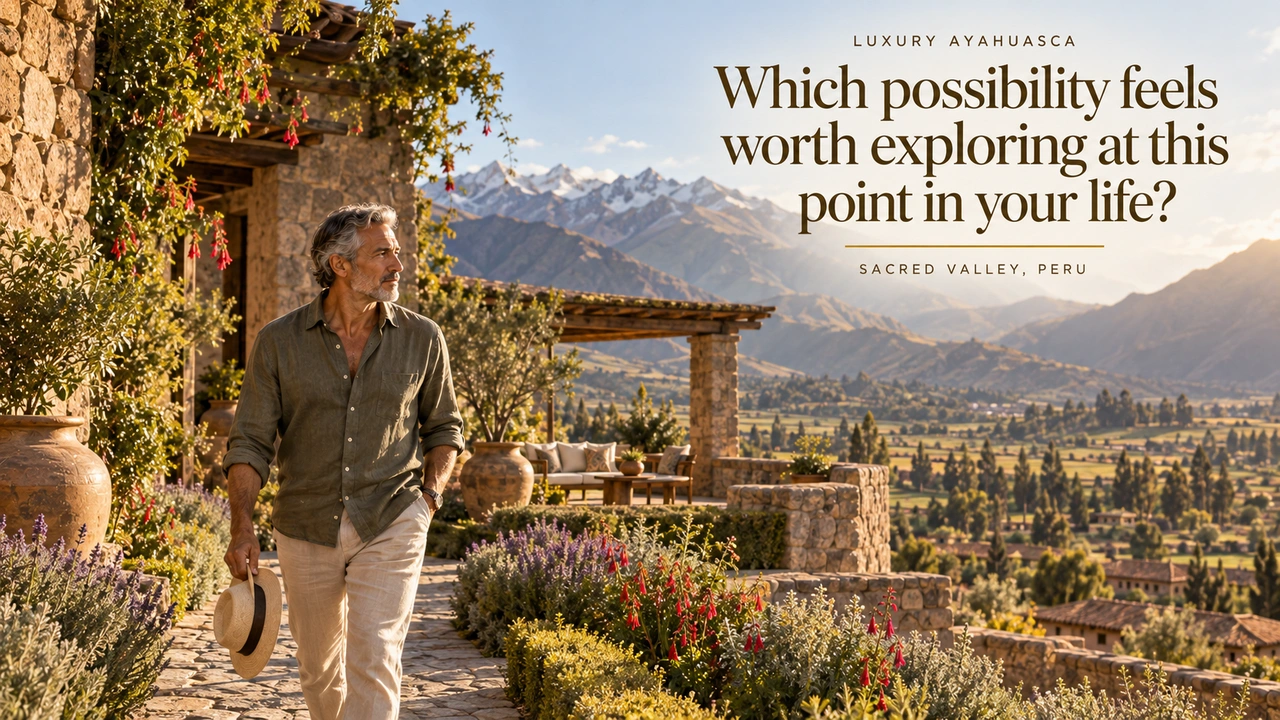
A public reader discussion asks for a matter-of-fact luxury retreat while expressing skepticism and respect for traditional practice. It supports a real question about fit; it does not verify an operator or establish search volume. Avoid grand promises when explaining the separate offering. A comfortable setting and a familiar style cannot establish medical suitability.

What should you do with unresolved questions?
Write them down and ask the responsible person. A provider who answers a question about rooms may not be the person qualified to address medication or psychological history. Request the appropriate contact instead of accepting a sales answer as clearance.
Read current official advice for the destination. The U.S. Department of State advises U.S. citizens visiting Peru against consuming ayahuasca. That guidance deserves consideration independently of operator marketing. The risk guide links to the current source.
You can pause the decision while facts remain unresolved. A deadline or special price does not answer a missing question about responsibility.
How do you compare two shortlisted providers step by step?
Once a shortlist reaches two or three options, a sequenced comparison is more reliable than an open-ended reading of websites. Work through the same stages for each provider and record the evidence beside each answer.
Step one: identity. Confirm the legal business, the operator and the payment recipient, and how any different names relate. Step two: team. Request the roles and people scheduled for your actual dates, distinguishing ceremony leaders, screening staff, guest services and follow-up contacts. Step three: assessment. Ask who reviews individual circumstances, through which private channel, and what happens financially if participation is declined. Step four: conduct. Request the consent process, guest conduct policy and complaint route, including an alternative contact when a concern involves your usual contact. Step five: support. Ask what urgent arrangements exist in writing and who is responsible. Step six: terms. Read inclusions, exclusions, cancellation rules and program-change provisions, and reconcile the website, quote and agreement for consistency.
Mark every item as documented, needs clarification or unavailable. Resist converting the marks into a score; the categories describe evidence states, not quality grades. When one provider answers quickly but vaguely while another answers slowly but precisely, record the content of the answers, not your impression of responsiveness. You can pause at any step. A missing answer at step three matters more than an impressive answer at step six, and sequencing keeps that priority visible rather than buried under accommodation details.
How do you read operator claims about tradition and community relationships?
Retreat marketing often invokes tradition, lineage and community partnership. These claims deserve respectful scrutiny, both because they are hard to verify and because vague cultural language can substitute for the operational questions that actually determine what you are buying.
Ask whose tradition is being described and who approved the wording. A provider should be able to say whether the practitioners in the description are the people present for your dates, and how translated terms are attributed to the people using them. Community partnership claims should identify the organization involved, what the partnership actually does, and how both parties describe it; a donation line or Indigenous imagery does not establish an ongoing relationship or permission. Ask what the imagery shows, who appears in it, and whether those people approved its use.
Keep two things separate. First, cultural description is not a quality certificate: a respectfully written page does not establish screening practices, support arrangements or professional scope, and a plainly written page does not disprove them. Second, your evaluation of cultural claims should not become a demand for private knowledge; some information is not intended for public sharing, and a provider declining to disclose ceremonial details is different from a provider unable to explain its business relationships.
The useful output is a short list of checkable statements: who leads, what their role is, what relationship is documented, and what the provider can point to publicly. Where a claim cannot be checked, note it as unverifiable rather than accepting or rejecting the whole offer on that basis.
What else should you ask?
Do any retreats refund my deposit if screening rules me out?
Some operators take a deposit up front as part of screening: the Temple of the Way of Light begins its application process with a $100 reservation deposit, and Soltara collects a remaining balance before arrival. Refund terms if screening rules you out vary, so ask for them in writing before paying.
Is serotonin syndrome a real risk with antidepressants and ayahuasca?
Yes in theory, rare in the reported record. A peer-reviewed review states combining ayahuasca with serotonergic drugs and MAO inhibitors may cause serotonin syndrome, which can be fatal, but no confirmed cases appear in experimental or clinical settings. Never stop medication without the doctor who prescribed it.
What is ICEERS AyaSafe and can I use it myself?
AyaSafe is a set of seven free safety documents from ICEERS covering before, during and after a session, including a health questionnaire, a pre-interview screening guide and an emergency protocol. You can download them free and use them to check what an operator actually has in place.
Are small ceremonies under 12 people safer?
BookRetreats recommends groups under 12, but that is a marketplace guideline, not research. Published operator caps range from 18 (Etnikas) to 25 (Arkana Amazon). What you can verify is the ratio of sober, trained staff to guests and overnight coverage, which matters more than the raw headcount.
Does Costa Rica have on-site doctors at ayahuasca retreats?
Some operators say so. Soltara states an onsite doctor on staff who gives health checks to every guest at the start and end of each retreat, plus a paramedic present for emergencies during every ceremony. Rythmia states a 24/7 on-site clinical team of doctors, registered nurses, and emergency response technicians. These are operator claims; ask who will be present on your dates.
How common are problems serious enough to need medical attention?
In the Global Ayahuasca Survey of 10,836 people, about 70% reported acute physical effects, mostly vomiting, but only 2.3% reported needing medical attention. Separately, 55.9% reported adverse mental health effects in the weeks or months after use, which is why aftercare matters.
Is ayahuasca illegal in the USA?
Yes. Ayahuasca use is illegal in the United States because DMT is a Schedule I controlled substance, though religious exemptions exist, including the União do Vegetal under a 2006 Supreme Court decision and a Santo Daime congregation in Oregon under a 2009 ruling.
Why do people throw up after ayahuasca?
Vomiting is a common physical effect of the tea, not a sign of failure. In the Global Ayahuasca Survey of more than 10,000 people, about 70% reported physical side effects, with nausea and vomiting the most common. In traditional settings it is treated as an expected part of the process.
What does ayahuasca do to your brain?
Imaging studies show ayahuasca increases activity and blood flow in frontal and paralimbic brain regions, including the anterior insula. Long-term use has been associated with changes in brain chemistry and possibly the default mode network. DMT reaches peak blood concentration about 1.5 hours after drinking, matching peak effects.
How many people have died from ayahuasca?
ICEERS identified 58 deaths worldwide that media linked to ayahuasca, with no autopsy attributing any fatality to acute intoxication from the traditional brew. Reported deaths have mostly involved suicide, mixing ayahuasca with other drugs, or drowning. ICEERS states most ayahuasca-involved deaths could have been prevented with minimum safety standards.
Is an all-inclusive ayahuasca retreat available?
Yes, many centers offer all-inclusive weeklong programs covering lodging, food and ceremonies; research describes ayahuasca tourism as typically all-inclusive Amazon trips. Confirm in writing exactly what the price covers, since a fifth of listed retreat experiences publish no cost at all.
What are the benefits of an ayahuasca retreat?
Small clinical trials found a single dose reduced depressive symptoms in treatment-resistant depression for up to 21 days, and research links rituals to reduced harmful substance use in some participants. Cleveland Clinic states ayahuasca is not recommended for medicinal or therapeutic use at this time. These are research findings with small samples, not treatment claims.
Can ayahuasca make your mental health worse?
Yes. In the large Global Ayahuasca Survey, 55.9% reported adverse mental health effects in the weeks or months after consumption, though about 88% viewed them as part of a positive process of growth. Anyone with a psychiatric history should speak with a clinician beforehand.
Do I need a visa for a Costa Rica ayahuasca retreat?
US and Canadian citizens need no tourist visa for stays of up to 180 days in Costa Rica, according to Soltara's published guidance. Check current entry rules with official sources before booking, since travel requirements can change.
How many people go to ayahuasca retreats each year?
ICEERS estimated the 232 centers in Amazonian countries and Costa Rica received about 62,000 people and provided around 210,000 experiences in 2019. A separate study with Costa Rica's National University estimates the country's centers now welcome more than 45,000 people per year.
Does best mean the same thing for everyone?
No. Room preferences, travel constraints and support expectations differ, while suitability requires individual professional assessment.
Can this checklist tell me a retreat is safe?
No. It helps identify missing information. It does not assess an operator or clear a person to participate.
What if the team changes after booking?
Ask the provider how changes are communicated and what your agreement says about them.
What are the best ayahuasca retreats in the world?
A popular-provider list cannot establish the best choice for every reader. Compare documented roles, assessment, consent, support and terms. This draft does not rank operators or substitute review counts for individual professional advice.
How can I verify who operates a retreat?
Ask for the business identity, contracting entity and responsible delivery team. Distinguish founder, property owner and practitioner. Where several organizations are involved, request a clear division of responsibilities.
What should practitioner biographies help me understand?
Check the actual role, relevant training and how claims can be verified. A ceremonial title is not a clinical qualification. Ask who handles health assessment instead of assuming one person performs every function.
How should I assess a medical supervision claim?
Identify the qualified professional, scope, availability and supporting documentation. The phrase can describe different arrangements. A label alone cannot establish whether actual services match your circumstances.
When should screening happen relative to payment?
Understand the sequence before accepting payment terms. Ask who assesses, when a decision arrives and what happens financially if attendance is declined. A deposit does not establish professional approval.
What should urgent-support arrangements explain?
Request responsible contacts, escalation steps and transport or referral arrangements. Keep routine hospitality distinct from urgent help. A plan identifies responsibilities without guaranteeing that difficulties cannot occur.
How can I ask about consent concretely?
Ask how choices are explained, how activities or contact can be declined and how concerns are reported. Request the actual process. General care statements leave these practical questions unanswered.
What should a complaint process make clear?
Identify who receives concerns and what happens when a concern involves that person. Ask about records and privacy. An alternative reporting route is a useful question to put to the provider.
How much weight should I give ratings?
Use them to identify questions, not to certify care or suitability. The review guide explains dates, firsthand context and commercial relationships. A large average rating can still leave important current-program questions open.
How do I use a negative review responsibly?
Extract the checkable issue and ask whether it applies to the current offer. Look for relevant context and the response. Serious allegations require appropriate channels rather than a simple scoring exercise.
What should I ask about preparation and follow-up?
Request the service, responsible person, access period and extra charges. Establish whether it means information, coaching, group discussion or clinical care. The preparation and integration guides explain the distinctions.
How should affiliate recommendations be disclosed?
Look for the commercial relationship and limits of firsthand experience. Referral compensation can affect recommendations. Ask whether the comparison criteria can be checked independently of a promotional link.
Can I evaluate a retreat without adopting its spiritual beliefs?
Ask which activities or beliefs are expected and what can be declined. Compare the actual arrangements with your preferences. Respectful cultural description and clear participation choices matter; style alone cannot establish medical suitability.
What should I compare in contract terms?
Read inclusions, exclusions, cancellations, program-change rules and the payment entity. Resolve unclear points before committing. Marketing descriptions should not become assumed contractual promises.
How can I compare providers with unanswered questions?
Use the same core questions and record supporting evidence. Mark gaps unresolved rather than scoring them favorably. A shortlist can remain incomplete while you seek information or reject unsuitable options.
What official advice matters for a Peru shortlist?
The State Department advises U.S. citizens visiting Peru against consuming ayahuasca. Read its current advisory before weighing operator marketing. Attractive accommodation does not cancel that official advice.
What if a provider presses for an immediate decision?
Keep unresolved questions and terms in view. You can decline to commit while essentials remain unclear. A deadline or limited place is not evidence about assessment or professional support.
Where does this guidance come from?
- U.S. Department of State: Peru travel advisoryCurrent official advice against ayahuasca consumption by U.S. citizens visiting Peru. Checked October 11, 2026.
- ICEERS: 2026 safety factsheetBackground on physical and psychological risks; individual assessment belongs to qualified professionals.
- Public reader discussion: grounded retreat expectationsOne reader task and preferences, read October 11, 2026. No commenter recommendation adopted as fact.
- Ayahuasca: What It Is and RisksChecked November 15, 2026.
- Ayahuasca Tourism In-Depth: Revealing the Who, How, and WhereChecked November 15, 2026.
- Ayahuasca - Alcohol and Drug FoundationChecked November 15, 2026.
- Ayahuasca Therapy Information- UC Berkeley BCSPChecked November 15, 2026.
- Ayahuasca: Psychological and Physiologic Effects, Pharmacology and Potential Uses in Addiction and Mental...Official government source, checked November 15, 2026.
- Ayahuasca, Global Consumption & Reported Deaths in the MediaChecked November 15, 2026.
- A landscape analysis of psychedelic retreat organizations advertising online - PMCOfficial government source, checked November 15, 2026.
- Ayahuasca: pharmacology, safety, and therapeutic effects - PMCOfficial government source, checked November 15, 2026.
- AyaSafe: Free Ayahuasca Safety Documents by ICEERSChecked November 15, 2026.
- Is Ayahuasca Legal in Costa Rica?Operator's own published description, checked November 15, 2026. Confirm the terms for your dates; not independent verification.
- PeruChecked November 15, 2026.
- Ayahuasca healing retreats illegal in Costa Rica 012825Checked November 15, 2026.
- Adverse effects of ayahuasca: Results from the Global Ayahuasca Survey - PMCOfficial government source, checked November 15, 2026.
- Health Alert: Do Not Use Ayahuasca/Kambo - U.S. Embassy Lima (January 23, 2025) - U.S. Embassy in PeruOfficial government source, checked November 15, 2026.
- Ayahuasca and Dimethyltryptamine Adverse Events and Toxicity Analysis: A Systematic Thematic Review - PMCOfficial government source, checked November 15, 2026.
- Switch to mania after ayahuasca consumption in a man with bipolar disorder: a case report - PMCOfficial government source, checked November 15, 2026.
- Economic Impact of Ayahuasca Retreat Centers in Costa RicaChecked November 15, 2026.
- Ayahuasca Retreat SafetyOperator's own published description, checked November 15, 2026. Confirm the terms for your dates; not independent verification.
- How Much Does an Ayahuasca Retreat Cost?Operator's own published description, checked November 15, 2026. Confirm the terms for your dates; not independent verification.
- Your First Ayahuasca Retreat: What To Know Before You GoOperator's own published description, checked November 15, 2026. Confirm the terms for your dates; not independent verification.
- The Temple Of The Way Of LightOperator's own published description, checked November 15, 2026. Confirm the terms for your dates; not independent verification.
- 7 Days Transformational Ayahuasca Retreat near Medellin, Colombia - Tripaneer.comChecked November 15, 2026.
- Ayahuasca Retreat FAQ: Safety, Cost, Preparation & TravelOperator's own published description, checked November 15, 2026. Confirm the terms for your dates; not independent verification.
- Ayahuasca Retreats in Costa RicaOperator's own published description, checked November 15, 2026. Confirm the terms for your dates; not independent verification.
- How Much Does Rythmia Cost? Pricing, Packages & What's IncludedOperator's own published description, checked November 15, 2026. Confirm the terms for your dates; not independent verification.
- FAQ - Etnikas - Safe and authentic Ayahuasca retreats in Cusco Peru.Operator's own published description, checked November 15, 2026. Confirm the terms for your dates; not independent verification.
- Our Healing Journey & VisionOperator's own published description, checked November 15, 2026. Confirm the terms for your dates; not independent verification.
- Choosing an Ayahuasca Retreat: The Questions Worth AskingOperator's own published description, checked November 15, 2026. Confirm the terms for your dates; not independent verification.
- Safety protocols - Etnikas - Safe and authentic Ayahuasca retreats in Cusco Peru.Operator's own published description, checked November 15, 2026. Confirm the terms for your dates; not independent verification.
- 7 days Ayahuasca retreat and visit to Machu PicchuOperator's own published description, checked November 15, 2026. Confirm the terms for your dates; not independent verification.
- 35 Handpicked Ayahuasca Retreats in United States With REAL Reviews • BookRetreats.comChecked November 15, 2026.
- Book Your Ayahuasca Retreat TodayOperator's own published description, checked November 15, 2026. Confirm the terms for your dates; not independent verification.
- Ayahuasca Integration: Before, During & After the JourneyOperator's own published description, checked November 15, 2026. Confirm the terms for your dates; not independent verification.
- Rythmia FAQ: Pricing, Safety, Booking & Ayahuasca QuestionsOperator's own published description, checked November 15, 2026. Confirm the terms for your dates; not independent verification.
Read our editorial standards and the risk and screening guide.