Peru is the world's largest ayahuasca retreat destination, and ayahuasca itself is legal there, while retreat facilities are not regulated by the Peruvian government. Most centers sit around Iquitos in the Amazon, with others in the Sacred Valley near Cusco. Published retreat prices average about $2,665 for a seven-day program. This page explains legality, regions, prices and how to check an operator.
How do I compare ayahuasca retreats in Peru?
Compare Peru retreat centers on medical and psychological screening, the ratio of sober staff to guests, named healers and their lineage, group size, the nearest medical facility and evacuation plan, integration support, and total cost including transfers. Do not compare on scenery, testimonials or the lowest price. No Peruvian government body licenses retreat facilities, so verification falls entirely to you.
- Who screens applicants, against what written criteria, and which conditions or medications exclude someone?
- How many healers and facilitators attend each ceremony, and how many of them stay sober and stay awake overnight?
- What is the maximum number of guests per ceremony, and is that cap published in writing?
- Which medical facility is nearest, how far is it, and what is the evacuation plan and expected time?
- What preparation is required before arrival, and what integration support is offered after you return home?
- What exactly does the published price include: transfers, lodging, meals, ceremonies, excursions?
- Are healers named, with lineage and training described, rather than an anonymous 'shaman' label?
- What do independent reviews across platforms say, including critical ones and any incident reports?
Treat these claims as warning signs: guaranteed cures, pressure into extra ceremonies, instant booking without any health screening, unnamed healers, and no stated emergency plan. ICEERS states that minimum admission standards, ceremony supervision and integration support significantly reduce ayahuasca risks. BookRetreats recommends intake questionnaires covering medical history, medications and psychological state, and small ceremony groups under 12 people for individualized support. An Arkana article notes that retreat websites use 'small group' loosely, from under 20 (and sometimes under 12) to as many as 30.
Sources, checked November 15, 2026: Health Alert: Do Not Use Ayahuasca/Kambo - U.S. Embassy Lima (January..., Ayahuasca Tourism In-Depth: Revealing the Who, How, and Where, 35 Handpicked Ayahuasca Retreats in United States With REAL Reviews •..., Small Group Ayahuasca Retreats: Why Ratios Matter
What do published prices, group sizes and medical staffing look like at named Peru centers?
The centers this guide profiles in Peru publish very different prices, group caps, screening and medical staffing for November 2026: Etnikas lists 7-day programs from $1,700, Arkana Sacred Valley lists 7-day retreats at $3,000 to $4,020, Arkana Amazon lists 7-day retreats at $2,520 to $4,500, and Temple of the Way of Light lists its 12-day program at $4,440. All figures are operator claims.
| Center (published Nov 2026) | Entry price and length | Ceremonies | Max group | Medical staffing | Screening |
|---|---|---|---|---|---|
| Arkana Sacred Valley | $3,000-$4,020, 7 days | 3 ayahuasca, 1 San Pedro, 1 hapé | 18 guests | Medical director oversees protocols | Medical intake and pre-arrival call |
| Arkana Amazon | $2,520-$4,500, 7 days | 4 ayahuasca, 1 hapé | 25 guests | Same medical director oversees protocols | Medical intake and pre-arrival call |
| Etnikas | from $1,700, 7 days | 3 ayahuasca | 18 per ceremony | Doctor present at ceremony with emergency medical equipment | Reviews all medical information before the visit |
| Temple of the Way of Light | $4,440, 12 days | 6 ayahuasca | 23 guests | Evacuation plan and Iquitos clinic contract | In-depth medical screening; about 70% of applications accepted |
Use the table to frame questions, not to pick a winner. A higher price often reflects staff levels, medical support and included integration programs, but only the operator's own terms say what a price includes. Confirm transfers, lodging, meals, ceremonies and any extras in writing before comparing sticker prices, and check refund terms, which differ sharply between operators.
Sources, checked November 15, 2026: Sacred Valley Ayahuasca & San Pedro Retreats Peru, Ayahuasca Retreat in Iquitos, Peru, Safe and authentic Ayahuasca retreats in Cusco Peru, Ayahuasca Retreat FAQ: Safety, Cost, Preparation & Travel, Book Your Ayahuasca Retreat Today
What should a first-timer know about ayahuasca in Peru?
A first-timer should know three things: retreat facilities are not regulated by the Peruvian government, the experience is not risk-free and is not guaranteed therapy, and the U.S. Embassy in Lima advised U.S. citizens on January 23, 2025 not to use it, citing 2024 deaths and severe illness. Screen any operator on medical criteria before paying anything.
Know the pharmacology and the numbers before booking. Retreat.guru states physical effects often start within 30 minutes and the most intense period occurs 1 to 2 hours after drinking. In the Global Ayahuasca Survey of more than 10,000 users published in PLOS Global Public Health in 2022, roughly 70 percent reported physical adverse effects and nearly 56 percent reported mental health adverse effects during or after ceremony. Combining ayahuasca with serotonergic pharmaceuticals such as antidepressants can cause serotonin syndrome, which can have serious consequences; never stop prescription medication without the prescribing clinician.
- Check the U.S. Embassy and State Department guidance before planning, and treat it independently of retreat marketing.
- Give the operator your full medication and psychiatric history, and take medication questions to a licensed clinician.
- Follow the required pre-ceremony dieta; BookRetreats states it typically starts 1 to 2 weeks before, avoiding alcohol, caffeine, processed foods, red meat and sexual activity.
- Plan quiet days after the retreat and ask what integration support the operator provides once you are home.
Sources, checked November 15, 2026: Health Alert: Do Not Use Ayahuasca/Kambo - U.S. Embassy Lima (January..., Ayahuasca Tourism In-Depth: Revealing the Who, How, and Where, 115+ Best Ayahuasca Retreats in Mexico, Small Group Ayahuasca Retreats: Why Ratios Matter, Ayahuasca Retreat Safety
Can tourists legally drink ayahuasca in Peru?
Yes, foreign visitors can legally attend ayahuasca ceremonies in Peru. ICEERS states that ayahuasca is legal in Peru and calls Peru one of the only countries in the world where that is true, and that any legal cases there, such as for illegal business practices or harmful actions, only indirectly involve ayahuasca. The U.S. Embassy in Lima states, separately, that retreat facilities are not regulated by the Peruvian government.
| Activity in Peru | Status |
|---|---|
| Ayahuasca | Legal in Peru, per ICEERS |
| Pure DMT | Schedule I under the 1971 UN Convention |
| Regulation of retreat facilities | The U.S. Embassy states facilities offering ayahuasca/kambo are not regulated by the Peruvian government |
The legal basis is narrow. When Peru signed the 1971 UN Convention on Psychotropic Substances it made a reservation specifically for ayahuasca and the San Pedro cactus, protecting use by Amazon and Andean ethnic groups. In 2008 Peru declared traditional ayahuasca use National Cultural Patrimony, and the director of the National Institute of Culture distanced traditional use from de-contextualized, consumer and commercial use. ICEERS also notes that new Peruvian drug legislation regulating ayahuasca remains a possibility. This is general information, not legal advice; confirm current rules with Peruvian authorities or your embassy.
Sources, checked November 15, 2026: Peru, Health Alert: Do Not Use Ayahuasca/Kambo - U.S. Embassy Lima (January..., Legal status of ayahuasca by country
Is ayahuasca controlled internationally because it contains DMT?
DMT is a Schedule I controlled substance under the 1971 UN Convention on Psychotropic Substances, but ayahuasca itself is not under international control. The INCB Report for 2010 states that no plants are currently controlled under that Convention and that preparations such as decoctions made from them, which includes ayahuasca, are also not under international control.
That distinction explains Peru's position. Peru's reservation to the 1971 Convention specifically protects ayahuasca use for Amazon ethnic groups and San Pedro use for Andean groups, per ICEERS. Wikipedia likewise notes that natural materials containing DMT, including ayahuasca, are not regulated under the 1971 Convention. The picture changes at the U.S. border: ayahuasca typically contains DMT, a Schedule I substance under U.S. federal law, and people were federally prosecuted for ayahuasca possession as recently as 2018. Do not attempt to bring ayahuasca from Peru into the United States. This is general information, not legal advice.
Sources, checked November 15, 2026: Peru, United States of America, Legal status of ayahuasca by country
Is ayahuasca legal in Peru?
Ayahuasca is legal in Peru, according to ICEERS, which calls Peru one of the only countries in the world where that is the case. This is general information, not legal advice. When Peru signed the 1971 UN Convention on Psychotropic Substances, it made a reservation specifically for ayahuasca and the San Pedro cactus, protecting ayahuasca use for Amazon ethnic groups. In 2008 the Peruvian government declared traditional ayahuasca use National Cultural Patrimony, and the director of the National Institute of Culture distanced that traditional use from de-contextualized, consumer and commercial use. ICEERS also notes that new Peruvian drug legislation regulating ayahuasca remains a possibility.
Two caveats matter to U.S. travelers. First, the U.S. Embassy in Lima states that facilities or groups offering ayahuasca or kambo are not regulated by the Peruvian government and may not follow health and safety laws or practices. Second, ICEERS states that legal cases in Peru, such as those for illegal business practices or harmful actions, only indirectly involve ayahuasca.
Sources: Peru, Health Alert: Do Not Use Ayahuasca/Kambo - U.S. Embassy Lima (January...
What has the U.S. Embassy or State Department said about ayahuasca in Peru?
The U.S. Embassy in Lima issued a health alert on January 23, 2025 recommending that U.S. citizens not use ayahuasca or kambo in Peru. The alert states that in 2024 several U.S. citizens died or experienced severe illness, including mental health episodes, after consuming ayahuasca, and that U.S. citizens have recently reported being sexually assaulted, injured or robbed while under the influence at retreat centers. The Embassy also notes that incidents often occur in remote areas near or within the Peruvian Amazon, far from modern medical facilities, and lists long-term effects including psychosis, difficulty sleeping, neurological diseases and ongoing hallucinations.
Separately, the September 2026 travel advisory rates Peru at Level 2, Exercise Increased Caution, and states that U.S. travelers should not consume ayahuasca or kambo because of known dangers. The advisory also warns against travel to the Colombia-Peru border area in the Loreto Region due to crime, and says U.S. government employees there must obtain special authorization within 20 kilometers of that border. Demonstrations can shut down roads, trains and major highways without warning. The advisory recommends enrolling in STEP and buying insurance that covers evacuation, medical care and trip cancellation.
Sources: Health Alert: Do Not Use Ayahuasca/Kambo - U.S. Embassy Lima (January..., Travel Advisory: Peru September 2026 - U.S. Embassy in Peru
How much does an ayahuasca retreat in Peru cost?
Across a published study of psychedelic retreat listings worldwide, seven-day, six-night retreats averaged $2,665, ranging from $780 to $11,250. Three-day retreats averaged $980, one-day events averaged $668, and programs longer than two weeks averaged $7,179. Treat every published price as a listing, and confirm what it includes with the operator.
| Retreat length | Average price | Price range | Sample size |
|---|---|---|---|
| 1 day (no overnight) | $668 | $20 to $3,625 | 58 experiences |
| 3 days, 2 nights | $980 | $200 to $3,333 | 77 experiences |
| 7 days, 6 nights | $2,665 | $780 to $11,250 | 85 experiences |
| Longer than 2 weeks | $7,179 | $850 to $150,000 | 50 experiences |
Reddit threads read in November 2026 include complaints that typical prices are exploitative, with one user citing $3,500 for 10 days without airfare as overpriced, and others reporting cheaper options such as $1,700 for a 10-day retreat with five rituals at a center near Pucallpa. Those are reader reports, not verified prices. Use the budget worksheet to add flights, hotels, insurance and transfers to the sticker price.
Sources: A landscape analysis of psychedelic retreat organizations advertising...
Where are Peru's ayahuasca retreats located?
Most Peruvian centers are located in and around Iquitos, a city in the Peruvian Amazon. The second cluster is the Sacred Valley, near Cusco and Machu Picchu. Pucallpa and Tarapoto also host centers, and are discussed frequently in Reddit threads read in November 2026 as less commercialized alternatives.
- Iquitos and the surrounding Amazon: most centers, jungle settings, reached through Iquitos airport. See the Iquitos planning page.
- Sacred Valley and Cusco: Andean settings at altitude, convenient to Machu Picchu. See the Sacred Valley planning page.
- Pucallpa: a Shipibo-region gateway with family-run centers mentioned in Reddit threads read in November 2026, some several hours away by road and boat.
- Tarapoto: a northern Amazon town with centers, including one Reddit users say is recognized for clinical work with dietas.
Sources: Ayahuasca Tourism In-Depth: Revealing the Who, How, and Where
How does Peru compare with Costa Rica and other destinations?
Peru is the number one destination for ayahuasca tourism in the world, according to ICEERS, which estimated that Peru's 173 centers received over 36,000 people and facilitated more than 160,000 ayahuasca experiences in 2019. Peru offers the Amazon setting and the 2008 cultural heritage recognition. Compare Peru with Costa Rica in detail on the Peru versus Costa Rica page.
Sources: Peru, Ayahuasca Tourism In-Depth: Revealing the Who, How, and Where
What happens at an ayahuasca retreat in Peru?
Ayahuasca tourism most often involves nonindigenous tourists on all-inclusive Amazon trips for shaman-led ceremonies, according to a published research description. Typically, ICEERS reports, each retreat lasts about a week, during which participants drink ayahuasca three to four times. Effects begin about 40 minutes after ingestion, peak between 60 and 120 minutes, and fade by about four hours.
In the Global Ayahuasca Survey of 10,836 participants, about 70% reported physical side effects, most commonly nausea and vomiting, and 55.9% reported adverse mental health effects in the weeks or months after consumption, though about 88% of those people viewed them as part of a positive process of growth or integration. Around 12% sought professional support for these effects. Sharing circles are typically held the day after a session. Ask each operator exactly what their program contains.
Sources: Ayahuasca: Psychological and Physiologic Effects, Pharmacology and..., Ayahuasca Tourism In-Depth: Revealing the Who, How, and Where, Ayahuasca: What It Is and Risks, Adverse effects of ayahuasca: Results from the Global Ayahuasca...
Who should avoid ayahuasca?
The Alcohol and Drug Foundation states that ayahuasca can trigger or worsen conditions such as anxiety, schizophrenia or psychosis, and that anyone with a history of these issues, or a family history of them, should avoid it. A review of ayahuasca safety concluded the brew should be avoided by people with certain pre-existing mental conditions and by pregnant women. Combining ayahuasca with medications that raise serotonin levels risks serotonin syndrome, which can range from mild to life-threatening. Take medication, diagnosis and psychiatric history questions to a licensed clinician before booking anything.
A prospective study of 40 ceremony participants found 7 with extremely challenging psychological reactions, 4 of whom had prior psychiatric diagnoses. A published case report describes a man who had experienced a hypomanic episode two weeks earlier and was hospitalized in Brazil with an acute psychotic episode after a four-day ayahuasca ritual. These are small samples and single cases, but they show why screening matters. The risks and screening guide lists the questions to ask.
Sources: Ayahuasca - Alcohol and Drug Foundation, Ayahuasca and Dimethyltryptamine Adverse Events and Toxicity..., Ayahuasca: What It Is and Risks, Adverse effects of ayahuasca: Results from the Global Ayahuasca...
How do you check a Peru retreat operator?
No Peruvian government body regulates retreat facilities, and ICEERS notes that institutions of shamans, healers and curanderos have tried to form but few have succeeded. So verification falls to you. ICEERS states that minimum admission standards, ceremony supervision and integration support can significantly reduce risks, and publishes the free AyaSafe documents, including a health questionnaire to identify contraindications and an emergency protocol covering likely physical and psychological emergencies.
- Ask who screens participants, against what criteria, and who can be excluded.
- Ask how many facilitators attend each ceremony relative to guests, and what happens if someone is in distress.
- Ask what medical facility is nearest, how far it is, and how an evacuation would work.
- Ask what integration support exists after you return home.
- Read reviews across sources, not only the operator's own site. The review guide explains what a review can and cannot tell you.
- Confirm the actual property, address and pickup arrangements, since offers labeled simply Peru can point to very different regions.
Sources: Health Alert: Do Not Use Ayahuasca/Kambo - U.S. Embassy Lima (January..., Peru, Ayahuasca Tourism In-Depth: Revealing the Who, How, and Where, AyaSafe: Free Ayahuasca Safety Documents by ICEERS
How do travelers describe choosing a center on Reddit?
Reddit threads read in November 2026 show recurring criteria: small group sizes, often capped at 6 to 12 guests, the lineage and training of the healers, medical screening, integration support, price relative to duration and number of ceremonies, and whether a center is locally or family run rather than commercially operated. Common fears include fake or self-proclaimed shamans, sexual assault with no accountability, being at your most vulnerable with people you do not trust, and losing deposits to unresponsive centers. These are reader reports, not our judgment of any center. Compare specific operators on the centers page.
Which location is the provider describing?
Peru is a large country with very different retreat settings, so the first question to any provider is which region and property the offer actually describes. The Sacred Valley is an Andean destination in the Cusco region, described by Peru's tourism authority through its towns, archaeological sites and landscapes. An offer saying Peru may instead point to a lowland Amazon property reached through Iquitos, with a different airport, climate and arrival route.
Ask for the actual address, the arrival airport and the pickup arrangement attached to your dates. Arkana's Sacred Valley retreat page, checked October 21, 2026, described accommodation and a scheduled Cusco shuttle; ask for the corresponding plan for the particular property you are considering.
- Region: Andean valley near Cusco, or an Amazon location with its own access plan?
- Airport: which one, and who meets you there?
- Transfer: included, scheduled, or quoted separately, and what happens on delay?
Get these three answers in writing before comparing rooms or prices, because every other planning detail depends on them.
What should U.S. travelers read first?
The State Department's Peru advisory advises U.S. citizens against consuming ayahuasca and describes serious harms. Read the current official page, including its regional travel guidance, before planning. Treat this information independently of retreat marketing.
This guide does not interpret local law, claim a provider is regulated or suggest that a cultural tradition makes a commercial program medically suitable. The risk and screening guide explains the questions that belong with qualified people.

Which travel details should be confirmed?
Obtain the recommended airport, pickup point, transfer schedule and actual address from the provider. Ask who handles delays and whether arrival outside the scheduled window costs extra. Check current airline, entry and travel guidance directly before purchasing.
| Planning item | What to confirm |
|---|---|
| Region and property | Actual address and provider identity |
| Arrival | Airport, pickup point and accepted times |
| Transfer | Included service, contact and delay arrangements |
| Additional nights | Accommodation outside the package |
| Travel health questions | Advice from qualified professionals |
| Departure | Transport responsibility and appropriate personal advice |
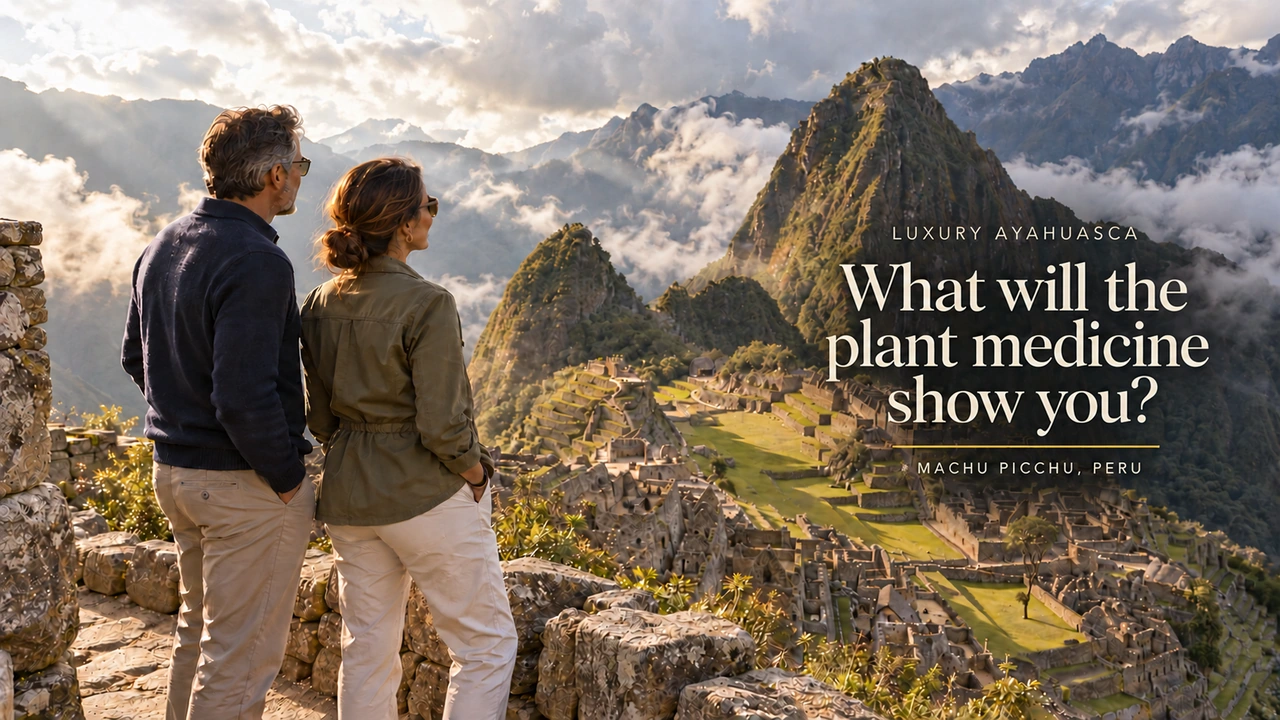
Can you add a Machu Picchu visit?
Treat a Machu Picchu visit as a separate travel task. The official ticket page directs readers to the Ministry of Culture's platform. Check dates, ticket options and transport through the responsible sources; a retreat photograph or excursion description does not establish availability.
If a provider advertises an excursion, ask which tickets, transfers and lodging are included in your actual quote, who reserves each component and which terms apply. Arkana's Sacred Valley page lists a Machu Picchu excursion as an additional option; it is not part of every advertised stay.
Discuss individual health and travel-sequencing concerns with appropriately qualified professionals. This guide supplies no universal interval between a ceremony and sightseeing. Luxury Ayahuasca has no confirmed bundled Machu Picchu package.
How should practitioners be described?
Ask practitioners how they identify their work and traditions. Name roles and relationships accurately rather than place every commercial program under one cultural label. Permission, attribution and understanding the actual setting matter when a publication tells someone else's story.
Sacred Valley or Iquitos: which planning questions differ?
The Sacred Valley is an Andean destination in the Cusco region. Iquitos is a gateway to the lowland Peruvian Amazon. Establish which setting and actual property an offer describes before arranging flights or comparing rooms. Ask for the arrival airport, pickup window, final transfer and contact for delays.
If you are still choosing the region, compare the Sacred Valley and Amazon settings for the differences in accommodation and arrival planning.
For an Andean shortlist, read the Arkana Sacred Valley profile and Etnikas profile. For an Amazon shortlist, compare Arkana Amazon and Temple of the Way of Light. Each profile separates the operator's published arrangements from details to confirm for a particular booking.
What should a Peru property-change notice explain?
Providers sometimes move a program to a replacement property within Peru before departure. A change inside the same country can still alter nearly every practical detail you verified, so treat the notice as a new offer rather than a footnote.
Request the replacement address first, then the arrival sequence: if the venue moved from the Sacred Valley to a different valley or to the Amazon, your airport, transfer length, and elevation may all change, and flights you already booked may no longer fit the pickup window. Ask whether the room category you reserved exists at the new property, whether the bathroom is private, and which shared spaces apply. Request a revised written confirmation covering transfers, meals, and any included services, plus the terms that now govern cancellation if the change does not suit you.
Two specific questions deserve written answers. First, who bears any additional transfer or accommodation cost the change creates? Second, does the original agreement's cancellation clause still apply, or does the property change give you a different option? Record the date of the notice and the date of each answer.
Keep your Machu Picchu or Cusco plans in the same review: a property move can break an itinerary you arranged around the original location. This guide certifies no provider's authorization to operate at either property; verify current legal and operational questions through appropriate sources.
What else should you ask?
What did the International Narcotics Control Board say about ayahuasca?
The INCB Report for 2010 states that no plants are currently controlled under the 1971 Convention on Psychotropic Substances, and that preparations such as decoctions for oral use made from plants containing DMT are also not under international control.
Does Peru's 2008 cultural heritage declaration license retreat centers?
No. The 2008 declaration recognized traditional ayahuasca use as National Cultural Patrimony, and its author distanced traditional use from commercial use. The U.S. Embassy in Lima states that facilities offering ayahuasca are not regulated by the Peruvian government.
How small should an ayahuasca ceremony group be?
There is no standard. BookRetreats recommends ceremony groups under 12 people for individualized support, and an Arkana article notes retreat sites use 'small group' loosely, meaning under 20, under 12, or even as many as 30 guests. Ask each operator for the written maximum and the staff-to-guest ratio.
What does a first ayahuasca ceremony feel like?
Etnikas states most people describe revisiting significant events of their lives like sequences in a chaotic film, often with acute emotional release. In the Global Ayahuasca Survey, nearly 56 percent reported adverse mental health effects during or after ceremony.
Can I bring ayahuasca home from Peru?
No. Ayahuasca typically contains DMT, a Schedule I substance under U.S. federal law, and people were federally prosecuted for ayahuasca possession as recently as 2018, per Wikipedia. Drinking it in Peru and carrying it across a border are legally very different things.
Is Iowaska legal in Peru?
Iowaska is a common misspelling of ayahuasca. Yes, according to ICEERS, ayahuasca is legal in Peru, one of the only countries where that is the case. However, facilities offering it are not regulated by the Peruvian government, the U.S. Embassy says.
How many ayahuasca retreat centers operate in Peru?
ICEERS estimated Peru had 173 retreat centers in 2019, receiving over 36,000 people and facilitating more than 160,000 ayahuasca experiences that year. Most centers are located around Iquitos.
How long does an ayahuasca ceremony last?
The effects begin about 40 minutes after drinking, peak between 60 and 120 minutes, and fade by about four hours. Overnight ceremonies at retreat centers usually run longer than the effects themselves, and Reddit threads read in November 2026 mention ceremonies lasting many hours.
What does ayahuasca actually do?
It can cause visual and auditory changes, sensitivity to light, sound and touch, altered time perception and synesthesia, according to UC Berkeley's BCSP. Nausea and vomiting are common. See the what is ayahuasca guide for the full pharmacology.
Do Peruvian retreats include a plant dieta?
Many do. A dieta is a traditional practice of restricted diet and isolation with specific plants. ICEERS reports a typical retreat lasts a week with three to four ayahuasca sessions; longer dietas of weeks or months also exist. Ask each operator exactly what their program involves.
Is ayahuasca illegal in the US?
Yes. DMT, ayahuasca's main active ingredient, is a Schedule I controlled substance, though a 2006 Supreme Court decision and later rulings granted religious-use exemptions to certain churches. See the U.S. legality guide for details.
Do I need to speak Spanish for a Peru retreat?
Not always, but it can matter. Reddit threads read in November 2026 note that at some family-run centers, Spanish speakers get more from the close relationship with the healer. Ask each operator what translation support exists during ceremonies and one-on-one talks.
Are there free or very cheap ayahuasca retreats in Peru?
Reddit threads read in November 2026 mention low-cost options such as a 10-day retreat at $1,700 and roughly $100 per day dietas. Treat any such offer as unverified and apply the same screening questions as to expensive centers.
What is huachuma medicine?
Huachuma, also called San Pedro, is a cactus with psychoactive properties used in Andean tradition. Peru's reservation to the 1971 UN Convention covers both ayahuasca and San Pedro. See the huachuma versus ayahuasca guide for the differences.
Is a small group better at a Peru retreat?
Reddit threads read in November 2026 show a frequent preference for groups capped at 6 to 12 guests, and some criticize ceremonies with 20 or more participants. That is a reader preference, not a verified safety finding. Ask operators for the actual guest cap and the facilitator-to-guest ratio on your dates.
Is every Peru retreat in the Sacred Valley?
No. Confirm the actual region, property and arrival instructions for the offer you are considering.
Where in Peru is Luxury Ayahuasca being developed?
The Sacred Valley is the main location. An actual venue, operator, program and booking package still need to be confirmed. Costa Rica and luxury Amazon locations are future possibilities, rather than available departures.
Is Machu Picchu part of an ayahuasca package here?
No. A separate tourism visit requires its own planning and appropriate personal advice.
Where to do ayahuasca retreat in peru?
This publication recommends no operator and confirms no booking. Start with official advice, individual professional assessment and the proposed region and provider. Compare actual arrangements rather than selecting a place from country-level rankings.
How do Sacred Valley and Amazon locations affect travel planning?
Confirm the exact property and route, including airport, onward transport and access to services. These are different settings. One provider’s arrival instructions should not be used for another region’s offer.
What should near Cusco mean in an offer?
Request the actual address and transfer route. Confirm whether accommodation, pickup and activities use the same location. A nearby city name can leave important arrival details unanswered.
What official ayahuasca guidance should U.S. travelers read?
The State Department advises U.S. citizens visiting Peru against consuming ayahuasca. Read the current advisory before evaluating an offer. Tourism appeal does not replace that guidance.
Does tourism information endorse a ceremony provider?
A destination page can describe geography or attractions without assessing a retreat or practitioner. Check the source’s purpose. Keep tourism information distinct from operator claims and individual assessment.
How should published Peru prices be compared?
Record date, length, nights, room and exclusions, then request a current quote. The cost guide explains how to compare actual offers. Published prices do not imply every Peru package is equivalent.
What should airport pickup instructions specify?
Confirm airport, meeting point, supplier, contact and delayed-arrival process. Check whether your itinerary is covered. Keep agreed instructions rather than relying on informal directions from another guest.
How should altitude questions enter Sacred Valley planning?
Discuss personal concerns with a qualified clinician and obtain accurate details for where you would sleep and travel. This guide prescribes no medication or acclimatization schedule.
Can I assume Peru retreats share one tradition?
Ask who leads the practice and how the provider documents its cultural description. A country name or Indigenous image does not establish a particular practitioner’s identity, training or authority.
What should local practitioner descriptions identify?
Request the actual role and specific, respectful support for claimed training or community relationships. Distinguish cultural descriptions from clinical qualifications. A generic shaman label leaves responsibilities unclear.
How can I plan a separate Machu Picchu visit?
Use current entry information, transport details and appropriate personal professional advice. Confirm what is separate from any package. This publication does not suggest consuming ayahuasca at the protected site.
Should sightseeing schedules determine participation plans?
Resolve provider, participation and itinerary questions separately before accepting rigid bookings. Check what remains changeable. An attractive combined itinerary does not establish suitability or that every activity will fit your circumstances.
What should a Peru property-change notice explain?
Request the replacement address, room, transfers and terms. Recheck arrangements at that location. A change within the same country can still alter important practical details.
How can access to professional help be compared?
Ask the qualified team about arrangements at the actual property, service limits and external referrals. A city name or proximity claim is not a complete explanation of urgent-support responsibilities.
Does cultural heritage language establish operator licensing?
Do not infer legal permission, staffing or suitability from a cultural description. Verify relevant current legal requirements with appropriate sources. This guide certifies no provider’s authorization.
What should I ask an insurer about Peru travel?
Give a qualified insurer the exact itinerary and proposed activities. Request relevant coverage and exclusions. A general travel policy or tourism package cannot establish protection for your plans.
How should Peru travel information stay current?
Check dated provider documents and current official transport, entry and travel information. Record relevant changes before committing. Saved articles and another guest’s itinerary can become outdated.
Where does this guidance come from?
- U.S. Department of State: Peru travel advisoryOfficial advice against ayahuasca consumption by visiting U.S. citizens, rechecked October 21, 2026. Individual health questions require qualified advice.
- PROMPERÚ: the Sacred ValleyDestination geography and tourism context, not endorsement of any ceremony provider.
- Sacred Valley Ayahuasca & San Pedro Retreats Peru | ArkanaOperator accommodation or commercial description checked October 21, 2026. Confirm the terms for the selected dates; not independent verification of safety or outcomes.
- Official Machu Picchu ticketsOfficial direction to the Ministry of Culture ticket platform; availability not asserted. Checked October 11, 2026.
- PeruChecked November 15, 2026.
- Health Alert: Do Not Use Ayahuasca/Kambo - U.S. Embassy Lima (January 23, 2025) - U.S. Embassy in PeruOfficial government source, checked November 15, 2026.
- Ayahuasca Tourism In-Depth: Revealing the Who, How, and WhereChecked November 15, 2026.
- A landscape analysis of psychedelic retreat organizations advertising online - PMCOfficial government source, checked November 15, 2026.
- Travel Advisory: Peru September 2026 - U.S. Embassy in PeruOfficial government source, checked November 15, 2026.
- Ayahuasca: Psychological and Physiologic Effects, Pharmacology and Potential Uses in Addiction and Mental...Official government source, checked November 15, 2026.
- Ayahuasca: What It Is and RisksChecked November 15, 2026.
- Adverse effects of ayahuasca: Results from the Global Ayahuasca Survey - PMCOfficial government source, checked November 15, 2026.
- AyaSafe: Free Ayahuasca Safety Documents by ICEERSChecked November 15, 2026.
- Ayahuasca - Alcohol and Drug FoundationChecked November 15, 2026.
- Ayahuasca and Dimethyltryptamine Adverse Events and Toxicity Analysis: A Systematic Thematic Review - PMCOfficial government source, checked November 15, 2026.
- Switch to mania after ayahuasca consumption in a man with bipolar disorder: a case report - PMCOfficial government source, checked November 15, 2026.
- Ayahuasca Therapy Information- UC Berkeley BCSPChecked November 15, 2026.
- 35 Handpicked Ayahuasca Retreats in United States With REAL Reviews • BookRetreats.comChecked November 15, 2026.
- Small Group Ayahuasca Retreats: Why Ratios MatterOperator's own published description, checked November 15, 2026. Confirm the terms for your dates; not independent verification.
- Ayahuasca Retreat in Iquitos, PeruOperator's own published description, checked November 15, 2026. Confirm the terms for your dates; not independent verification.
- Safe and authentic Ayahuasca retreats in Cusco PeruOperator's own published description, checked November 15, 2026. Confirm the terms for your dates; not independent verification.
- Ayahuasca Retreat FAQ: Safety, Cost, Preparation & TravelOperator's own published description, checked November 15, 2026. Confirm the terms for your dates; not independent verification.
- Book Your Ayahuasca Retreat TodayOperator's own published description, checked November 15, 2026. Confirm the terms for your dates; not independent verification.
- 115+ Best Ayahuasca Retreats in MexicoChecked November 15, 2026.
- Ayahuasca Retreat SafetyOperator's own published description, checked November 15, 2026. Confirm the terms for your dates; not independent verification.
- Legal status of ayahuasca by countryChecked November 15, 2026.
- United States of AmericaChecked November 15, 2026.
- CanadaChecked November 15, 2026.
- Ayahuasca plant medicine - Etnikas - Safe and authentic Ayahuasca retreats in Cusco Peru.Operator's own published description, checked November 15, 2026. Confirm the terms for your dates; not independent verification.
Read our editorial standards and the risk and screening guide.