Properly prepared yuca gives roast duck a substantial, mildly flavored starchy side. Serve tender pieces with greens, keeping citrus separate so the diner can adjust the finished bite.
Yuca with roast duck and greens
Buy a reliable food-grade yuca product with clear preparation directions. Peel and fully cook it as directed, using the required soaking and boiling process, then discard the cooking water. Serve the prepared root beside roast duck and greens.
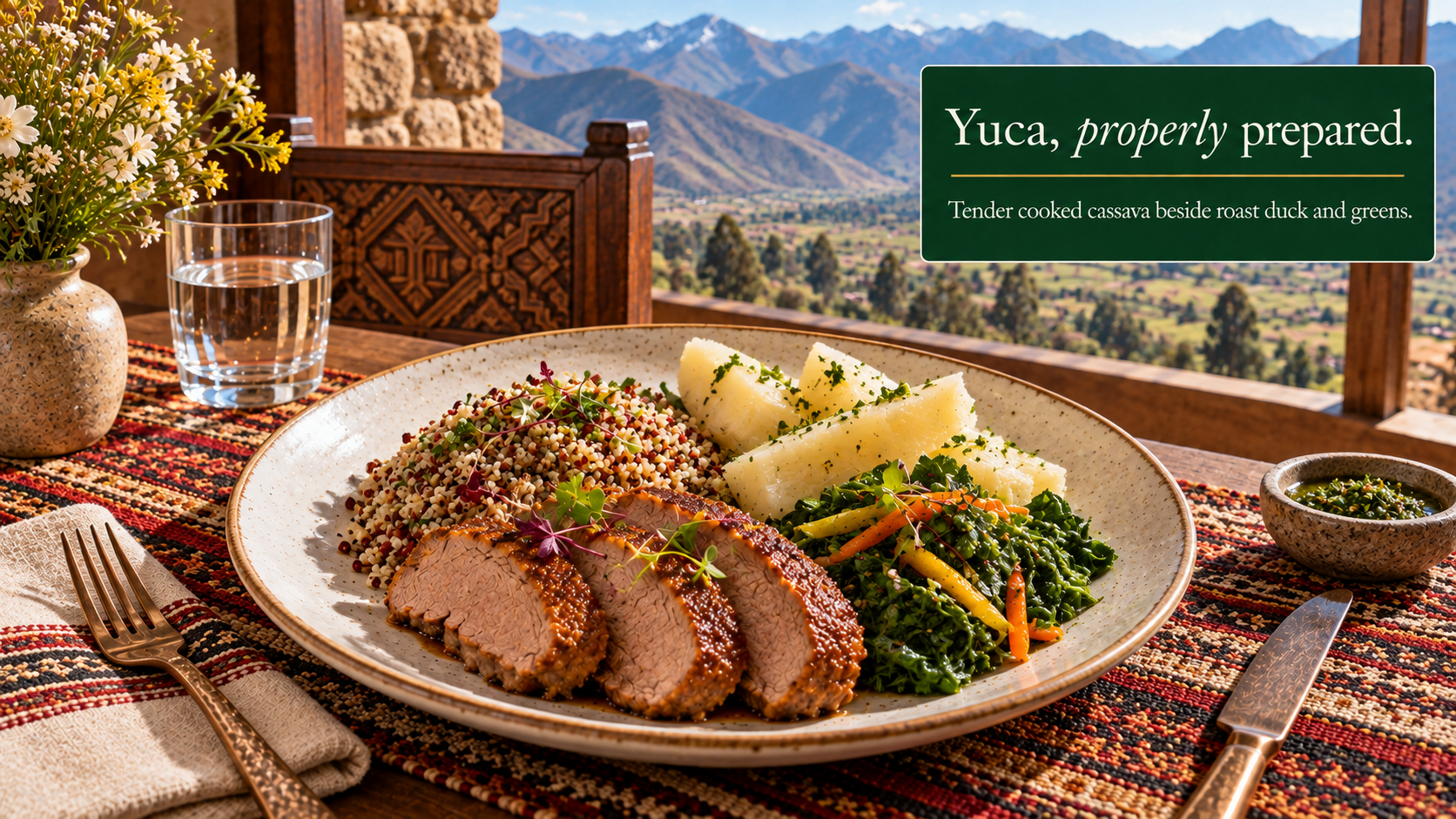
Taste and texture on the plate
The pleasure of the serving is the contrast between a tender starchy root, savory roast duck and fresh or gently cooked greens. Keep the yuca moist rather than chasing a hard crust. A few manageable pieces make a better first portion than an oversized mound, especially when its dense texture is new to you.
Try the safely prepared root plain, then with a little duck and a small squeeze of citrus. It should be comfortable to divide with a fork. This version uses yuca as the starch, so another large grain or potato side is optional. All flavor decisions come after the product's required safe preparation has been completed.
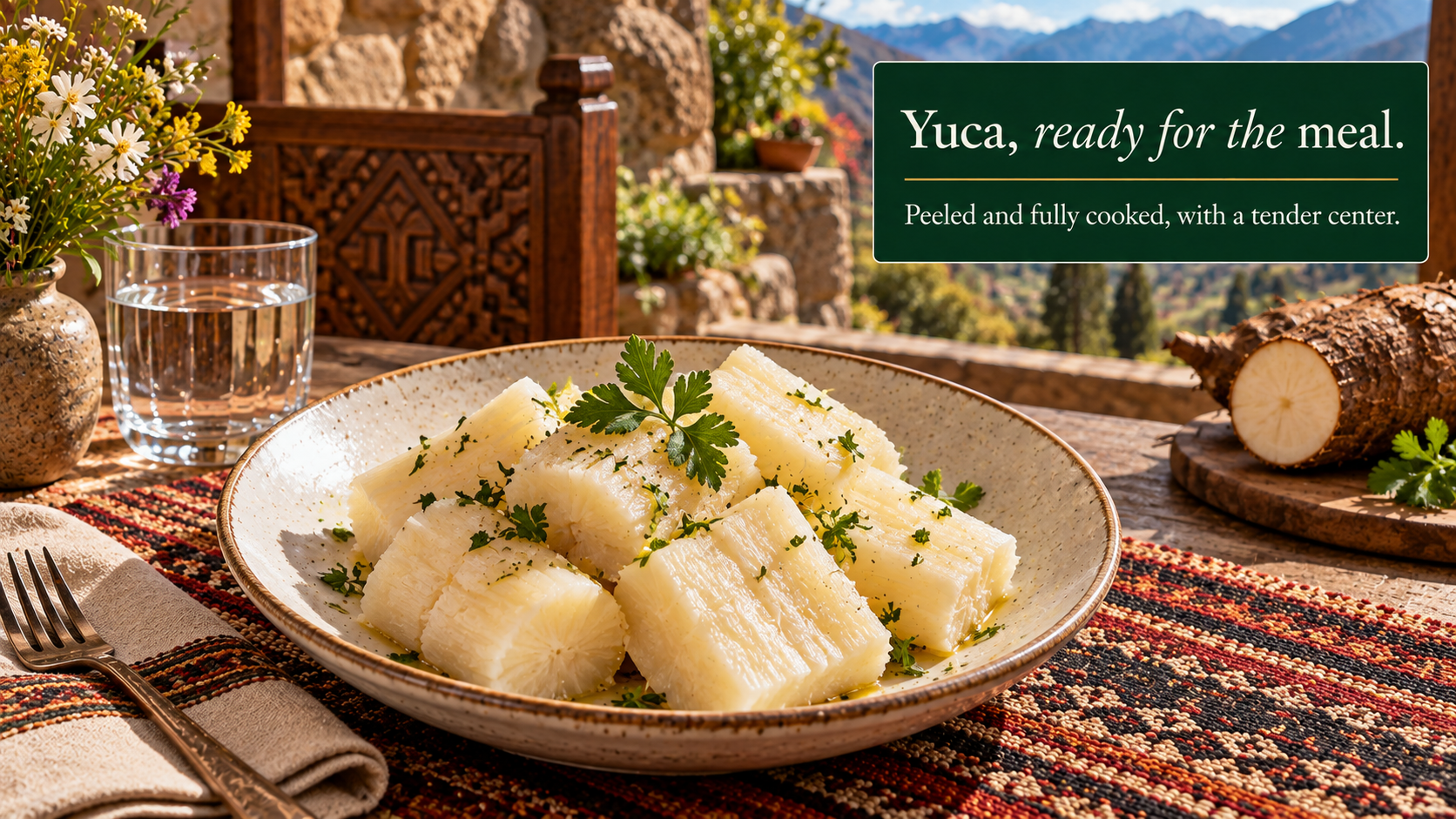
Choosing the serving while traveling
Ask whether the yuca is boiled or otherwise properly processed before any final oven treatment, and choose a kitchen that can explain its preparation confidently. Request tender pieces alongside roast duck rather than fried yuca. If a root's identity or processing remains uncertain, choose a familiar prepared starch instead.
Yuca takes the substantial starchy place on this plate; the greens provide a separate vegetable portion and the duck is the meat center. Keep citrus and any herb finish at the side for a first taste. This guide does not assign a universal safe time to unknown cassava. A reliable food product and its complete preparation process remain essential.
Buy the ingredient with its instructions
Yuca is cassava, a different ingredient from uncucha or taro. For this meal, choose a packaged or otherwise traceable food product sold by a reliable supplier. Ask whether it is fresh, peeled frozen, partially cooked or ready cooked. Those forms do not begin at the same stage, and the label's directions matter.
Avoid an unknown garden root or a bag whose seller cannot explain the preparation. A white cut surface does not establish its variety or suitability. If the product has no reliable instructions, choose another starch for dinner. A familiar potato is a better practical alternative than trying to identify an unknown cassava variety by appearance or a raw taste.
Food Standards Australia New Zealand: Cassava and bamboo shoots · Hong Kong Centre for Food Safety: Cyanide Poisoning and Cassava
Why the preparation is different
Cassava contains cyanogenic compounds that can release cyanide. Food Standards Australia New Zealand requires cassava sold under its rules to carry advice to peel and fully cook it. Hong Kong's Centre for Food Safety distinguishes sweet cassava from bitter types that need more extensive processing. These are reasons to follow a verified process, not to improvise a short boil for any root.
Do not eat raw cassava or use raw tasting as an identification test. A fork-tender center alone cannot prove an unknown root has been adequately processed. This guide's meal begins with a confirmed food-grade product and its appropriate preparation. It does not turn a roasting time into a universal detoxification method.
Food Standards Australia New Zealand: Cassava and bamboo shoots · Hong Kong Centre for Food Safety: Cyanide Poisoning and Cassava
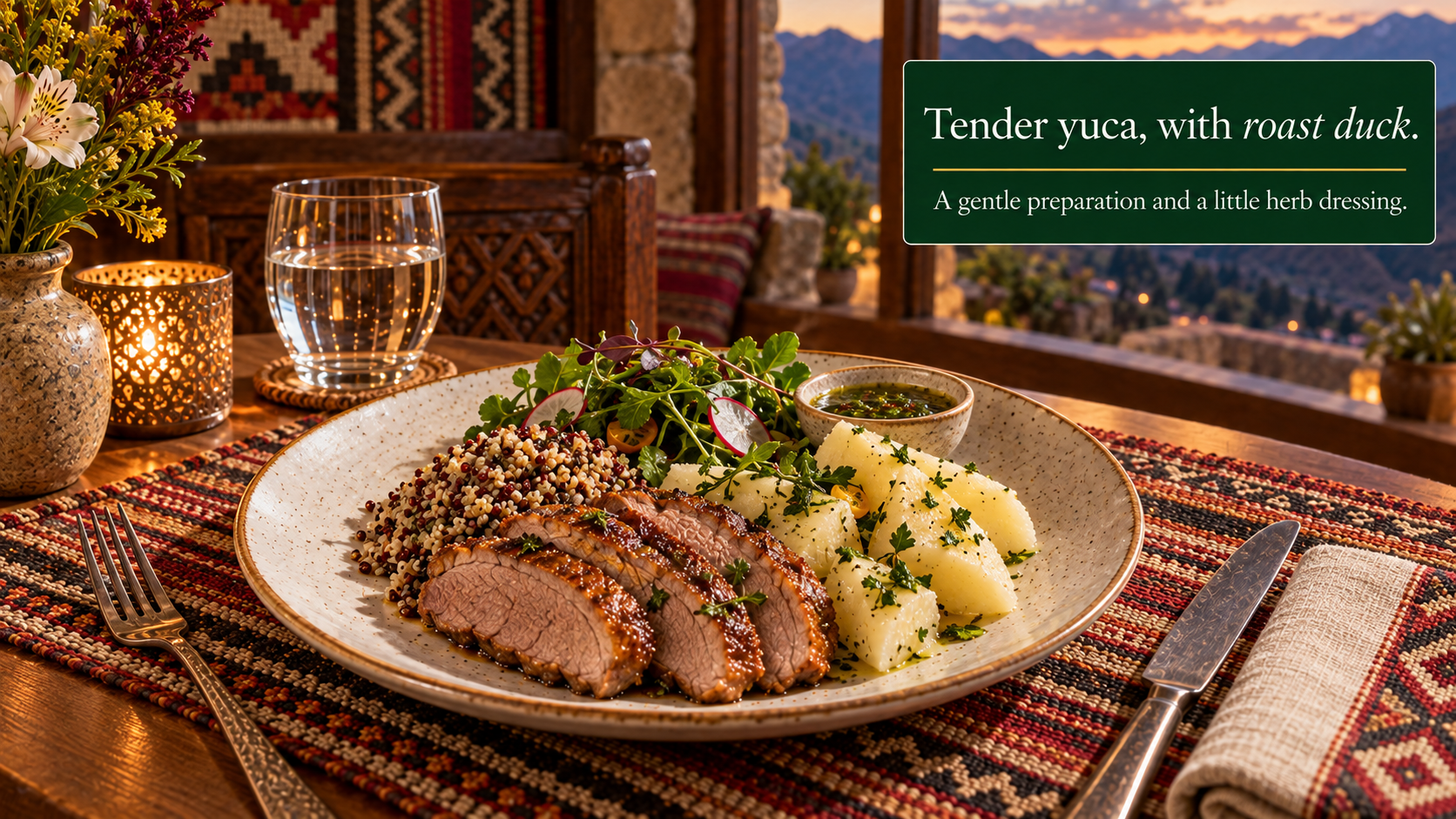
Prepare first, then season
For a fresh food-grade product, follow the supplier's complete directions for peeling, cutting, any required soaking, and thorough cooking in boiling water. Keep this process separate from the duck and vegetables. Discard the soaking and cooking water instead of using it as soup stock or a sauce. A peeled frozen product still needs the cooking its package requires.
Do not move raw yuca straight onto a roasting tray as a shortcut. A final oven finish can be considered only after its required preparation is complete and the product instructions permit it. Keep written directions nearby the first time you use the product. If they are contradictory, resolve that with the supplier before cooking rather than averaging two methods.
Hong Kong Centre for Food Safety: Cyanide Poisoning and Cassava
Choose a comfortable finished texture
Once the verified preparation is complete, look for pieces that are tender enough to divide easily with a fork. Remove a tough central fiber if present in the cooked piece. Keep the portions large enough to recognize but small enough to eat comfortably alongside the meat. This serving aims for a soft interior, not a hard crust.
If the safely prepared root breaks apart, serve it as a rough mash rather than drying it out in an effort to restore neat edges. Add a little fresh hot water if needed for texture, never the discarded processing liquid. Taste only the finished prepared food. Stop using a batch with unexpected bitterness or any unresolved concern about its preparation.
Roast the duck on its own schedule
Use a dependable food-grade duck cut and a roast method suited to it. Keep raw poultry and its utensils away from the prepared yuca and washed greens. USDA recommends a minimum internal temperature of 165°F for duck, checked with a food thermometer in the appropriate thick part of the meat.
Let the duck be the savory center of the meal and give the yuca a moderate place alongside it. Trim or drain excess rendered fat rather than turning it into a frying medium. If the root is ready before the duck, hold it using safe hot-holding practice or cool and refrigerate it promptly for later reheating. Do not leave it on the counter while a long roast finishes.
Make the greens a distinct part of the meal
Use washed tender greens, either served fresh when appropriate or cooked separately. If cooking them, drain them so their liquid does not soak the yuca. Place them alongside the root and duck rather than under all the meat juices. That keeps their texture visible and makes it easier to take a bite of each component.
Begin with plain greens and a small amount of lemon or lime offered separately. Add acid to your own portion after tasting the duck and root together. The dish does not need a sweet glaze. If the meat is strongly seasoned, a very sharp dressing can make the whole plate harder to balance. Fresh herbs can remain a small accent rather than a second dominant flavor.
Portion the root as a starch
Yuca occupies the substantial starchy place on this plate. You do not need to add a second large mound of grain or potatoes to make the meal feel complete. Start with a few tender pieces, a manageable duck portion and plenty of greens, then adjust to your appetite. These are serving suggestions, not a claim about an ideal diet.
For someone trying the ingredient for the first time, keep a small plain piece available beside the seasoned meal. Comparing a plain bite with one containing duck and citrus teaches more about preference than covering the entire root with sauce. If the texture is unfamiliar, offer smaller pieces without implying that a larger serving is a test of authenticity.
The images are editorial illustrations of ingredients and serving ideas. They do not document a named restaurant, a current harvest or an included retreat meal. Preparation guidance is not a tested recipe.
Leave room for the Sacred Valley
A visit to Machu Picchu can leave time for a good meal and a quieter stay in the valley. Ask Florian about The SoulSearching Experience, his five-day Sacred Valley seminar for 8-15 participants. Discuss dates, venue and meal arrangements directly.
Questions readers ask
What is the safe starting point for this yuca meal?
Buy a traceable food-grade product with clear preparation directions. Cassava needs peeling and thorough cooking, and some types need more extensive processing. Follow the process for the actual product rather than treating every root as interchangeable.
Food Standards Australia New Zealand: Cassava and bamboo shoots · Hong Kong Centre for Food Safety: Cyanide Poisoning and Cassava
What should I ask when buying fresh yuca?
Ask what product it is, how fresh it is, and what preparation it requires. Use a reliable food supplier. If the identity, condition or cooking directions are unresolved, choose another starch for the meal.
Hong Kong Centre for Food Safety: Cyanide Poisoning and Cassava
Does a wax coating identify yuca?
No. Different roots can be sold with protective coatings. Resolve the label with the seller before cooking. This dish needs confirmed cassava with appropriate directions, not an identification based on the outer coating.
Hong Kong Centre for Food Safety: Cyanide Poisoning and Cassava
Can I leave the cassava peel on during preparation?
Follow cassava-specific directions, including peeling before its required cooking process. Do not import a peel-after-boiling shortcut from potatoes or another root. Cassava preparation is a food-safety step, not only a preference about texture.
Food Standards Australia New Zealand: Cassava and bamboo shoots · Hong Kong Centre for Food Safety: Cyanide Poisoning and Cassava
Can frozen yuca be used for this plate?
Yes, when it is a clearly labeled food-grade product. Check whether it is peeled, partially cooked or ready cooked and follow all package directions. Frozen does not automatically mean ready to eat.
Food Standards Australia New Zealand: Cassava and bamboo shoots
Should frozen yuca be thawed first?
Use the package directions for that exact frozen product. A peeled raw root and a prepared ready-to-heat product may require different handling. Do not infer the process from the shape of the cut pieces.
Food Standards Australia New Zealand: Cassava and bamboo shoots
How can I avoid a dry, chalky serving?
Complete the verified safe preparation first. Then keep the finished root moist and tender instead of prolonging a drying oven finish. Serve smaller pieces or a rough mash if the cooked batch is dense. Do not shorten safety processing to improve texture.
Hong Kong Centre for Food Safety: Cyanide Poisoning and Cassava
Should I cover unexpected bitterness with seasoning?
No. Stop eating and resolve the product and preparation with the supplier. Do not use citrus, sugar or a second roast to hide unexpected bitterness. The meal should start with a known food product and an appropriate complete process.
Hong Kong Centre for Food Safety: Cyanide Poisoning and Cassava
Can microwaving replace the directed preparation?
Do not substitute a microwave-only shortcut for the product's verified preparation. Follow its requirements for peeling, soaking or other processing and thorough cooking. Reheating an already prepared product is a different task from making raw cassava safe.
Food Standards Australia New Zealand: Cassava and bamboo shoots · Hong Kong Centre for Food Safety: Cyanide Poisoning and Cassava
Is peeling and roasting raw yuca enough for this guide?
This guide does not use raw yuca directly on a roasting tray. Complete the appropriate verified process first. Bitter or unknown cassava cannot be assigned a universal short oven method. Follow reliable product directions before considering an optional finish.
Hong Kong Centre for Food Safety: Cyanide Poisoning and Cassava
How can I serve yuca without frying it?
Serve the safely prepared root as tender pieces or a rough mash beside duck and greens. A crisp crust is optional and this version uses no frying. Use preparation guidance for the actual cassava product before choosing a final serving method.
Is cassava starch the same ingredient as this root serving?
No. This meal uses prepared root pieces. Tapioca or cassava starch is a processed ingredient with a different function and preparation. Use the food form named in the recipe and do not exchange starch for whole root by volume.
Hong Kong Centre for Food Safety: Cyanide Poisoning and Cassava
What flavors suit the prepared yuca beside duck?
Start simply with the root, savory roast duck and greens. Try a little lemon or lime on one bite, then decide whether to add a modest herb finish. Keep the yuca visible rather than coating it with several competing sauces.
What complete savory meal can use the prepared root?
Use a moderate yuca portion as the plate's starch, with safely roasted duck and a generous green accompaniment. You do not need another large mound of potato or grain. The exact yuca preparation comes first; the pairing is a serving suggestion.
Should rendered duck fat become the yuca cooking medium?
For this version, drain excess rendered fat and keep the yuca preparation separate. The root is served tender rather than fried in the roasting fat. Use a duck roast method suited to the cut and check its internal temperature.
How do I check that the duck is safely cooked?
Use a food thermometer rather than skin color or whether the meat pulls from a bone. USDA recommends duck reach a minimum internal temperature of 165°F. Tender yuca cannot compensate for an inadequately cooked meat portion.
Do multiple ducks require a different oven temperature?
Use a roast method suited to the quantity, cut and oven, and check each duck independently with a thermometer. USDA recommends a minimum internal temperature of 165°F. Do not simply double the oven temperature or rely on one shared timer.
How much dressing should the greens receive?
Dry washed greens well and add a small amount of dressing just before serving. Offer more separately. Keep the greens alongside the root instead of making a wet layer underneath it. The duck may already supply enough savory intensity.
Can I leave the finished meal out while it cools?
Cool it promptly in shallow containers and refrigerate within two hours, or one hour above 90°F. Do not leave a deep pot on the counter for a long cooling period. Store greens separately from the cooked components.
How should hot leftovers be reheated?
USDA recommends reheating leftovers to 165°F. Use a suitable thermometer and reheat only the portion you plan to eat. Add fresh greens after heating. Use refrigerated leftovers within three to four days or freeze suitable portions promptly.