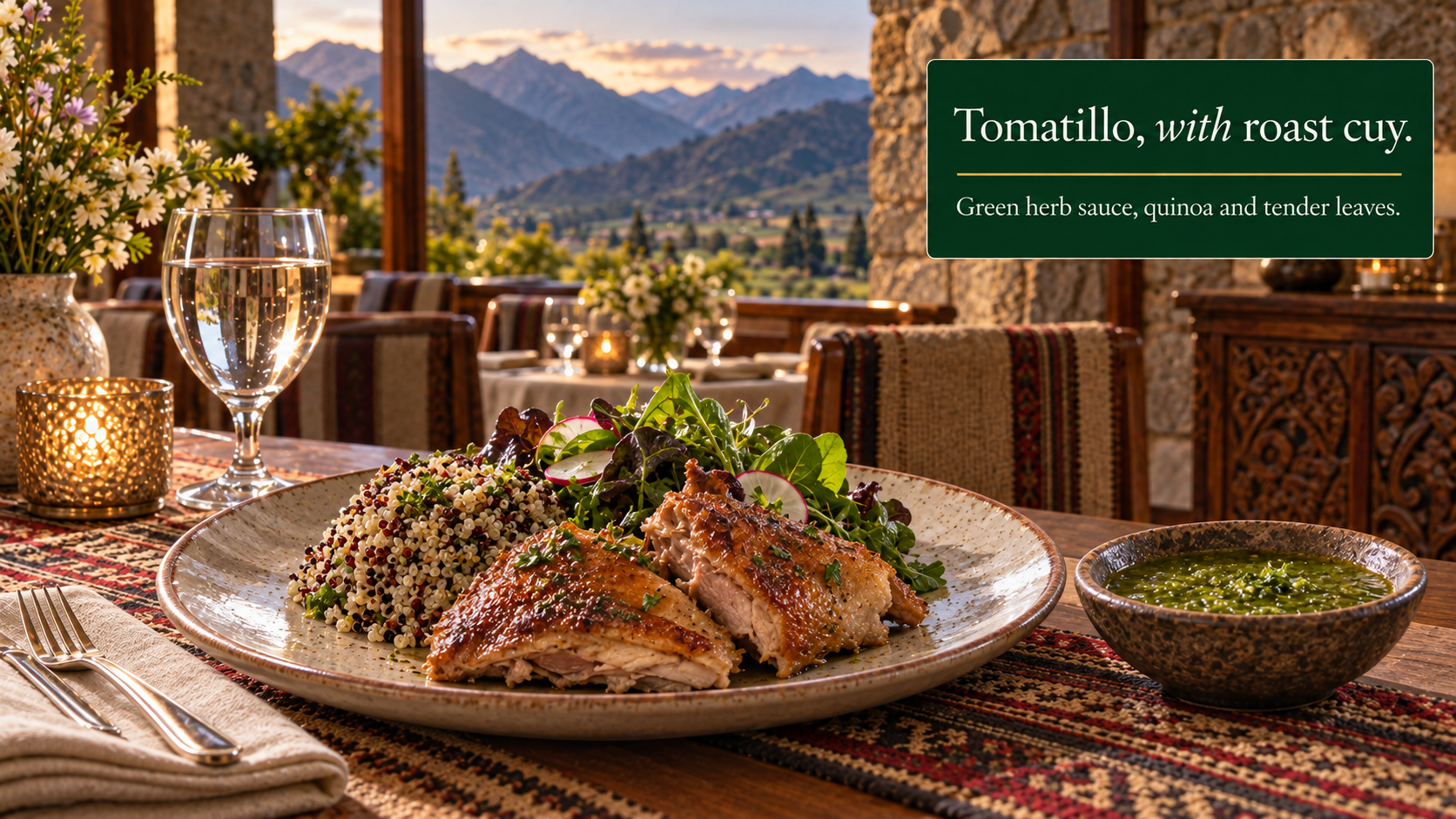
A small green sauce can make a roast-cuy plate feel fresh without hiding the meat. Tomatillo supplies tartness and body; herbs add a separate aroma. Quinoa catches a little sauce, while greens keep the plate generous. The aim is a spoonable accompaniment served beside boneless meat, with enough restraint to taste all the food.
Fruit, grains and savory plates
Tomatillo Herb Sauce with Roast Cuy, Quinoa, and Greens
Tomatillo makes a tart green sauce for boneless roast cuy, quinoa, and greens. Remove and discard the papery husks, wash the sticky fruit thoroughly, then cook and blend or chop it with a restrained amount of culinary herbs. Serve the sauce alongside the meat. Tomatillo, Physalis philadelphica or P. ixocarpa, is distinct from aguaymanto, P. peruviana.
Know the husked fruit you are buying
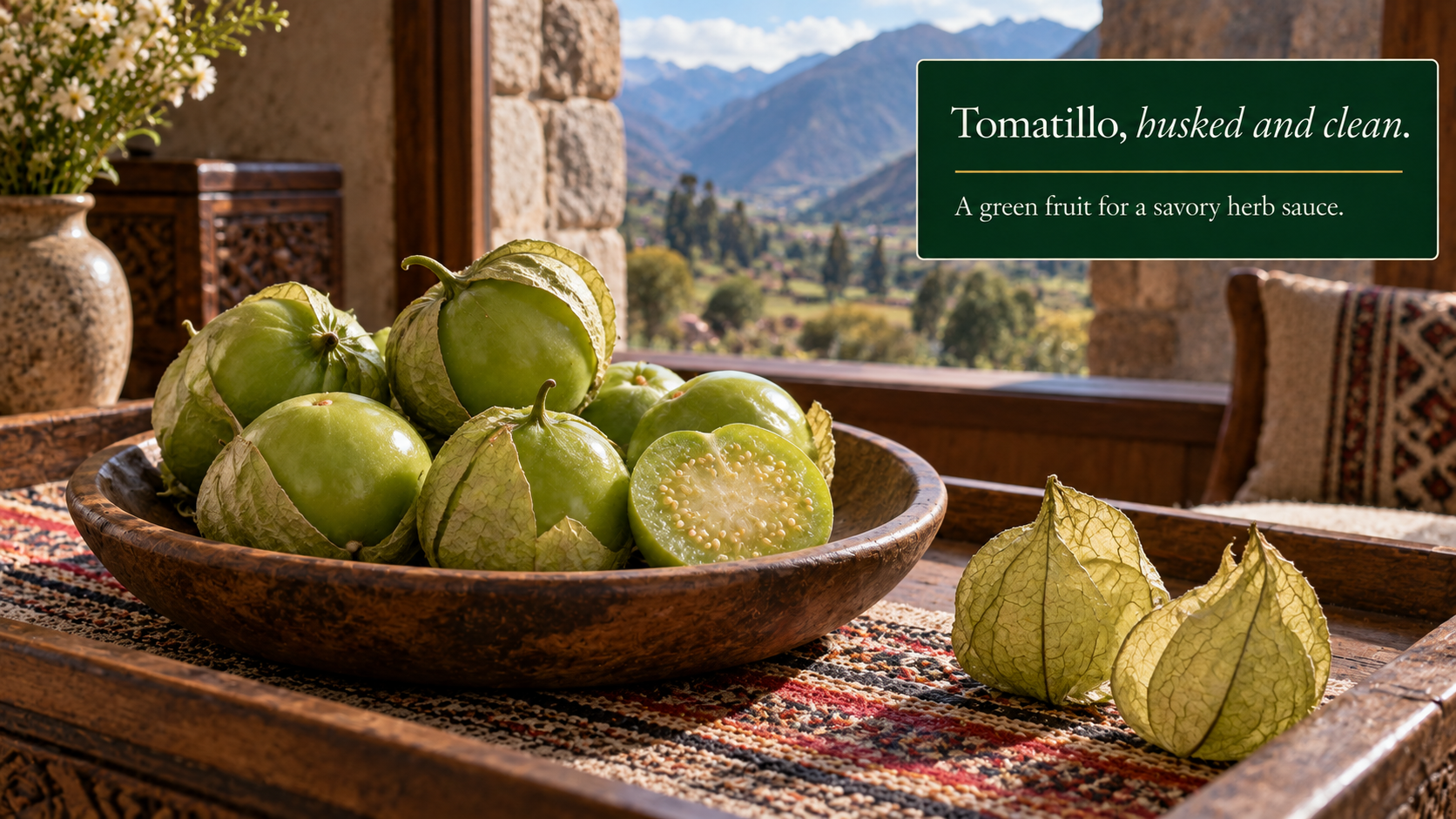
Tomatillos are commonly described as Physalis philadelphica or P. ixocarpa. They are relatives of tomatoes, but a green tomatillo is not simply an underripe red tomato. Minnesota Extension describes their firm texture and tart flavor. Green culinary varieties are normally selected when the fruit has filled its husk and remains firm.
Aguaymanto, Physalis peruviana, is a different fruit despite its own papery covering. Do not replace one with the other merely because both arrive in a husk. If a seller uses a broad name such as ground cherry, ask which fruit is being offered before planning the sauce.
Remove the husk and wash the fruit
Peel away the papery husk and discard it. Rinse the fruit under running water, rubbing the surface to remove the sticky coating. Use clean hands and utensils. The husk is packaging from the plant, not an edible wrapper for this meal, and the plant's leaves do not belong in the herb sauce.
Choose mature culinary fruit from an identified source. Discard rotten or badly damaged pieces. The edible fruit's thin skin and small seeds can remain in the sauce. They are different from the outer husk. Careful washing is more useful than trying to disguise residue or poor produce with a stronger seasoning.
Make a cooked green sauce
For this plate, soften the cleaned tomatillos before blending or chopping them. A dry-pan cooking method is demonstrated in Oregon State Food Hero's salsa verde. No frying oil is required. Move the pieces as they cook and aim for tender flesh with modest surface color rather than a blackened shell.
Blend or chop the cooked fruit with a little onion, prepared garlic, and the culinary herb you want to taste. Add liquid only as needed for a spoonable texture. Keep the sauce mild if heat is unwelcome. A green sauce does not have to contain a large quantity of hot chile. Taste before adding citrus, since tomatillo already supplies tartness.
Reserve the liquid released by the cooked fruit in a small bowl. Begin with the softened flesh, then add the reserved liquid a little at a time while blending or crushing. This gives control over the final texture. A sauce that will sit beside the meat can stay thicker than one intended to spread through a bowl of grain.
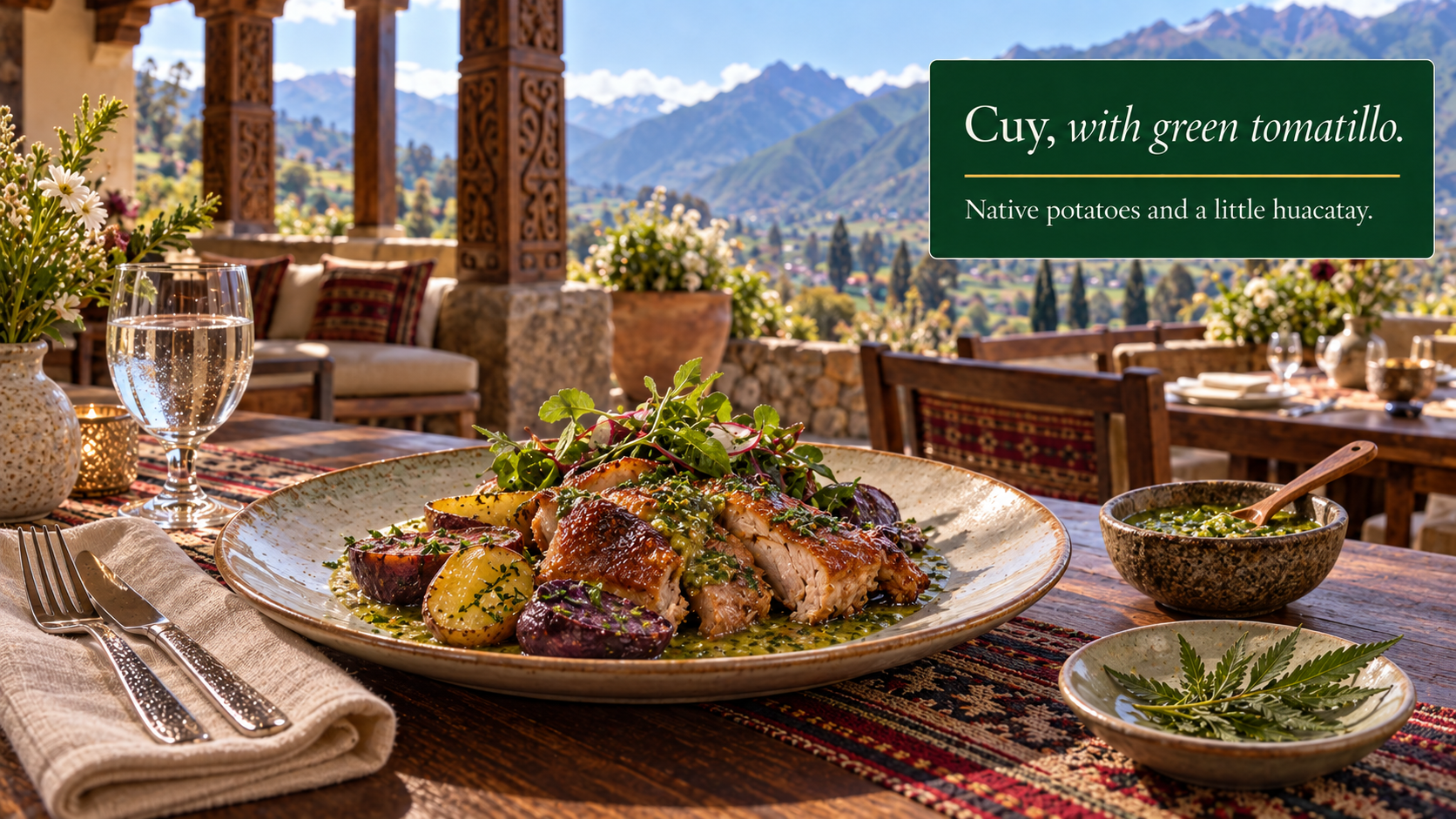
Plate cuy, quinoa, and greens
Serve a boneless roast-cuy portion with cooked quinoa and greens. Keep the sauce at the side, where a spoonful can join a bite of meat or grain without saturating everything. Boneless service is convenient, but careful preparation and inspection still matter. The plate should be easy to eat, not a puzzle hidden beneath a green puree.
Cuy is guinea pig, and oven-cooked cuy is one of the preparations described by Peru Travel. This tomatillo pairing is a serving idea rather than a claim that every regional cuy dish uses the sauce. Quinoa provides a separate grain texture. Native potatoes could make an alternate plate when that is the starch you prefer.
Keep the herb flavor clear
Cilantro is a familiar choice, but it is not compulsory for a freshly prepared sauce. If you dislike it, omit it or try a modest amount of another identified culinary herb, understanding that the flavor changes. Avoid adding several strong herbs at once before tasting the tomatillo itself.
Add a fresh herb finish near service when you want it to remain distinct. A cooked herb note is a different choice. Keep greens as a separate vegetable portion rather than blending the entire serving into the sauce. That preserves a contrast between the spoonable tomatillo, tender meat, small grains, and leafy vegetable.
Order by preparation rather than color
At a restaurant, ask whether the green sauce is made with tomatillo, herbs, avocado, or another ingredient. Color does not establish the recipe. Ask about chile heat and whether the sauce can come alongside the meat. These questions help if you want to taste cuy first before deciding how much tartness to add.
Ask the kitchen where the meat and vegetables in the meal came from and which suppliers provided them. Tender food and a well-balanced sauce matter most when the plate reaches the table.
The images illustrate serving ideas, rather than a named restaurant menu, a current harvest or an included retreat meal. These are preparation guides, not tested recipes.
A little more time in the Sacred Valley
A Machu Picchu journey can leave space for more than the train and the citadel: a meal, a quieter morning and a conversation that has time to develop. Ask Florian about The SoulSearching Experience, his five-day Sacred Valley seminar for 8-15 participants. Discuss dates, venue and meal arrangements directly.
Questions readers ask
Does tomatillo taste like an underripe tomato?
It is a different fruit, with a firm texture and a characteristic tart flavor. Do not choose an unripe red tomato and assume it is the same ingredient. For the cuy plate, a small cooked tomatillo sauce supplies its own flavor alongside the meat and grain.
What if I cannot find tomatillos?
You can choose a different sauce, but name the actual ingredients and expect a different result. A green tomato or another tart fruit is not a guaranteed one-for-one substitute. The boneless cuy, quinoa, and greens can still make a meal without relabeling an improvised sauce as tomatillo.
Can aguaymanto or another ground cherry be treated as tomatillo?
Do not assume equivalence from the husk. Tomatillo is commonly listed as Physalis philadelphica or P. ixocarpa. Aguaymanto is P. peruviana. Confirm which culinary fruit you have. A ground-cherry substitution changes the dish, and a generic name does not identify the species or reproduce this green sauce.
What should I do with the sticky coating under a tomatillo husk?
Remove and discard the husk, then rinse and rub the fruit under running water to remove the coating. Use clean hands and utensils; FDA does not recommend washing produce with soap. The papery husks and plant leaves are not ingredients in this sauce.
How can I recognize a tomatillo suitable for the sauce?
Look for identified mature culinary fruit that has filled its husk and remains firm. Green culinary tomatillos do not need to become red tomatoes to be ready. Inspect beneath the husk and reject rotten or badly damaged fruit. A dry wrapper alone cannot establish the condition of what is inside.
Do tomatillos have to be roasted before making a sauce?
Mature culinary fruit can be used raw or cooked, but this plate uses a cooked sauce. Softening the fruit gives a different texture from chopping it raw. Choose a preparation you enjoy rather than treating raw and roasted versions as the same recipe with an optional step.
Should tomatillos be cooked whole or halved?
Either cut can work in a suitable method. Even halves make the interior easier to inspect and can expose more surface to cooking. Whole fruit keeps a different shape until it softens. For a blended accompaniment, choose manageable pieces and judge tenderness rather than preserving a decorative shape.
What if the tomatillo sauce tastes too sour?
Taste it with the cuy and quinoa before judging a spoonful alone. Use a smaller amount, omit extra citrus, or loosen a portion with a little appropriate savory liquid. Do not keep adding fruit because the sauce is green. Its useful role here is a tart accent, not a large vegetable serving.
Why might a cooked tomatillo sauce become much thicker after standing?
Tomatillo sauces can set up as they cool. Check the texture at the temperature you plan to serve, then stir in a little suitable liquid if needed. For this plate, a spoonable sauce is enough. You do not need a stiff mound or a watery pool around the quinoa.
Can canned tomatillos be used when fresh ones are unavailable?
They can supply the ingredient for a different version, but check the label and adjust for the liquid and seasoning already present. Do not expect a canned product to reproduce fresh fruit cooked on a dry surface. Taste before adding extra salt and keep the sauce portion modest.
What if cilantro tastes unpleasant to me?
Leave it out of a freshly prepared sauce or try a small amount of another identified culinary herb that you enjoy. The flavor will change, and that is fine. Keep tomatillo recognizable, taste the sauce with the cuy, and avoid assuming every green herb is an equivalent replacement.
Does tomatillo sauce have to be hot with chile?
No. Tartness and chile heat are separate choices. Food Hero gives a mild salsa option using bell pepper instead of serrano. For this plate, start mild and offer any hot chile separately if wanted, allowing the cuy and tomatillo to remain easy to taste.
Does the sauce need a blender, or can it stay more textured?
A blender makes a smoother accompaniment, but a knife or mortar can produce a chopped or crushed version. Food Hero lists these alternatives. Use tender cooked fruit and keep the texture comfortable to spoon beside the boneless cuy. A perfectly uniform puree is not necessary for a good meal.
Can extra tomatillos be frozen instead of turned into a preserved sauce?
Yes. Remove the husks first. University extension guidance describes washing and drying the fruit before freezing. Label the batch and expect thawed fruit to be softer. A cooked sauce is a practical later use. Freezing whole fruit is a different decision from inventing a shelf-stable sauce recipe.
Can extra acidity guarantee that homemade green sauce will keep safely?
No. Tart taste is not a substitute for proper handling. Make a sensible amount, refrigerate promptly, and use guidance appropriate to the actual preparation. If a sauce develops mold or other spoilage, discard it. Adding more citrus is not a way to restore it.
What is cuy, and must it be served fried?
Cuy is guinea pig, a recognized food in Peru. Peru Travel lists oven-cooked cuy as well as other preparations. Ask specifically for roast or oven-cooked meat if that is what you want. Here it is served boneless with quinoa, greens, and a small green sauce alongside.
Should the quinoa beside the cuy be rinsed first?
Check the package. Quinoa that is not pre-rinsed can be washed in a fine-mesh strainer to remove its bitter surface coating, then drained before cooking. That keeps the grain from adding another unwanted sharp note beside an already tart sauce. Use measured cooking liquid after rinsing.
How can quinoa stay separate rather than becoming mushy?
Measure the cooking liquid and include an off-heat covered resting stage instead of continuing to boil after the grain is tender. Food Hero uses that approach. Keep excess sauce beside the meal and add it by the spoonful so the finished quinoa does not sit in a deep pool.
Does quinoa replace the meat nutritionally if I leave cuy off the plate?
It contributes protein, but the amount depends on the portion. A small grain side is not equivalent to a meat portion simply because quinoa contains protein. For a vegetarian plate, add a suitable cooked legume or another deliberate protein food and keep the tomatillo sauce with the vegetables and grain.
When should the fresh herb be added to the sauce?
Add a delicate finishing herb after the main cooking or close to service when you want its aroma to remain distinct. A cooked-herb version is a different flavor choice. Taste a small portion with the meat and quinoa before adding more herbs to the whole batch.