A few pieces can change a plate more than a thick nut sauce. Almond has a firm bite, pecan a softer crumble, and cashew a rounder texture. Across roast duck, warm quinoa, and greens, those differences are most noticeable when the nuts arrive at the end. They should be a deliberate ingredient that the diner can see and identify.
Fruit, grains and savory plates
A Small Nut Finish for Duck, Quinoa, and Greens
Scatter a small amount of food-ready, shelled almond, pecan, or cashew pieces over roast duck, quinoa, and greens just before serving. The nuts supply a crisp contrast, not the bulk of the meal. Plain or lightly roasted and unsalted pieces let the duck and herbs remain clear. For a vegetarian plate, use cooked quinoa, greens, and the same nut finish, with a separate protein choice when needed.
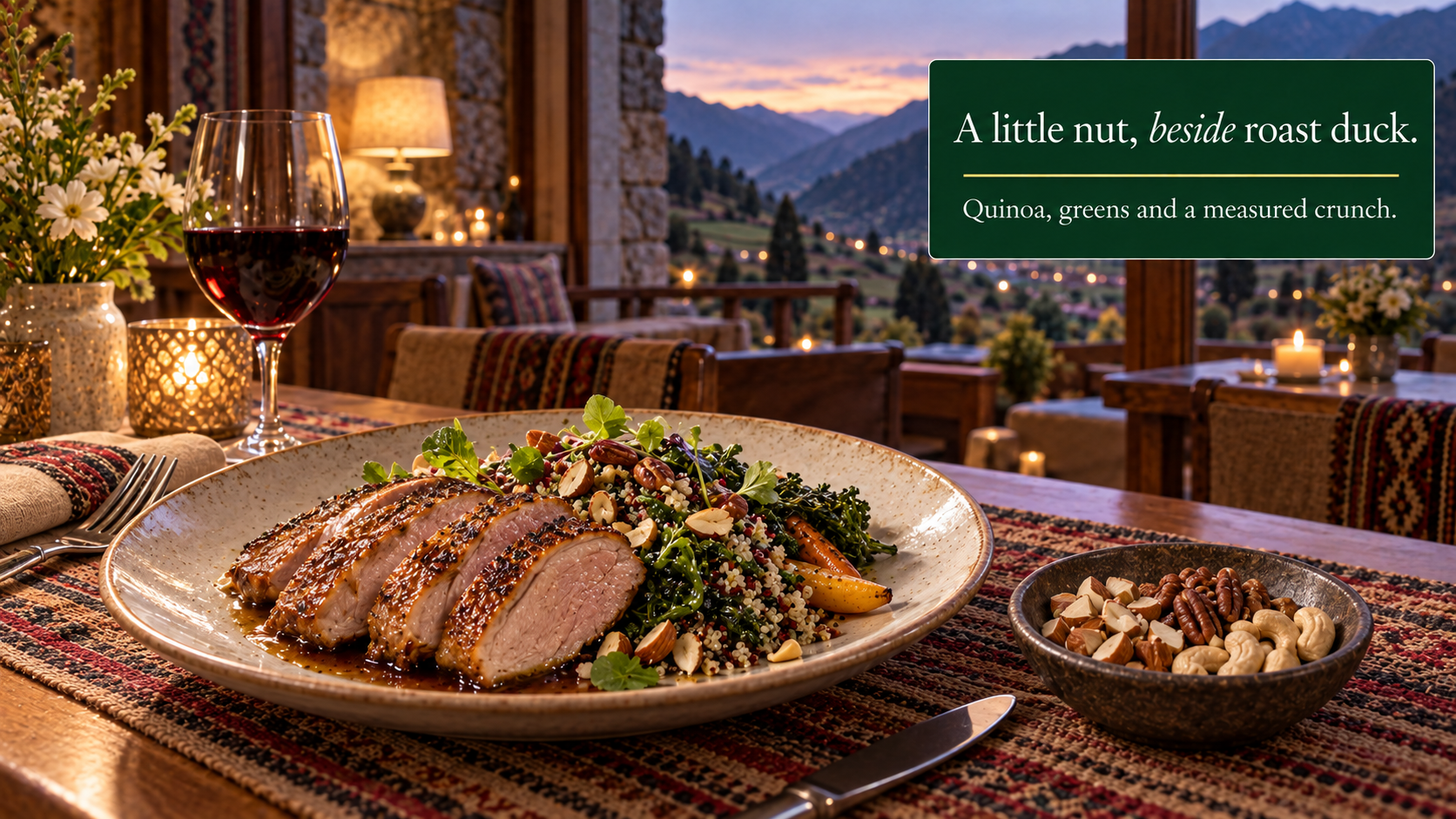
Build the duck plate first
Cook the duck safely and let it rest before slicing. Put warm quinoa and tender greens beside it, with herbs and a small bright dressing. Only then add a modest scatter of chopped food-ready nuts. The pieces should catch in the greens and grain rather than form a crust over the meat. Keeping them in a small visible area also makes the ingredient easier to identify at the table. A forkful of duck, a few quinoa grains, and one small nut piece is enough to test whether the contrast works.
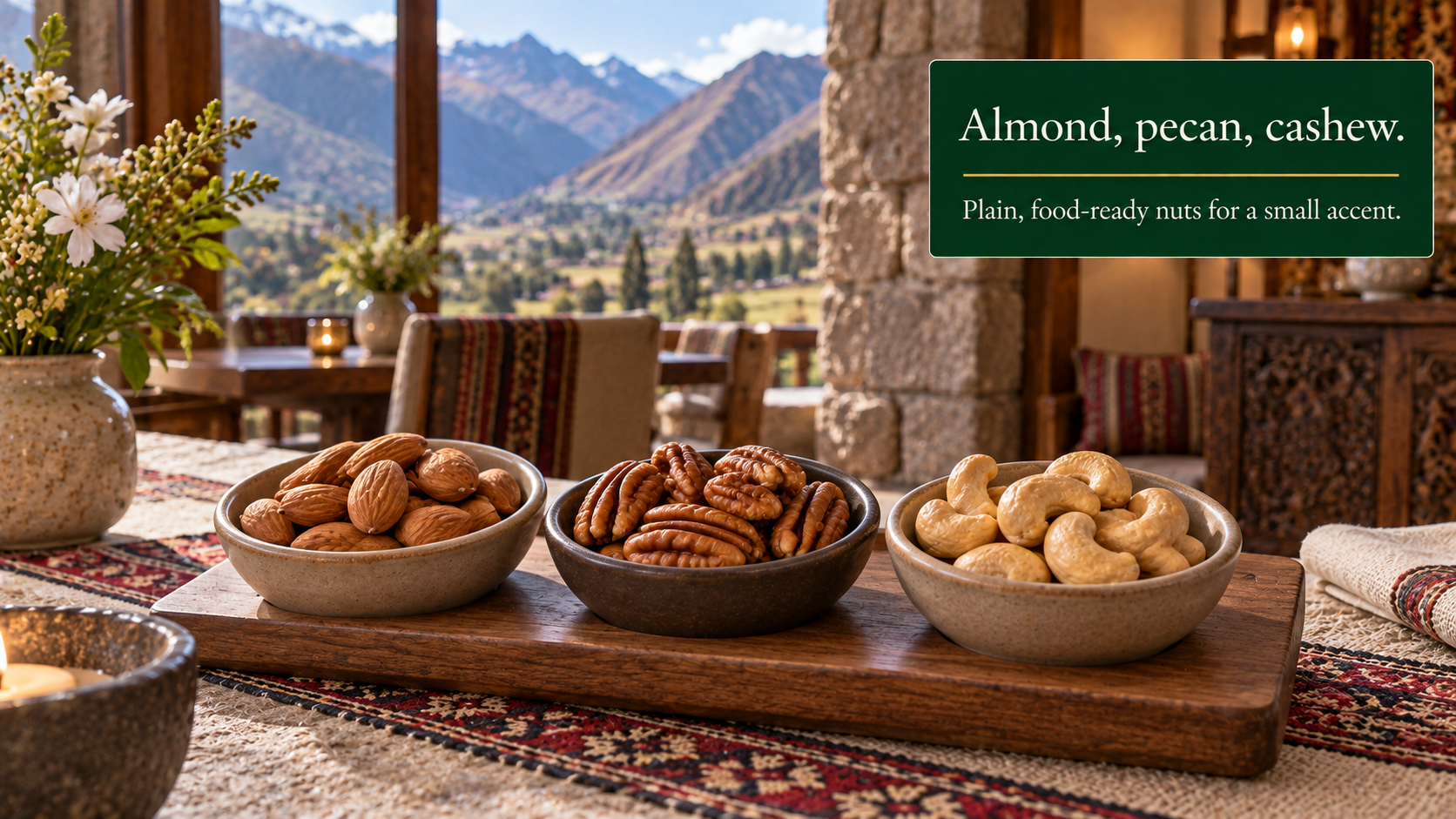
Choose one nut at a time for a clear flavor. Almond pieces hold a firm crunch; pecan pieces are softer and more aromatic; cashews feel rounder and creamier. The choice is culinary, not a claim that one is superior for health. Taste the actual package first. A sweet coating, heavy salt, or stale flavor will overtake the herb-and-duck balance.
Cut the nuts into pieces large enough to recognize but small enough to meet a forkful rather than demand a separate bite. Add them after any warm juices or dressing have touched the quinoa. If the duck has crisp skin, leave a little open space around each slice so the grain does not soften it. Plain roasted nuts may be used straight from a food-ready package; an additional dry toast is only a flavor choice. The finished plate should still taste first of duck, herbs, and quinoa.
Make a vegetarian plate with the same finish
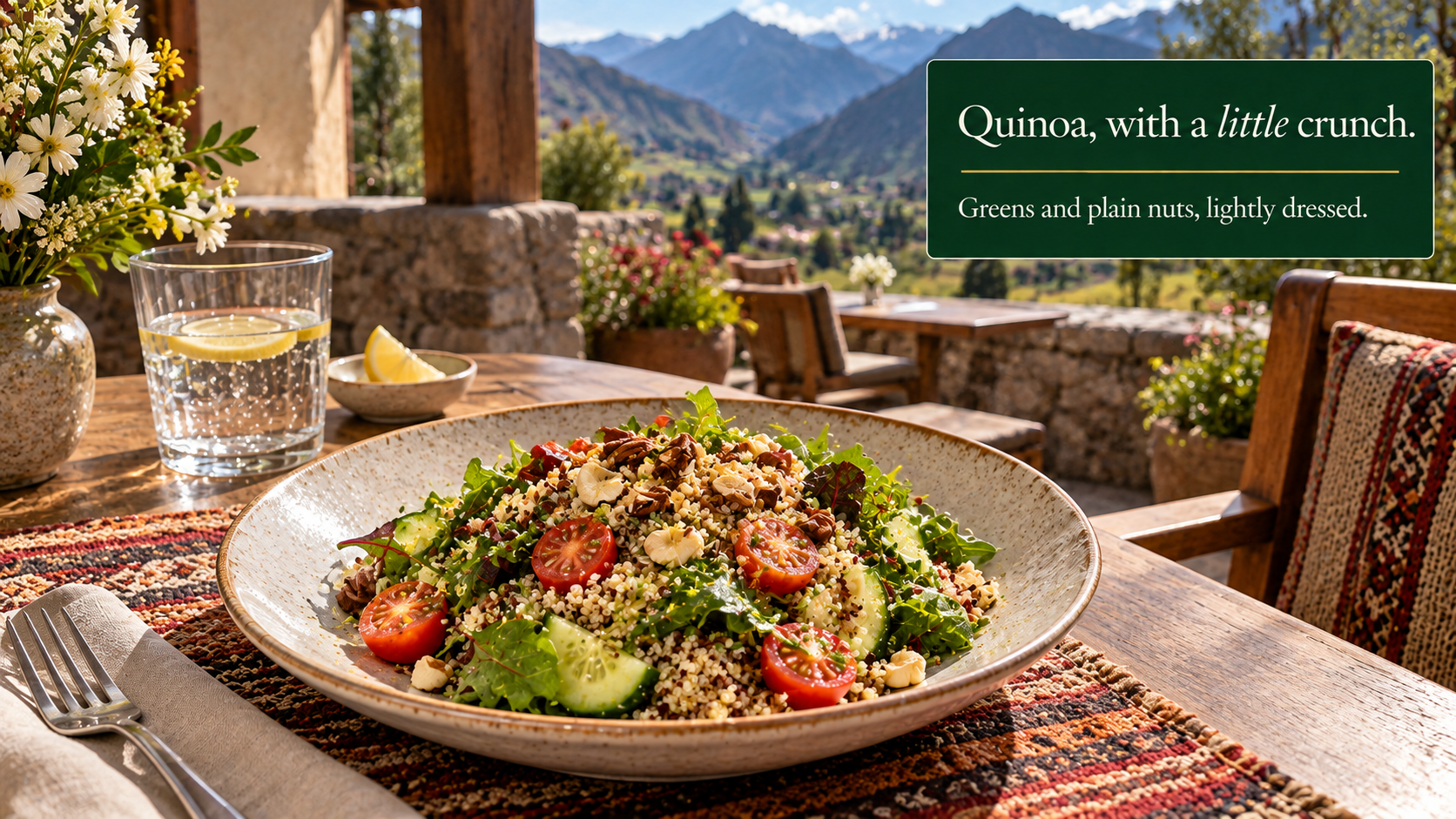
For a meat-free version, start with cooked quinoa, a larger mound of greens, herbs, and a small amount of the same food-ready nut pieces. Tender vegetables or beans can give the dish more substance. Dress just before eating so the nuts stay distinct from the moist grain. A citrus note and finely cut herbs do more for the plate than a sugary glaze. Put the nuts in a separate small bowl during assembly, then add them only after confirming the intended diner can eat that exact nut.
Nuts can contribute to a vegetarian meal, but a garnish alone is not a complete plan for every diner's needs. Let the rest of the plate supply enough food, and describe the ingredients plainly. If a guest wants no tree nuts, make a separate dish with ingredients they can safely eat; lifting visible nuts from a finished salad does not undo contact.
Buy a ready-to-eat kernel, especially for cashews
Use shelled nuts sold as food, and read the package for the exact type, added salt or sugar, and allergen information. This is especially important for cashews: the shell of an unprocessed cashew contains caustic oil. A fresh cashew still in its shell is not a kitchen garnish. Buy food-ready processed kernels from a reliable supplier rather than experimenting with home shelling or an unknown harvest.
Store the nuts closed and protected from heat, moisture, and strong odors. If a package smells rancid, tastes off, shows mold, or has damaged contents, replace it. A briefly dry-toasted food-ready nut can add aroma, but toasting is optional and should never be treated as a repair for spoiled stock. Avoid frying or oil-heavy coatings; the plate already has richness from duck.
Make the allergy question visible
Almonds, pecans, and cashews are tree nuts for U.S. allergen-label purposes. Name the exact nut in any description, and ask about allergies before preparation. Use clean utensils and work surfaces to prevent cross-contact. When there is a serious allergy or uncertainty about the kitchen's controls, the right choice may be a different meal prepared under appropriate conditions, not a nut garnish removed at the last moment.
Serve the quinoa while it is pleasantly warm, then finish with herbs and the measured nut pieces just before the plates go out. At the table, offer a little citrus separately: it can brighten duck without soaking the nuts, and a vegetarian diner can use the same choice on greens. Leftover nut pieces should go back into a clean, closed container, not into the bowl that held dressed salad. The useful rule is simple: a small amount of a known, food-ready nut adds texture when it is added at the right moment and clearly named to the diner.
The images illustrate serving ideas, rather than a named restaurant menu, a current harvest or an included retreat meal. These are preparation guides, not tested recipes.
A little more time in the Sacred Valley
A Machu Picchu journey can leave space for more than the train and the citadel: a meal, a quieter morning and a conversation that has time to develop. Ask Florian about The SoulSearching Experience, his five-day Sacred Valley seminar for 8-15 participants. Discuss dates, venue and meal arrangements directly.
Questions readers ask
How can nuts join a savory dinner without taking over?
Chop food-ready almonds, pecans, or cashews into small pieces and use only a modest scatter over duck, quinoa, and greens. The nut remains visible for ingredient clarity but should not dominate the bite. Choose plain, unsalted pieces when possible and let herbs provide the seasoning. Omit the garnish for anyone who cannot safely eat tree nuts.
Can the nuts stay savory without a glaze?
Yes. Plain food-ready nuts bring their own texture. Brief dry toasting is optional for aroma, then chop and add them after the quinoa and greens are dressed. No sugar coating or oil bath is needed. Pecan gives a softer crumble, almond a firmer bite, and cashew a rounder one; taste the package before choosing.
Do nuts work in a quinoa-and-greens salad?
Yes, when the diner can safely eat the selected tree nut. A small amount of food-ready chopped nut gives a crisp finish to cooked quinoa and washed greens. Add it near service rather than soaking it in dressing. Name the specific nut and keep a separate nut-free preparation if needed; removing pieces from an assembled salad does not undo contact.
Which texture works best on tender greens?
Match the cut to the leaf. Small almond slivers give a firm accent, finely broken pecans a gentler crumble, and cashew pieces a softer bite. Begin with a little and taste the combination before adding more. This is a culinary choice, not a claim that any one nut is required or nutritionally superior.
Should the nut pieces be chopped before dry toasting?
Either order can work, but whole or larger food-ready pieces are easier to watch and can be chopped afterward for an even-looking finish. Tiny chopped pieces brown quickly. Dry toast only if wanted, watch closely, and move them off the hot pan when fragrant. This is optional; packaged plain roasted pieces also suit the duck plate.
Can a small amount of almonds be toasted without frying?
Yes. Food-ready chopped almonds can be warmed in a dry pan while stirring, then moved to a cool plate before they scorch. No added oil is required. Use only a small amount for the quinoa and greens. This step adds aroma, but packaged plain roasted almonds can be used directly if their flavor and freshness are sound.
When should toasted nuts be added to duck and quinoa?
Add them near serving for their most distinct aroma and crunch. Store any unused food-ready nuts sealed and protected from heat and odors, and taste again before using them later. They need not be toasted at the last second, but dressing and steam will gradually soften their bite on a prepared plate.
Can the pecans be prepared ahead of the meal?
Yes. Dry-toast food-ready pecans if desired, cool them, and store them sealed until serving. Chop or crumble them so a small amount distributes across the greens. Add them after the duck and quinoa are ready. Check aroma and texture before use; advance preparation does not excuse a rancid or damp batch.
What if the available cashews are salted?
Taste them before adding any to the meal. Salted cashews can overwhelm a lightly seasoned quinoa plate, so a small amount may be enough and the rest of the dish may need less salt. Plain unsalted food-ready kernels are the easier starting point. Avoid washing salted nuts as a storage shortcut, which changes their texture.
Can pecans move beyond sweet recipes?
Yes. Their soft crumble suits roast duck, greens, and warm quinoa without any sugar glaze. Use food-ready shelled pecans, break them into modest pieces, and add near serving. Keep the base dish flavorful on its own so the nuts are a distinct accent. Store the remainder sealed and check its smell before the next use.
Could lightly toasted pecans go in a side salad instead of roasted potatoes?
Yes. Lightly toasted pecans can be served in a side salad, where their flavor is easier to judge than in the roasting pan. For this duck meal, use a small amount on greens or a quinoa-and-greens side. Keep the dressing light and add the pecans near serving so they stay distinct.
How can quinoa support a vegetarian nut plate?
Fold herbs and tender vegetables into cooked quinoa, then add washed greens and a small amount of food-ready nut pieces at serving. Beans or another suitable food can add substance if the diner wants a fuller meal. Dress lightly so the nut texture remains distinct. Name the specific nut for anyone managing allergies.
How should food-ready cashews be checked before plating?
Inspect the package and contents, then smell and taste only a sound-looking kernel. Discard cashews with mold, obvious damage, or a rancid off flavor. Store food-ready nuts closed and protected from heat and moisture. Roasting or seasoning cannot restore spoiled stock, and an unknown fresh cashew in its shell is not a substitute.
Should cashews with an unusual odor go on the salad?
No. An unexpected fishy or rancid odor is a reason to reject that package rather than conceal it with herbs or citrus. Nuts contain oils that can lose quality during storage. Use a fresh, food-ready replacement and keep the package sealed in suitable conditions. Do not let the garnish undermine an otherwise carefully prepared meal.
Can extra nuts be frozen for later savory dishes?
Food-ready shelled nuts can be kept in a tightly sealed freezer container to protect flavor, then taken out in the amount needed. Mark the package and follow its storage instructions. Assess quality after thawing rather than promising a fixed life for every nut and package. Keep the duck-and-quinoa garnish dry until serving.
Is the thin brown skin on a sold cashew the same as its hard shell?
No. The thin brown skin, called the testa, sits on the kernel after the hard outer shell is removed. Some processed cashews are sold with that skin still attached. The hard shell is different: it contains a caustic oil, and University of Florida IFAS warns against home shelling. For this plate, buy food-ready processed kernels and follow their label.
Does roasting change nuts nutritionally, and which type suits this meal?
Roasting can change texture, flavor, and some chemical constituents; the effect depends on the nut and the roasting conditions, so no single nutrition verdict fits all nuts. For this meal, choose food-ready kernels by taste and ingredient label rather than a health promise. Plain roasted almonds add a firmer crunch; unroasted food-ready almonds or pecans can also work. Cashews still require proper processing from the shell.
How much nut garnish should sit on the greens?
Start with a small sprinkle that leaves the duck, quinoa, and greens as the main ingredients. Taste and adjust rather than covering the leaves. USDA MyPlate counts nuts within its protein-food group, but that framework does not require a particular garnish amount on this plate. Ask first about tree-nut allergies and identify the nut used.
What should a diner with a tree-nut allergy ask before ordering?
Tell the kitchen the exact allergy before ordering and ask whether it can identify ingredients and control cross-contact for that meal. Almond, pecan, and cashew are tree nuts under U.S. labeling guidance. Do not rely on removing visible pieces from a finished plate. If the kitchen cannot answer clearly or provide safe preparation, choose another option.
How can a nut-free savory plate gain some roasted depth?
A nut-free plate need not imitate a particular nut. Well-cooked quinoa, herbs, and roasted vegetables can bring savory depth, though the flavor will differ from pecans or cashews. Check every proposed replacement against the diner's specific allergies and the kitchen's cross-contact controls. Do not assume sesame, sunflower seeds, or another nut is safe merely because someone online suggested it.