A berry dressing works best when a spoonful changes a bite of dinner without covering the entire plate. Mulberry and blackberry can both serve that purpose, but their names and flavors should remain distinct. Here the proposed meal is roast duck with quinoa and vegetables, with a small unsweetened berry accompaniment that the guest can add gradually.
A Small Mulberry or Blackberry Dressing for Duck and Quinoa
Use identified edible mulberries or blackberries, mash a small amount and strain if desired. Taste before adding citrus, then serve a little dressing beside duck and quinoa.
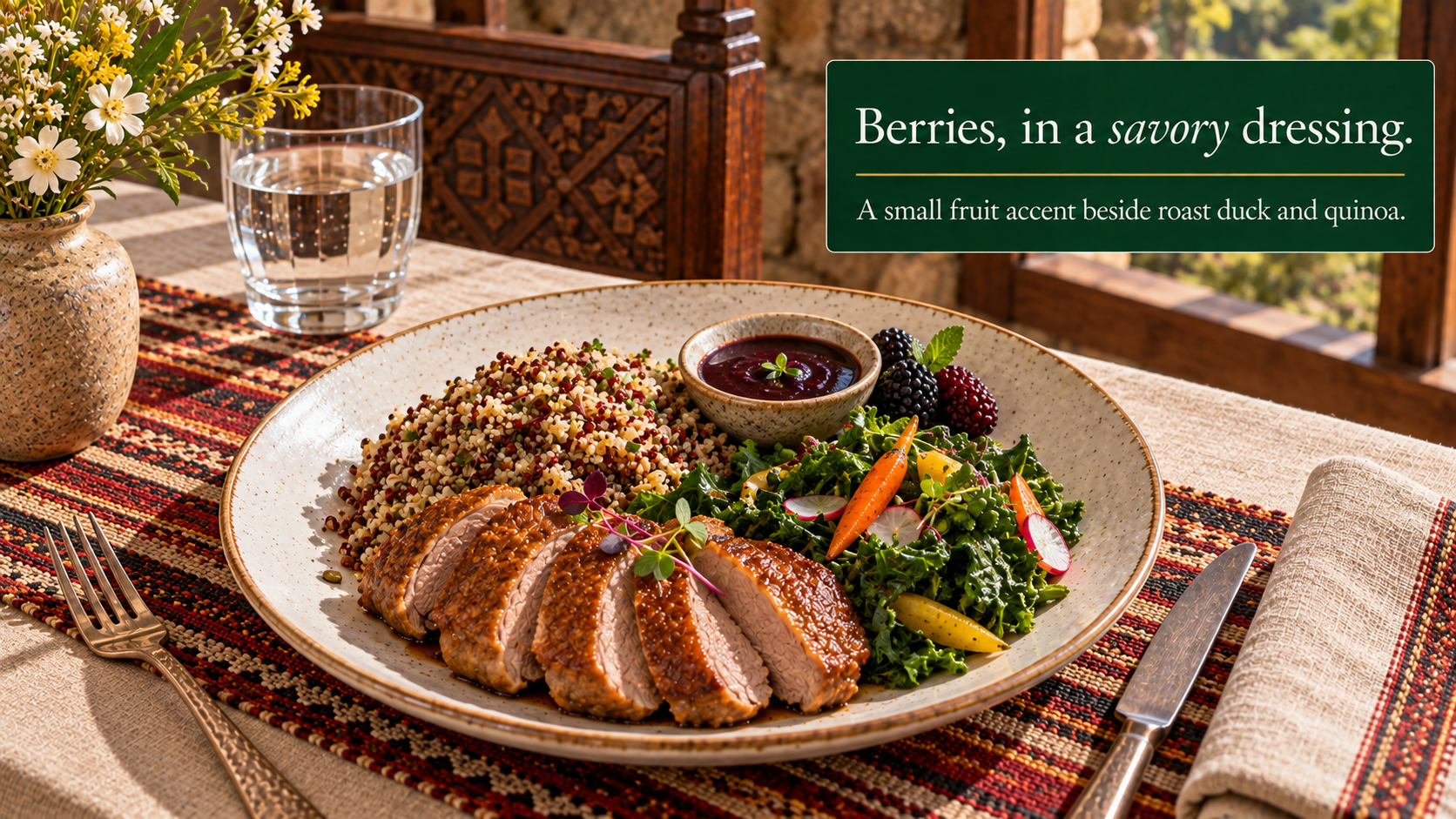
Begin with the actual berry
Mulberries belong to Morus; blackberries belong to Rubus. They can both look dark and clustered when ripe, yet they are different fruits. A supplier should identify the edible food product before it reaches the kitchen. Do not treat an internet picture as permission to collect or eat an unfamiliar berry. A dark stain on a napkin says little about its identity.
The name Chinese mulberry can also refer to che, Maclura tricuspidata, rather than a Morus mulberry. That distinction matters when the planting record is only a common name. Ask for a confirmed botanical identification or a reliable food-supplier label. This guide concerns ordinary edible mulberry or blackberry food fruit. It does not extend the same preparation to every plant called mulberry.
Kew: Maclura tricuspidata search and taxonomy · NParks: Morus alba edible fruits · Kew: Cudrania triloba synonym of Maclura tricuspidata
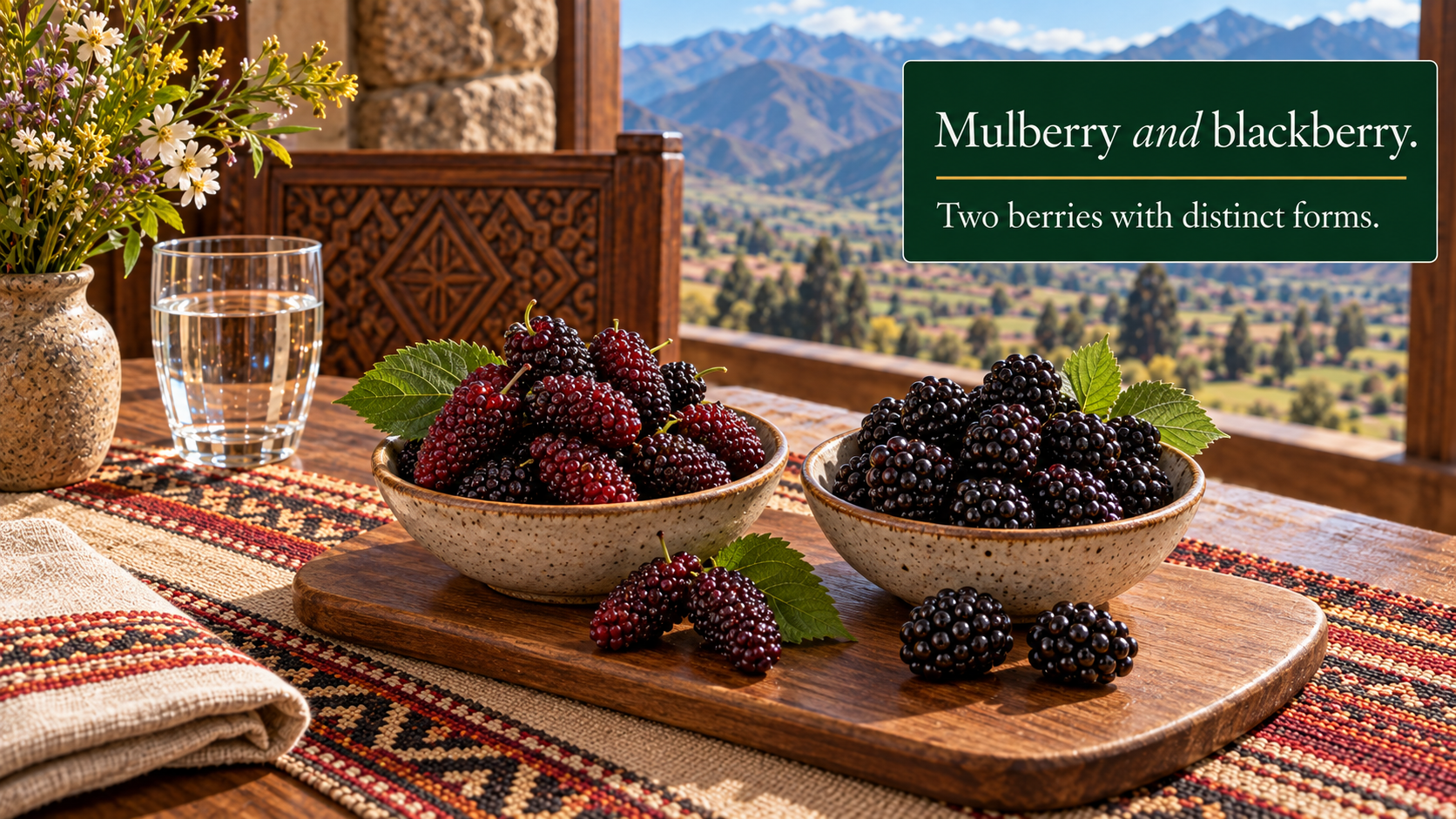
Taste before deciding whether the fruit needs citrus
Blackberries can bring noticeable acidity, while ripe mulberries may seem gentler and sweeter. Individual fruit varies, so begin with a few berries on their own. If the berry is already sharp, citrus may be unnecessary. If it is mild, a little lemon can sharpen the dressing without changing it into a lemon sauce colored with berries.
Use sound ripe berries with a pleasant aroma. Poor fruit will not become attractive simply by being mashed and strained. A tiny trial is useful: crush a spoonful, add a pinch of salt and taste it with a little cooked quinoa. That bite reveals the likely balance better than tasting a concentrated dressing alone from a spoon.
Make a dressing rather than a preserve
Mash a small quantity of berries with a fork. Add only enough water to make the pulp spoonable. For a smoother dressing, press it through a fine sieve and discard the retained solids. Keep the juice and pulp lightly seasoned. There is no need to cook it down to a thick coating or add a sweetener.
A briefly warmed version is possible when fresh pulp feels too cool beside the meal. Warm gently in a small pan and stop before prolonged reduction changes the balance. Taste again after warming because the perception of tartness may change. The practical test is whether a little dressing improves a bite of duck and grain, not whether it can stand upright as a glossy sauce.
Decide whether the seeds belong in this serving
Whole mashed berries keep more texture and make the ingredient easy to recognize. Straining gives a smoother result for guests who find blackberry seeds distracting. These are different preparations, and neither needs to be disguised. Offer a few intact berries alongside the dressing if the fruit is attractive and the guest wants to see what it looks like.
Do not strain automatically and then add an unrelated crunchy topping. The plate already includes quinoa and vegetables. Extra texture should have a purpose. With a particularly soft mulberry, leaving a small amount of pulp can retain its character better than an extremely fine liquid. Adjust to the actual fruit and the intended diner rather than a universal rule.
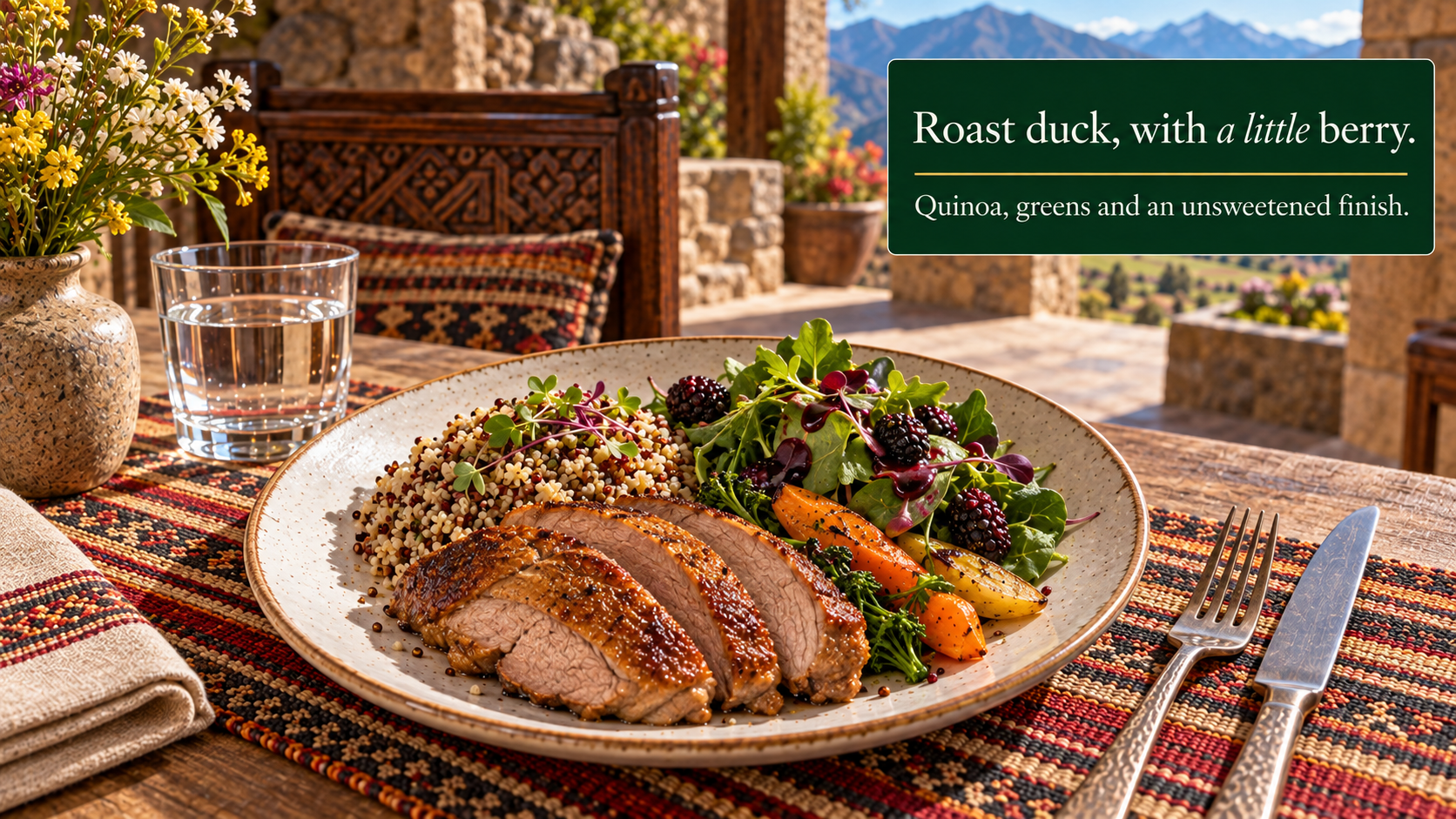
Place the dressing beside roast duck and quinoa
Serve carved roast duck with loose cooked quinoa and a tender vegetable accompaniment. Put the berry dressing in a small dish or spoon it beside the meat. Keep part of the duck uncoated so a guest can compare bites. A dark berry sauce spread across the whole plate makes that simple choice impossible.
Begin with a modest spoonful per plate. This is an editorial serving suggestion, not a dietary limit. If the dressing is distinctly tart, reduce the first portion further. The grain should be able to collect a little fruit and meat juice without becoming purple throughout. Greens or steamed vegetables can remain plainly seasoned, providing a pause between the stronger bites.
Keep the finishing choices restrained
A little chopped parsley can connect the quinoa and duck. If using sacha inchi oil, keep it to a tiny cold finish after cooking and assess its flavor separately before adding it. The berries do not need a large oil component to be useful. Too much can turn a bright accompaniment into a heavy dressing.
Avoid adding several other fruits to correct the berries. A dressing that needs mango, citrus and dried fruit to taste acceptable may be better replaced by a smaller portion of good berries. Adjust the plate around the ingredient available that day. Plain duck with quinoa and vegetables is preferable to a complicated fruit mixture assembled to fulfill an attractive menu description.
Choose the dressing by flavor, not darkness
A darker dressing is not necessarily a stronger or better one. Taste a little with duck and quinoa, then decide whether the fruit should remain pulpy, become smooth or be served whole in a few separate pieces. A very mild mulberry may be enjoyable with almost no extra seasoning. A sharper blackberry can work in a smaller amount. The name on the menu should follow the actual berry used.
For someone who dislikes seeds, request a strained serving before the plate is assembled. For someone who enjoys fruit but prefers meat plain, a small side dish preserves both choices. Ask whether the kitchen is using fresh fruit, plain frozen fruit or a prepared sauce. Each can be described clearly, and the guest can decide from the ingredients and texture rather than from an unexplained forest-fruit label.
The images are editorial illustrations of ingredients and serving ideas. They do not document a named restaurant, a current harvest or an included retreat meal. Preparation guidance is not a tested recipe.
Leave room for the Sacred Valley
A visit to Machu Picchu can leave time for a good meal and a quieter stay in the valley. Ask Florian about The SoulSearching Experience, his five-day Sacred Valley seminar for 8-15 participants. Discuss dates, venue and meal arrangements directly.
Questions readers ask
Are mulberry and blackberry the same fruit?
No. Mulberry is a Morus fruit and blackberry a Rubus fruit. Use the actual food ingredient name rather than calling either one simply black berry.
What does mulberry mean in this dressing?
It means an identified edible Morus food fruit. Chinese mulberry can also name che, so a vague common name alone is insufficient for a property identification.
Will mulberry taste exactly like blackberry?
No. Taste the actual fruit. A mild ripe mulberry may need less dilution or a different citrus adjustment than a sharp blackberry.
Is a dark berry photograph enough to authorize eating it?
No. Confirm the plant or use a reliable food-supplier product. This dressing does not provide identification permission for an unknown garden berry.
How can a small unsweetened blackberry dressing be made?
Mash sound berries, loosen with a little water and season lightly. Strain if a smoother texture suits the guest; serve a little beside the meal.
How can mild mulberry flavor remain noticeable beside blackberry?
Taste separately and use one berry for the first trial, or keep blackberry especially restrained in a blend. A dominant blackberry can conceal a milder mulberry.
How can a berry accompaniment remain savory?
Use a small unsweetened portion, season gently and taste with duck and quinoa. Fruit does not need to become a sticky glaze to accompany meat.
Should the berries be tasted before the dressing is made?
Yes. That reveals whether the problem is the fruit itself or the preparation. Unpleasant fruit should not be hidden in a stronger sauce.
Should the berries be ground hard before straining?
No need. Gentle mashing and pressing recover pulp without deliberately pulverizing seeds. Taste the resulting dressing before using it.
Can blackberry seeds remain in this dressing?
They can remain when the guest enjoys the texture. Strain for a smoother serving and describe that choice plainly.
How can tartness be reduced without sweetening the dressing?
Use less dressing and loosen a concentrated pulp with a little water. This is a general berry-sauce balance question, not a claim that the berries taste identical.
Where should the berry dressing sit on the duck plate?
Serve it beside the meat or in a small dish. Leave some duck uncoated so guests can compare the fruit pairing with a plain savory bite.
Does the quinoa need rinsing?
Use the quinoa package to decide whether it needs rinsing. Check the cooked grain on its own before adding berry dressing; that makes it easier to judge a mild mulberry or a sharper blackberry without another strong flavor underneath.
How can the tiny quinoa seeds be rinsed without losing them?
Rinse the quinoa through a fine-mesh strainer. A sieve used later for the berry pulp has a different job: removing unwanted seed texture. Prepare the grain and the selected edible berry separately before combining a small amount at the table.
How can the quinoa stay separate on this plate?
Let the cooked quinoa settle and fluff it gently, then keep the berry dressing in a small side dish. A guest can color one forkful without turning the whole grain portion into a wet purple mixture.
Can the cooked quinoa be kept for another meal?
Refrigerate the cooked quinoa promptly in a shallow covered container, with berry dressing stored separately under suitable handling. At another meal, adjust a small spoonful of dressing against plain grain instead of assuming the previously mixed plate has the same balance.
Oregon State University Food Hero: Stovetop Quinoa · University of Minnesota Extension: Safe Food Temperatures, Heating and Cooling
Can quinoa be prepared and frozen separately?
Freeze the properly handled quinoa without berry dressing mixed through it. When serving later, choose whole fruit, pulpy dressing or a smoother strained version from the actual berries available. That texture decision belongs to the fresh assembly of the plate.
How should this quinoa be seasoned?
Start with mild seasoning and a little parsley, then taste the chosen berry with quinoa and duck. A sharp blackberry may need no lemon; a gentler mulberry can be assessed separately. If using sacha inchi oil, keep it a small cold finish.
Does quinoa have to become a cold salad?
The grain can stay warm beside roast duck and vegetables. Offer the mulberry or blackberry dressing separately, either fresh or briefly warmed as proposed in the guide. Keep a portion of both meat and grain uncoated for comparison.
Can fresh fruit sit beside warm grain?
Fresh berry pulp can accompany warm quinoa in a small separate bowl. If whole berries are offered too, add them near service. The guest can choose pulp or intact fruit without having both stirred through the hot grain.