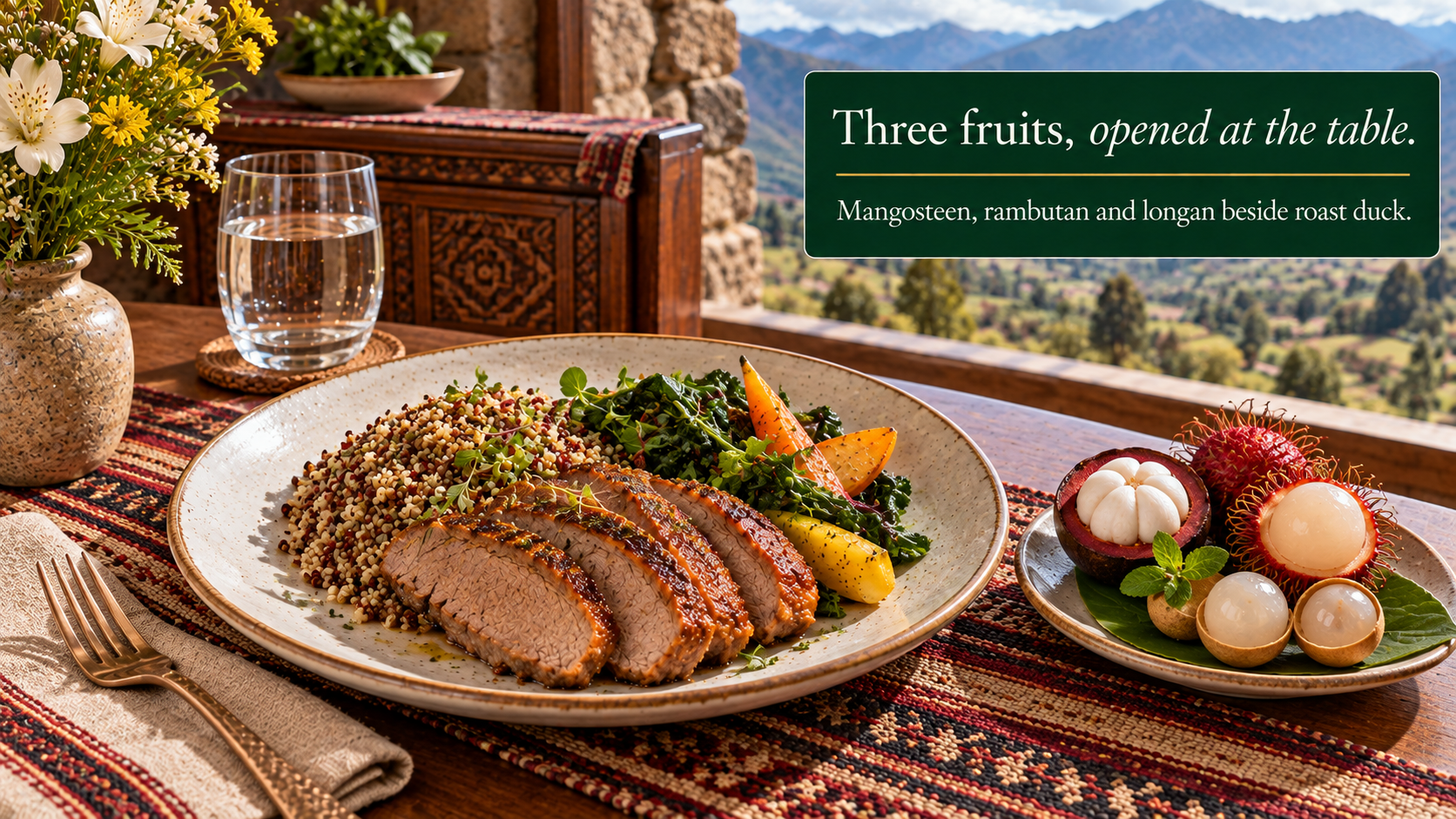
Mangosteen, rambutan and longan can all reveal pale edible flesh when opened, yet they are three distinct fruits. Their shells, internal arrangement and seeds differ. A visitor should see each one clearly before choosing a serving. Three separate fruit studies are more informative than a mixed bowl that makes unfamiliar ingredients impossible to identify.
Mangosteen, Rambutan and Longan: Three Separate Fruit Studies
Open and serve each fruit separately: white mangosteen segments, rambutan flesh around a removed seed, and longan flesh freed from its thin shell and dark seed.
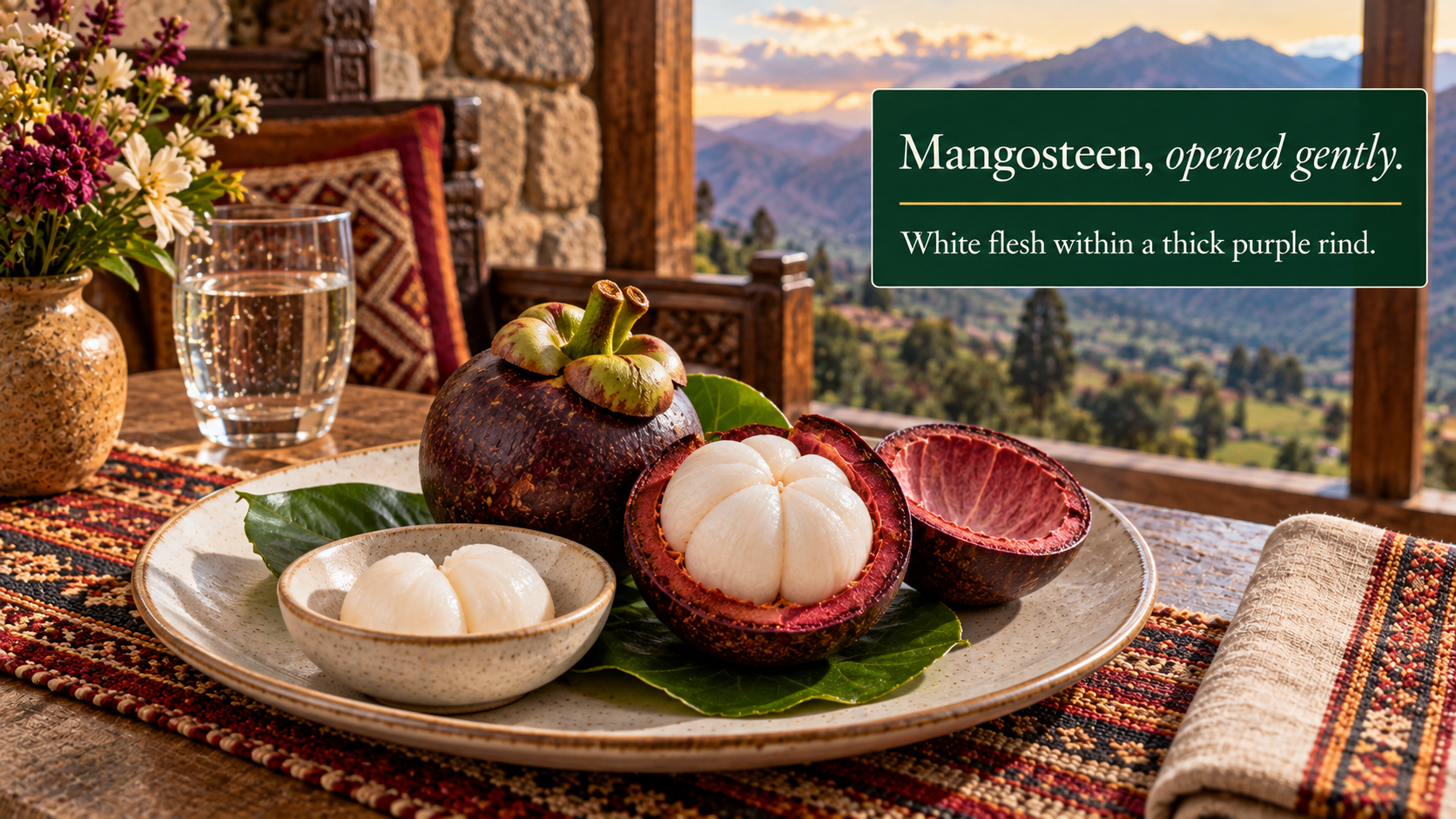
Mangosteen: a thick purple rind and white segments
Mangosteen, Garcinia mangostana, has a thick outer rind surrounding soft white segments. NParks describes the flesh as juicy and sweet with some acidity. For service, open a sound fruit carefully and lift out the edible segments without carrying pieces of rind onto the dish. Avoid squeezing so hard that rind juice stains the flesh.
Check the segments for seeds, particularly the larger ones, and remove them from a prepared tasting portion. The purple rind is not included in this fresh serving. Do not confuse a discussion of rind extracts or traditional use with an instruction to eat it. The plain white flesh is the food form introduced here.
Rambutan: a hairy-looking shell around one flesh-covered seed
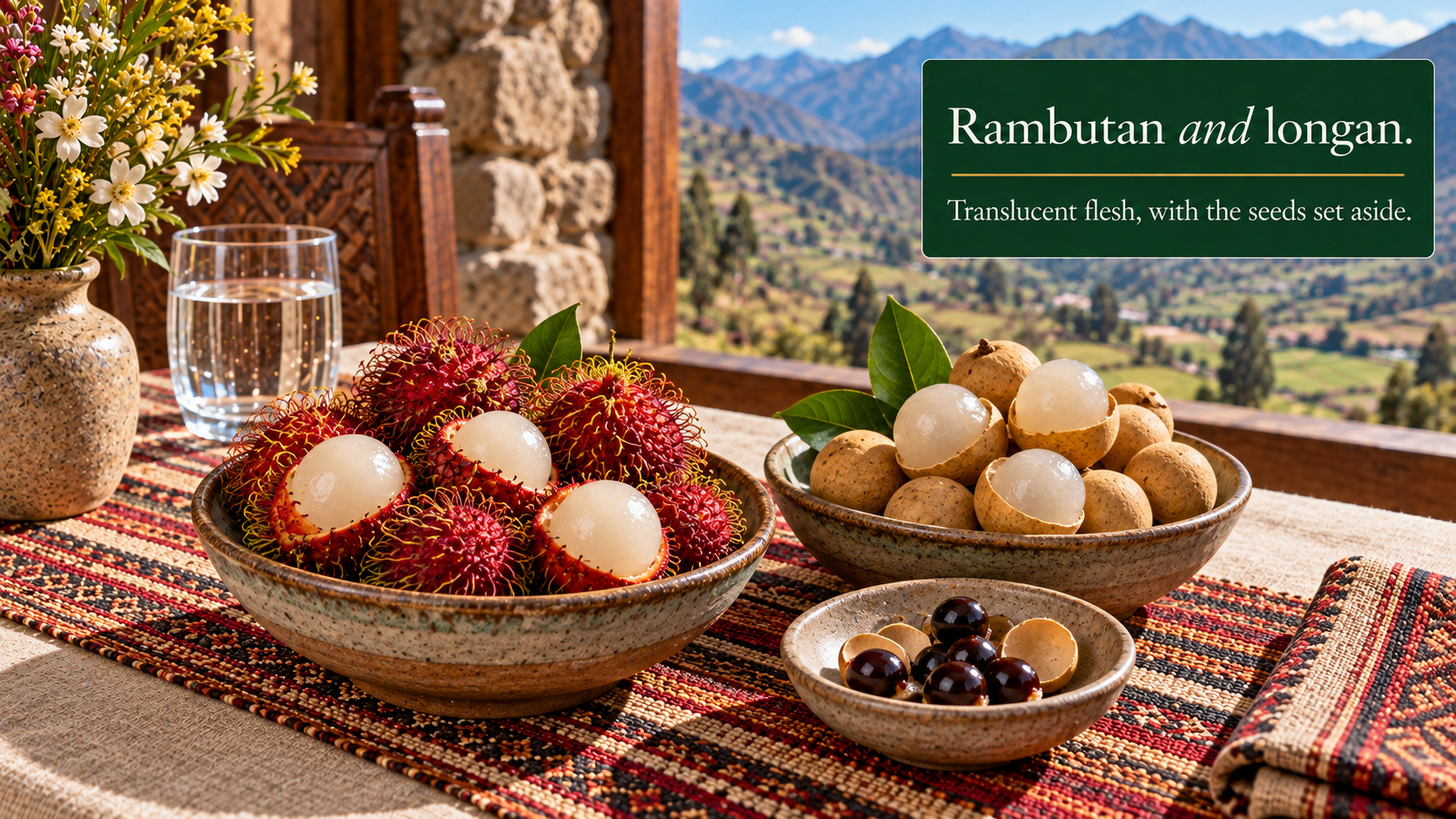
Rambutan, Nephelium lappaceum, has an outer rind covered with soft hairlike projections. Inside is a pale edible aril around a large seed. University of Hawaii postharvest guidance describes that structure. The outside can be striking, but the visitor eats the flesh, not the hairy rind.
Open the rind shallowly and lift away the shell. Separate the flesh from the seed carefully; some fruit clings more closely than others. For prepared service, remove the seed before presenting the flesh and check for pieces of seed coat. A cut opened example beside the serving can explain the structure without leaving hidden seeds in the guest's bowl.
Longan: a thin tan shell and a dark central seed
Longan, Dimocarpus longan, is usually smaller and less visually dramatic than rambutan. Its thin tan shell surrounds pale translucent flesh and a dark seed. The University of California Davis identifies that pale aril as the edible portion. Peel away the shell and separate the flesh from the seed for a simple fresh serving.
Keep a whole fruit and an opened sample beside the prepared flesh when explaining it. The contrast between the pale aril and dark seed is easy to recognize. Do not call it a small rambutan merely because the edible part looks similar. A clear name gives the visitor something useful to remember and makes later ingredient questions easier to answer.
Show three distinct portions, not an invented mixed fruit
Use separate small dishes or clearly separate areas of a fruit-study plate. Label them with their ordinary food names. Each study can include the whole fruit, a safely opened example and a small portion of edible flesh. Seeds and rind should sit apart from the eating portion so their exclusion is obvious.
For a guest tasting, it is easier to introduce one fruit at a time. Start with a small amount and allow a pause before moving to another. There is no need to claim that all three arrive in season together or are supplied by the same property. A comparison can remain useful even when the kitchen has only one of them available.
Describe flavor as an invitation to taste
Mangosteen often offers a soft, delicate sweet-tart bite. Rambutan and longan can be sweet and juicy, with a different firmness and aroma. Individual fruit varies, so these descriptions are starting points rather than promises. Let the guest taste a plain piece before adding any other ingredient.
Keep the first serving unsweetened and unadorned. Mixing the flesh into a strongly flavored dressing would make the comparison less informative. If a fruit tastes unpleasantly fermented, damaged or otherwise unsound, leave it out rather than treating a strong flavor as proof of authenticity. Exotic appearance does not require a visitor to accept poor quality.
Choose prepared service when opening would be awkward
A hotel kitchen can remove shells and seeds before bringing out a modest portion. Guests who want to understand the process can see an opened example without handling knives. Provide a small dish for any remaining shell or seed and explain what is edible. This is especially helpful when the fruit is unfamiliar and its smooth flesh hides a large central seed.
Keep the work surface and utensils clean, and handle the edible flesh separately from raw meat preparation. Follow the supplier's storage directions for packaged or frozen fruit. A fresh fruit study and a canned product in syrup are not the same offering, so name the actual product rather than using a generic tropical-fruit description.
Plan a tasting around what is actually available
Ask the host which of these fruits can be served in sound condition, then choose one or a small comparison. All three need not appear together. A well-prepared mangosteen portion alone can make a pleasant introduction, just as a few peeled longans can. Clear names and removed seeds matter more than the number of bowls on the table.
If comparing them, taste the plain flesh in separate portions and pause between fruits. Notice whether you prefer delicate segments, a firmer aril or a different aroma. Keep a small dish for excluded parts and ask about anything unfamiliar before eating it. Guests who prefer prepared fruit can have shells and seeds removed in the kitchen. Those interested in the structure can see a separate opened example without handling knives during the meal.
The images are editorial illustrations of ingredients and serving ideas. They do not document a named restaurant, a current harvest or an included retreat meal. Preparation guidance is not a tested recipe.
Leave room for the Sacred Valley
A visit to Machu Picchu can leave time for a good meal and a quieter stay in the valley. Ask Florian about The SoulSearching Experience, his five-day Sacred Valley seminar for 8-15 participants. Discuss dates, venue and meal arrangements directly.
Questions readers ask
Is mangosteen the strongly aromatic durian?
No. Mangosteen and durian are different fruits. Mangosteen has white segmented flesh inside a thick purple rind.
What does plain mangosteen flesh taste like?
It can be delicately sweet and juicy with a little tartness. Taste plain segments first; the actual fruit may differ from another person's description.
How should mangosteen be opened for a tasting?
Open the thick rind carefully and lift out the white segments. Keep rind fragments and staining juice out of the edible portion.
Should a rock-hard deteriorated mangosteen be forced open for service?
Ask an experienced supplier to assess the fruit and choose sound stock. A guest should not hammer a difficult shell open at the table.
How should the kitchen select mangosteen for fresh eating?
Use a reliable supplier and inspect an opened sample. Pale sound flesh matters more than assuming every purple shell contains good fruit.
Should a large opened mangosteen display wait through the meal?
Prepare small quantities close to service and store the remainder appropriately. A cut display is less useful than a fresh portion replenished when needed.
Does mangosteen need cooking for this study?
No. The introduction is plain fresh white flesh, with seeds removed from prepared portions. Keep the rind out of the serving.
What should be done with rambutan seed coat stuck to flesh?
For prepared service remove the seed and any distracting woody fragments carefully. Do not hide them in a smooth-looking portion or promise safety from a photograph.
Does every rambutan release its seed equally easily?
No. Ask the supplier about the actual food fruit. For a guest tasting, choose portions that can be prepared cleanly rather than assuming every fruit separates identically.
What part of rambutan is peeled away?
The outer hairy-looking rind is removed to reveal the pale flesh. Keep that rind and the central seed out of this fresh serving.
Is rambutan the same fruit as mangosteen?
No. Rambutan has a hairy-looking rind around one flesh-covered seed; mangosteen has white segments inside a thick purple rind.
How do rambutan and longan compare in a plain tasting?
Both offer pale edible flesh around a seed, but their texture and aroma differ. Try separately rather than assuming a preference for one predicts the other.
What can longan contribute to a fresh fruit tasting?
Its pale aril can be sweet with its own aroma. Serve a little plain so the guest can decide how they describe it.
Should an unpleasant longan be accepted as an authentic unusual flavor?
No. Have the actual fruit assessed and use sound product. An unfamiliar fruit name is not a reason to serve a questionable sample.
What should be removed from a longan serving?
Remove the thin tan shell and the dark central seed, leaving the pale edible flesh. Show an opened example separately if useful.
Is frozen longan the same presentation as freshly opened fruit?
It is another food form. Label it accurately and follow the product instructions rather than describing a thawed portion as freshly opened.
Can a generic tropical-fruit label replace three specific names?
No. Identify each supplied food fruit and label its serving. The comparison depends on recognizing mangosteen, rambutan and longan separately.
Are seeds included in these prepared tasting portions?
No. This service introduces the edible flesh with seeds removed. Do not transfer a seed-use claim from one fruit to another.
Does fresh mangosteen have the special health benefits people claim?
It can be enjoyed as a fresh fruit food. This tasting guide does not establish a treatment or preventive effect; a favorable reputation is not clinical evidence.
Must every visitor enjoy all three fruits?
No. Offer a small optional taste of each available fruit. Preference is individual, and another serving can follow only if wanted.