Durian deserves a clear introduction rather than a list of extravagant promises. Its edible flesh can be soft, rich and strongly aromatic, and people differ in how much they enjoy it. A small plain serving after a vegetable meal lets a visitor discover the fruit without committing to a large portion or an elaborate preparation.
Durian as Plain Fresh Fruit
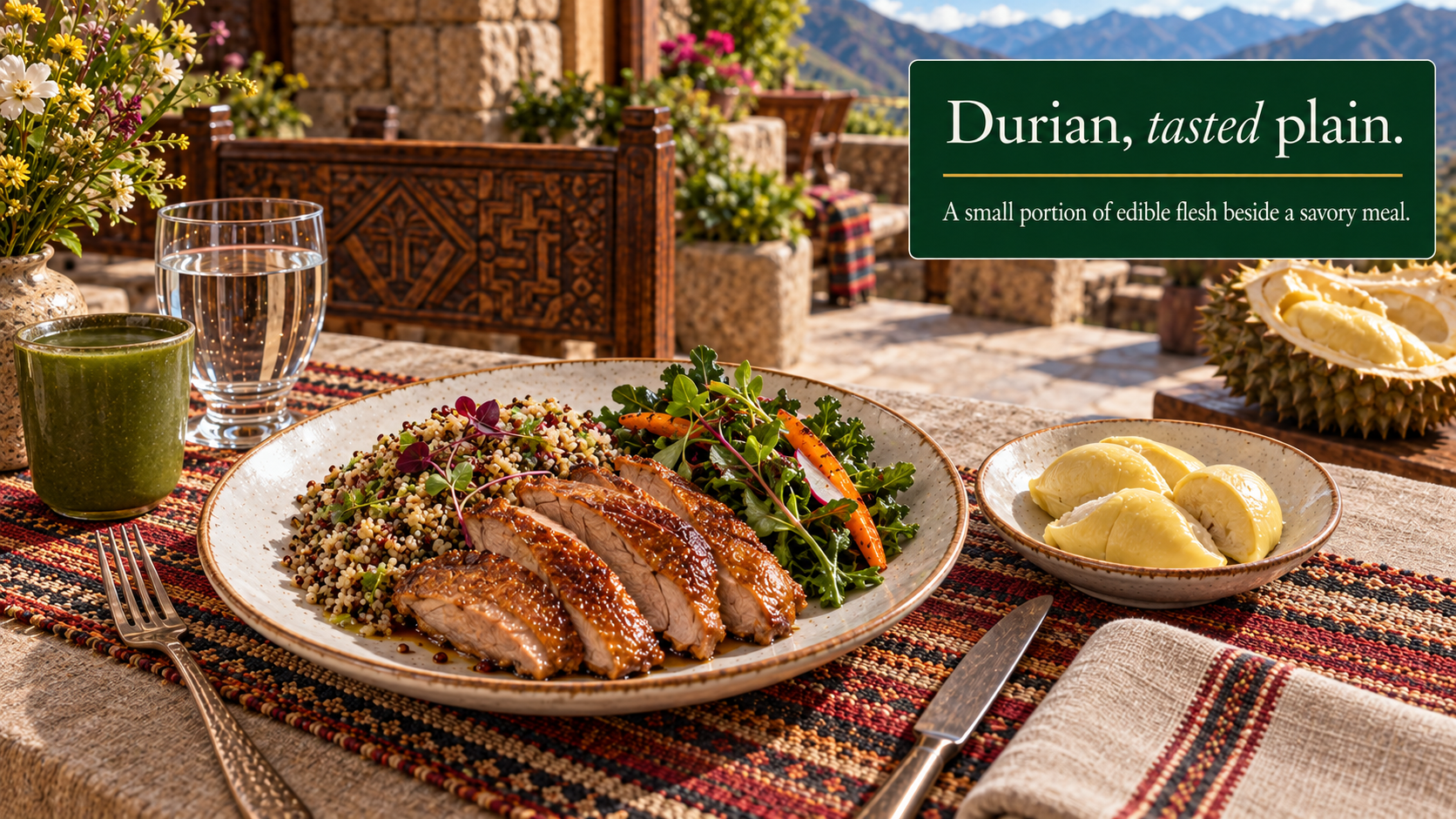
Serve a small amount of sound fresh durian flesh with its seed removed. Keep the strongly aromatic fruit optional and separate from the preceding vegetable meal.
Recognize the fruit and the edible flesh
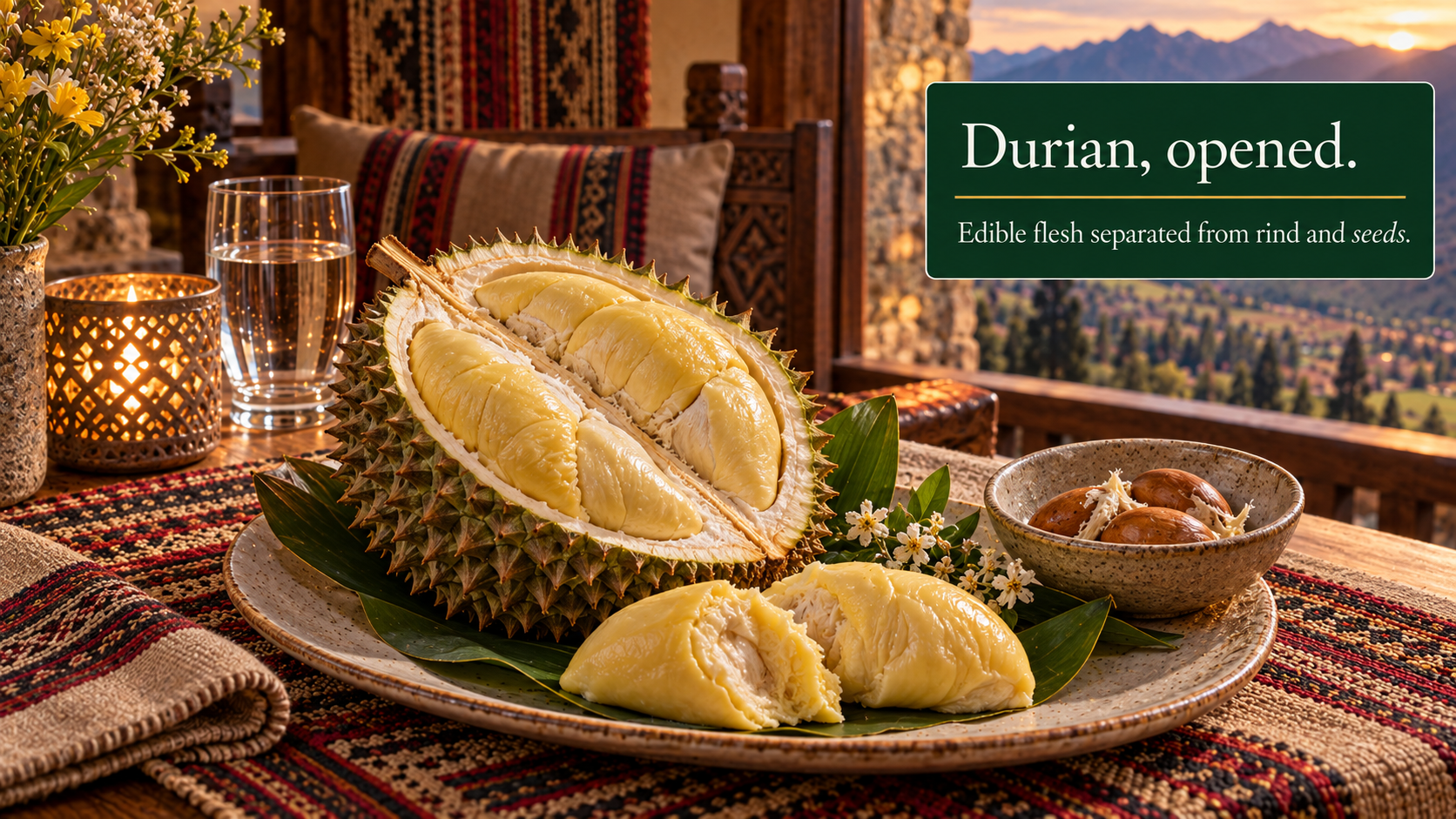
The common commercial durian is Durio zibethinus, a large fruit with a thick spiny outer shell. Within it, soft fleshy portions surround seeds. The University of Hawaii describes the edible aril as the part most frequently eaten fresh. The flesh can range in color and firmness with variety and eating stage. Ask the seller for the cultivar when known, and choose the flavor strength you enjoy.
Buy an identified food product from a reliable seller. A whole fruit and a tray of prepared flesh require different practical decisions, but neither should arrive as an anonymous tropical sample. Ask what is supplied and when it was prepared. A species name in an article helps explain the food; it does not identify a particular property tree.
University of Hawaii: Durian postharvest maintenance guidelines
Let an experienced person open the shell
The shell is awkward and spiny. For hotel service, ask the kitchen or seller to open the fruit and present the edible portions on a clean dish. There is no need for a guest to force a knife through a rolling shell at the table. A whole fruit can be shown separately so the visitor understands its appearance.
Keep the flesh clear of broken shell fragments. Separate it carefully and remove the large seed from the portion offered for eating. This guide concerns the fresh flesh only. Seed dishes are a separate preparation question and are not part of the proposed service. A neatly prepared portion is a more considerate introduction than a large shell left for the diner to navigate.
Start with a small plain portion
Offer a little flesh in a small bowl with a spoon or fork. Keep it plain so the guest can notice its own aroma and texture. The first bite can be quite enough for someone unfamiliar with durian. Another portion is easy to offer if the fruit is enjoyed. The serving is a tasting suggestion, not a prescribed quantity.
Some durian is firmer and mild, while other fruit is softer and more assertive. The University of Hawaii notes preferences for different eating stages and flavor strengths. Ask the supplier to describe the actual product rather than promising that every durian tastes the same. A guest who disliked one sample may still be curious about another, but there is no obligation to keep trying.
University of Hawaii: Durian postharvest maintenance guidelines
Serve it after a vegetable meal
The proposed sequence is a savory vegetable meal, followed by a separate small serving of fresh durian. The fruit should not be mixed through the preceding vegetables or treated as a sauce for them. A pause between courses makes its strong aroma easier to understand and lets the diner decide whether to continue.
Keep the serving simple: plain flesh, its seed removed, and drinking water nearby. There is no need for a sweetened mixture or a second rich preparation to make the fruit attractive. If the guest prefers to stop after the vegetables, that is a complete choice. Introducing an unfamiliar food works better when curiosity remains voluntary.

Consider the shared room as well as the plate
Durian's aroma can travel well beyond the person eating it. Ask the hotel or host where it may be opened and served. The University of Hawaii notes that some hotels and transport services prohibit it because of the smell. A considerate venue choice matters even when every part of the fruit is sound and properly prepared.
Use a small service area with suitable ventilation and clear away the shell promptly. Do not carry a newly opened fruit into a shared room on the assumption that everyone will enjoy the scent. A guest may be interested in tasting and still prefer the smell to remain away from their bedroom. That is a practical preference, not a judgment about the food.
Choose a clearly described fresh or frozen product
If buying prepared durian, check the label and storage instructions. Plain frozen flesh is a different presentation from a freshly opened whole fruit, even when both can be culinary foods. State which product is being offered. Thaw according to the producer's directions and do not imply that a frozen serving was opened moments earlier.
For a first introduction, a modest portion also reduces waste if the guest does not enjoy the aroma. Keep remaining food properly stored instead of leaving a large tray on display. The kitchen should decide its actual handling and service procedures. Ask when the tray was prepared and follow its storage directions.
Decide on the serving before opening the fruit
Ask for a small portion of plain flesh and agree on the place where it will be served. If the kitchen supplies a prepared food product, ask whether it is fresh or thawed. A guest who wants only a first taste does not need to buy or open a whole large fruit. The important details are a clearly identified product, comfortable service and enough time to notice its flavor.
University of Hawaii composition data show that durian flesh contains carbohydrate and fat as well as water. It is therefore a different eating experience from a very watery fruit. A little can feel rich, which supports a modest first portion after the vegetable meal. This is a culinary observation rather than a dietary limit. Enjoy more if wanted, or stop after a taste. Durian needs neither a medical promise nor a compulsory second helping.
University of Hawaii: Durian composition and postharvest guidance
The images are editorial illustrations of ingredients and serving ideas. They do not document a named restaurant, a current harvest or an included retreat meal. Preparation guidance is not a tested recipe.
Leave room for the Sacred Valley
A visit to Machu Picchu can leave time for a good meal and a quieter stay in the valley. Ask Florian about The SoulSearching Experience, his five-day Sacred Valley seminar for 8-15 participants. Discuss dates, venue and meal arrangements directly.
Questions readers ask
What texture should a visitor expect from durian flesh?
Soft edible flesh can feel rich and creamy, with flavor varying among fruit. Try a small plain portion rather than expecting one universal taste.
Does durian need another preparation before tasting?
No. This introduction uses plain fresh flesh with the seed removed. Serve it separately after the vegetable meal.
How much should a first tasting include?
Begin with a small amount of edible flesh and offer more if enjoyed. This is a practical tasting choice, not a recommended medical dose.
Who should open a whole durian for hotel service?
Ask an experienced seller or kitchen to open it securely. The spiny shell need not be forced with a knife at the guest table.
Should the seed remain hidden in a prepared tasting portion?
No. Remove it from the fresh flesh before serving and keep shell fragments out. This guide does not propose seed dishes.
Is prepared flesh a reasonable first purchase?
Yes, if it is an identified culinary product with clear handling information. It can make a small introduction easier than opening a whole fruit.
What should the seller explain before a first serving?
Ask about flavor strength, firmness and the actual product's eating stage. A named cultivar in an illustration cannot identify the supplied fruit.
Should frozen and fresh durian be described as identical?
No. State the actual food form and follow the producer's thawing directions. Temperature and product condition can change the tasting experience.
Can opened durian wait indefinitely on a table?
No. Follow the food supplier's storage directions and bring out a small portion. Keep remaining flesh appropriately stored.
How should a frozen durian product be thawed?
Follow the specific producer's instructions and keep the cold chain intact. A frozen whole fruit and a prepared fresh tray can need different handling.
Does a pungent smell alone establish readiness?
No single smell description settles the condition. Ask the experienced supplier to assess the actual fruit and do not serve questionable flesh.
Should the host expect aroma only after the first bite?
No. Plan the opening and serving location beforehand; the aroma can affect the shared room as well as the diner.
Should a guest check the hotel's durian policy?
Yes. Ask the actual hotel where it may be opened and eaten. Do not assume another property's rule applies.
Does a production report guarantee durian for a guest's stay?
No. Ask the host about the actual supplier and availability. The article does not establish a property crop or imported stock.
Can the guide quote the price of a local tasting?
No current quotation is verified. Ask for the actual product, edible portion and price before ordering.
Does the durian name imply a Peruvian origin?
No. Common commercial durian has Southeast Asian origins. The origin of an individual purchase requires its own supplier information.
Must a first-timer choose the most intense durian?
No. Ask the seller for a milder suitable food product and start small. Personal preference matters more than a prestige name.
Can yellow flesh identify a durian cultivar?
No dependable cultivar claim follows from flesh color alone. Use a trustworthy product label or grower identification.
Can the calories of a whole durian be guessed from the fruit count?
No. A useful calculation needs the measured edible flesh portion and a suitable composition reference. Shell and seed weight should not be counted as flesh.
What if the guest does not enjoy durian?
Stop after the small taste or decline it. The preceding vegetable meal remains complete; curiosity does not require eating a large portion.