Borojó is a food fruit before it is a story about extraordinary benefits. The useful starting point is an identified culinary pulp: dense, brown and distinctly acidic. A small amount loosened with coconut water can be offered as an unsweetened tasting. That proposal depends on a reliable food product, not on a common name attached to an unknown tree.
Borojó: Identified Culinary Pulp With Coconut Water
This guide concerns Alibertia patinoi, also recorded as Borojoa patinoi. Use labeled culinary pulp with seeds and peel excluded, then loosen a small amount with unsweetened coconut water.
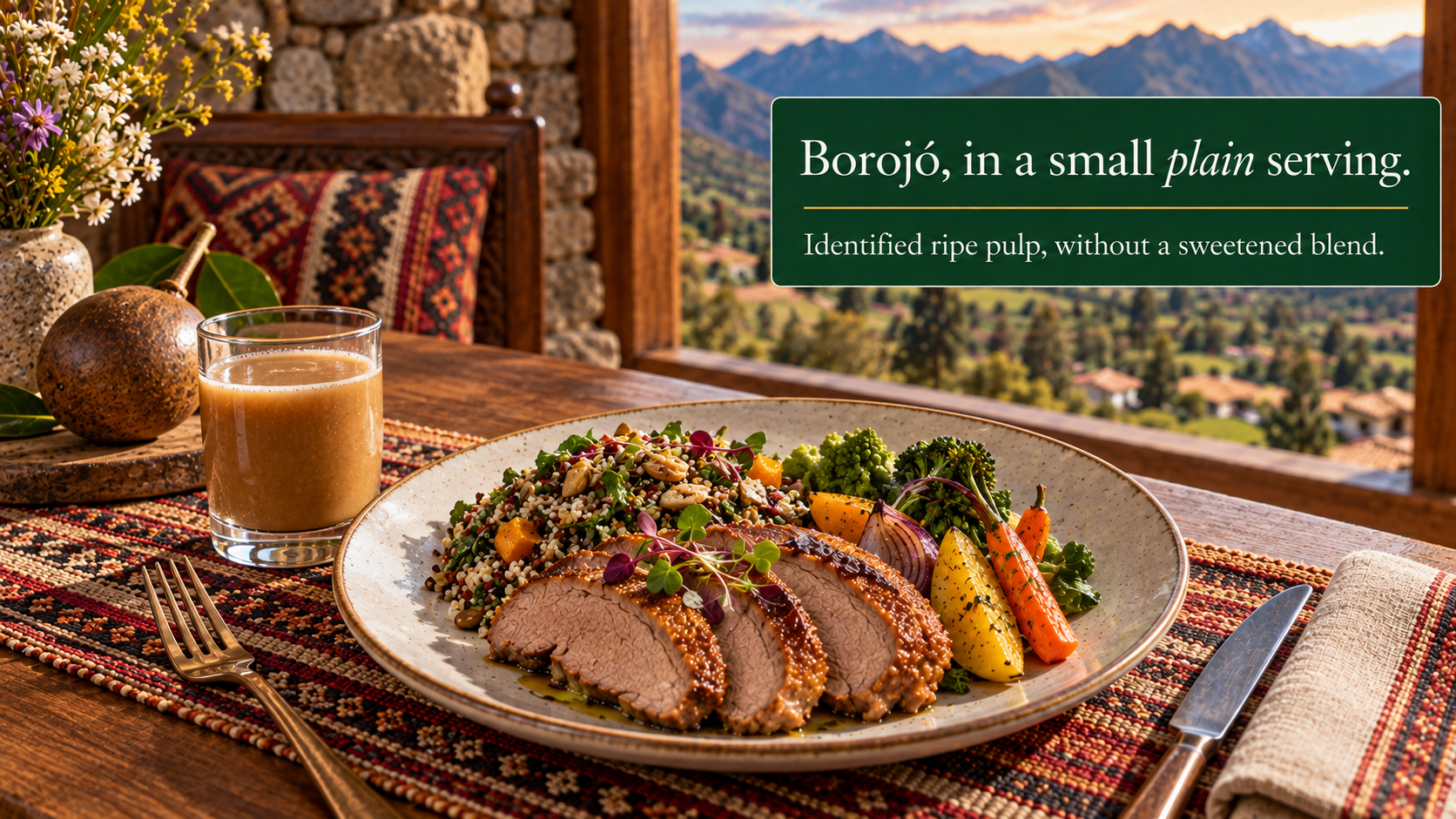
Resolve the name before making the serving
Kew records Borojoa patinoi as a synonym of Alibertia patinoi. Those names therefore connect the older food literature with the species discussed here. Patinoa is not the name to substitute into this identification. A misspelled or similar-looking genus can send a reader toward a different plant, so the exact name matters before any food instruction.
This botanical resolution does not identify a particular property specimen. Ask for a reliable planting record, specimen confirmation or a food-supplier label connecting the supplied ingredient to the culinary fruit. If that confirmation is unavailable, do not eat the unidentified fruit. An article can explain an identified food without authorizing a visitor to eat an unknown one.
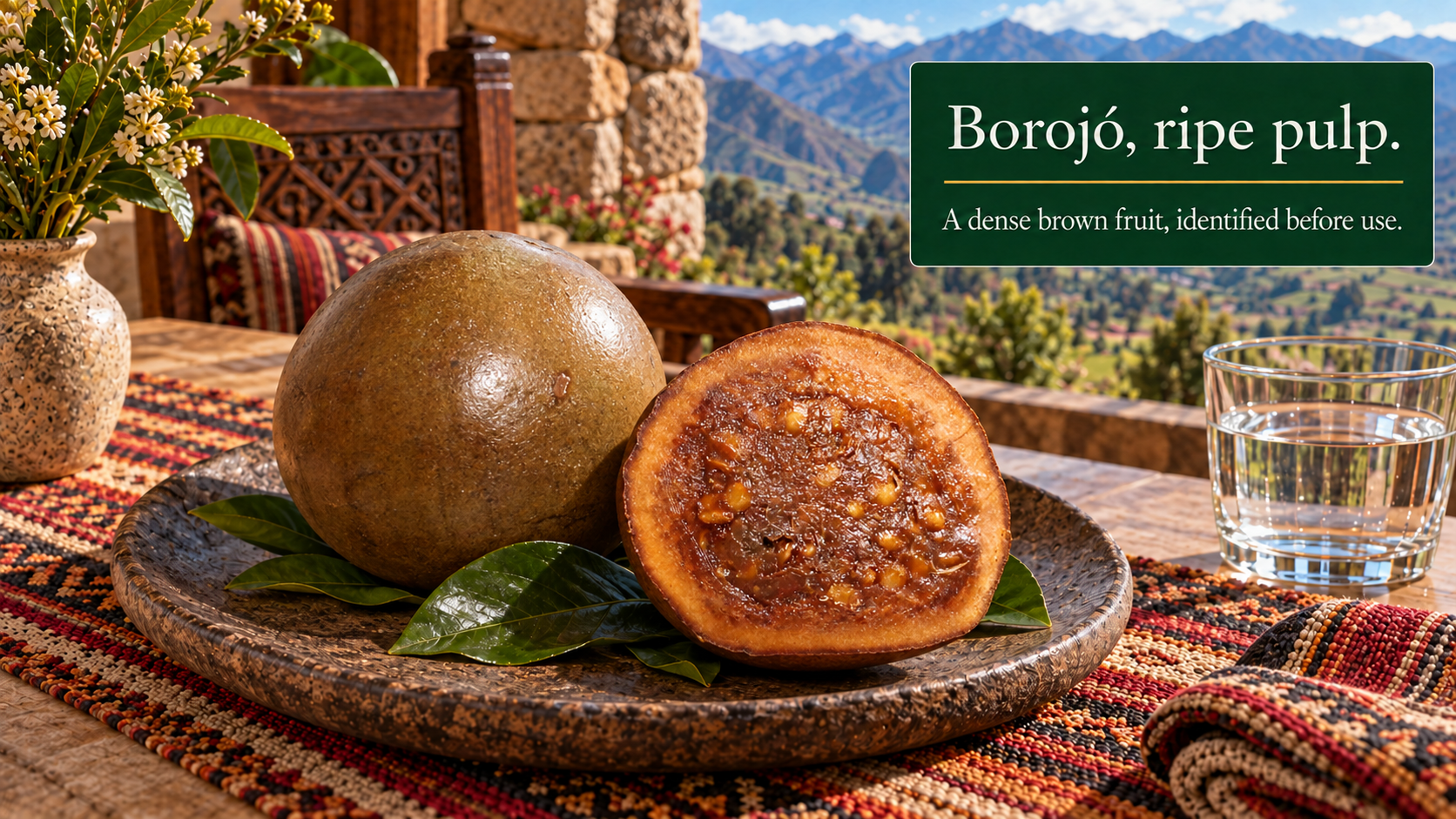
Recognize the documented pulp food form
FAO Ecocrop describes the fruit's brown pulp as dense and very acidic, and records its use in juices and other processed foods. AGROSAVIA also documents borojó fruit pulp as a food product. These sources support discussing the pulp in ordinary culinary terms. They do not require adopting the traditional medicinal or aphrodisiac claims that may appear beside those food uses.
The prepared serving here uses pulp with peel and seeds excluded. It is not a bowl of whole chopped fruit. If buying a commercial product, check that it is intended for food and follow its handling instructions. A supplement, extract or planting material is not an interchangeable ingredient for this tasting.
FAO Ecocrop: Borojoa patinoi · AGROSAVIA: Colombian Amazon fruit products, borojó pulp
Use a labeled culinary product when the fresh fruit is unfamiliar
For a hotel kitchen without experience of fresh borojó, a clearly labeled plain food pulp is the more straightforward starting point. Confirm the fruit identity and the ingredient list with the supplier. The label should make clear whether it is plain pulp or a prepared mixture containing added ingredients.
If the kitchen is using a whole identified fruit, ask an experienced food supplier to demonstrate appropriate preparation and selection of the sound ripe fruit. Do not infer a universal ripeness rule from the brown color alone. Brown flesh is part of the documented food form, but that does not make any damaged or fermented brown fruit acceptable.
Loosen a small amount with coconut water
Place a small spoonful of plain culinary pulp in a bowl or short glass. Add a little unsweetened coconut water and stir until the texture is easy to sip or spoon. Taste before adding more. The proposed combination is an editorial tasting, not a claim that this is a traditional recipe or a standard hotel beverage.
Keep the pulp proportion modest for the first attempt. Its dense acidity can dominate a large drink. If the mixture is too assertive, use less pulp and offer a smaller tasting rather than trying to disguise it. A guest can request more after discovering whether the flavor appeals to them.
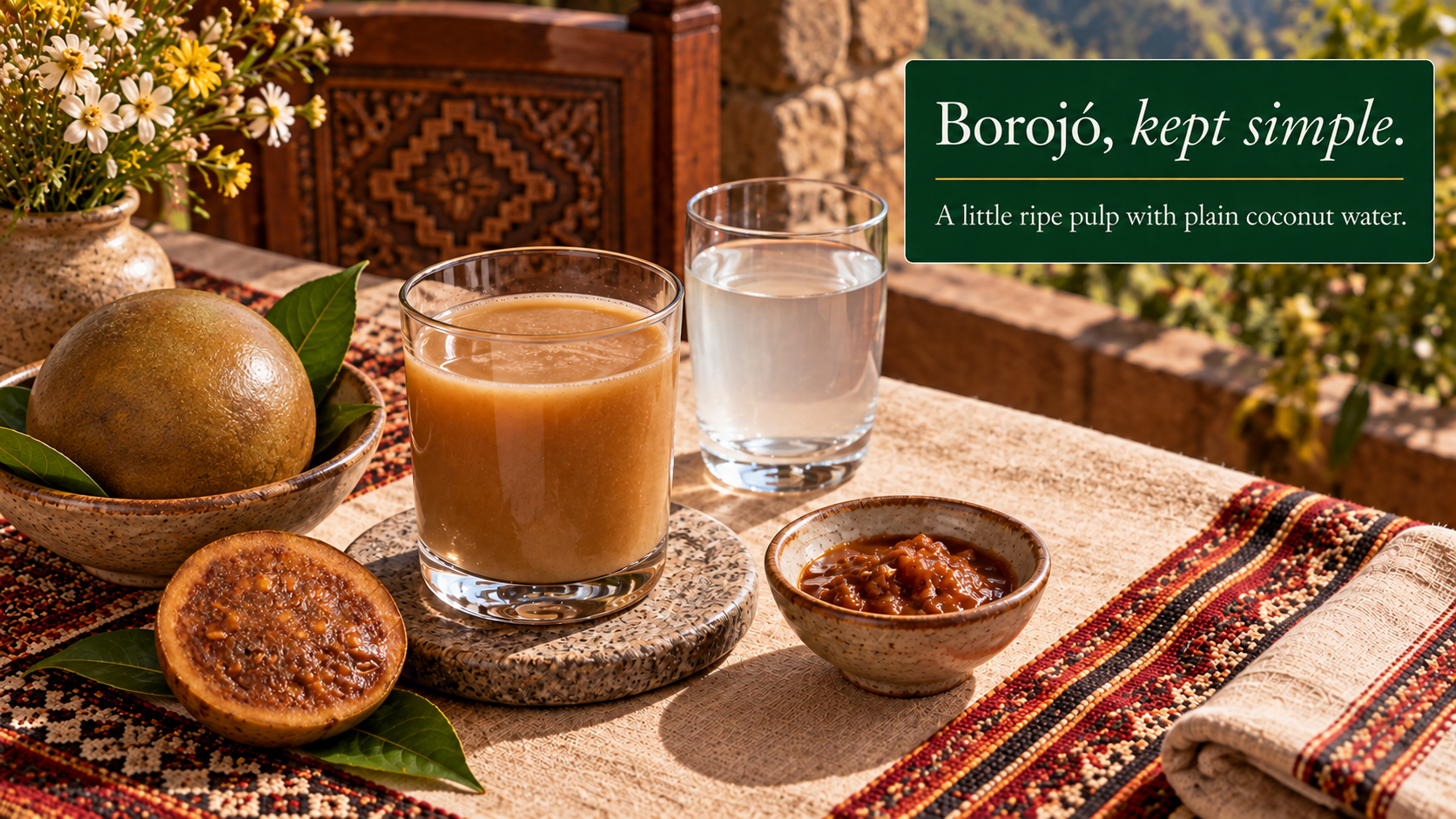
Keep the ingredient list short and visible
Use coconut water with an ingredient list that suits the intended unsweetened serving. Coconut milk, cream and sweetened coconut beverages are different products and change both the texture and the flavor. Plain drinking water is another simple way to loosen a small trial, but name the actual preparation if it is substituted.
There is no need to add several other fruits or concentrated flavorings. The purpose is to understand borojó's own culinary pulp. A short ingredient list makes it easier for the guest to decide whether to try it and for the kitchen to adjust a portion. Serve it plainly rather than attaching a dramatic title that implies a special physical effect.
Offer it as an optional fruit tasting
Bring a modest portion after or beside an ordinary meal, with a brief explanation of the fruit and its tart dense texture. Let the guest taste a little before committing to a larger serving. The fruit does not need to be compulsory because it is unusual. A polite introduction includes the option to stop after the first spoonful.
Keep the prepared mixture appropriately stored and make only what can be served promptly. Follow the culinary pulp supplier's directions for refrigeration, thawing or other handling. Ask when the mixture was prepared and keep any unused pulp in its proper storage conditions. A clean small serving is easier to enjoy than a large drink left waiting.
Taste the pulp before choosing a full drink
Ask for the culinary pulp and its ingredient label before ordering a larger mixture. A small spoonful loosened with coconut water lets the guest discover its dense acidity without committing to a full glass. Add liquid gradually and stir thoroughly so one sip is not mostly water and the next mostly pulp. A short glass or small bowl is sufficient for that first introduction.
If the texture seems too heavy, reduce the pulp rather than assuming another ingredient is needed. If coconut water's own sweetness distracts, a little plain drinking water can make a clearly named alternative. Keep the fruit product and the companion liquid recognizable in the description. Ask whether the pulp was supplied fresh, chilled or frozen and follow its actual handling instructions. A pleasant small tasting can stand on flavor alone, without promises about energy, fertility or performance.
The images are editorial illustrations of ingredients and serving ideas. They do not document a named restaurant, a current harvest or an included retreat meal. Preparation guidance is not a tested recipe.
Leave room for the Sacred Valley
A visit to Machu Picchu can leave time for a good meal and a quieter stay in the valley. Ask Florian about The SoulSearching Experience, his five-day Sacred Valley seminar for 8-15 participants. Discuss dates, venue and meal arrangements directly.
Questions readers ask
Which species does this culinary borojó guide concern?
Alibertia patinoi, with Borojoa patinoi recorded by Kew as a synonym. That resolution does not identify an unverified property specimen.
Does borojó establish a special stimulant effect?
No special effect is established here. Treat the identified pulp as food and describe its serving, without promising performance or medicinal benefits.
Is borojó an option when exploring Colombian food fruits?
Yes, Colombian food sources document its culinary pulp. Ask for an identified product; that food history does not establish exclusive origin or current local availability.
Which borojó food form is used here?
A labeled culinary pulp with peel and seeds excluded. Loosen a little with unsweetened coconut water and taste before making a larger portion.
How should the culinary pulp be stored?
Follow the specific food product's storage instructions. Prepare modest quantities and keep the remaining pulp appropriately stored rather than waiting on the table.
What flavor and texture should a guest expect?
FAO describes a dense, very acidic brown pulp. Begin with a small plain tasting rather than promising that it resembles a familiar sweet juice.
Should the menu promise fertility or aphrodisiac effects?
No. A traditional reputation does not establish an effect in a guest. The proposed serving is ordinary food, without reproductive or medicinal promises.
Does this guide authorize a year of pulp storage?
No. Use the actual producer's validated storage instructions. A small serving proposal cannot establish a preservation process or shelf life.
Can the prepared mixture be assumed unchanged after freezing?
No. Texture can change. Keep the first tasting freshly assembled from properly stored ingredients, and follow product-specific directions for any frozen component.
Does the word pulp guarantee an unsweetened product?
No. Read the ingredient list for the specific package. A supplier's claim about one product does not establish the contents of another.
Is coconut water the same as coconut milk?
No. Use the drink specifically labeled coconut water for this light mixture. Milk and cream make a different texture and should be named as substitutions.
How can the coconut companion remain unsweetened?
Check the ingredient list and added-sugars declaration on the actual product. Choose a plain unsweetened coconut water rather than assuming every coconut beverage matches.
Does no added sugar mean the coconut water cannot taste sweet?
No. A product can contain naturally occurring sugars. Check the actual label and keep the tasting modest rather than calling the mixture sugar-free.
Must every coconut water make the pulp taste identical?
No. Taste the actual product with a little pulp first. Adjust dilution from the combined bite or sip rather than assuming one universal ratio.
Where did the coconut water in the serving come from?
Check the actual package and supplier information. A coconut-water brand name or this proposed pairing does not establish a property-grown ingredient.
How should opened coconut water be handled?
Follow the specific bottle's directions and keep it appropriately chilled after opening. A published rule for one brand is not a universal shelf-life promise.
Where can the product form be checked?
Read the actual label for concentrate, dilution and ingredients. A front-of-package coconut image does not answer those questions.
Why can coconut-water nutrition labels differ?
First compare the serving sizes and actual formulations. Use the labels for the ingredients chosen rather than calculating this mixture from a generic coconut-water name.
How can the dense borojó pulp be made easier to sip?
Loosen a small portion gradually with coconut water, then taste. If it remains too assertive, use less pulp rather than making a large thick drink.
Should an unfamiliar fruit be served without checking guest requirements?
No. Explain the actual fruit and companion ingredient and check individual restrictions with the guest. General food use does not establish suitability for every person.