A banana and a green plantain can have a similar outline yet ask very different things of a kitchen. One can be peeled and eaten as ripe fresh fruit. The other makes a useful savory starch after thorough cooking. This guide keeps those food forms separate, with a fresh banana serving and a duck dinner built around tender green plantain.
Fresh Banana and Cooked Green Plantain: Two Different Servings
Treat ripe dessert banana as fresh fruit and green cooking plantain as a starch that needs proper cooking. Serve the cooked plantain beside duck and greens.
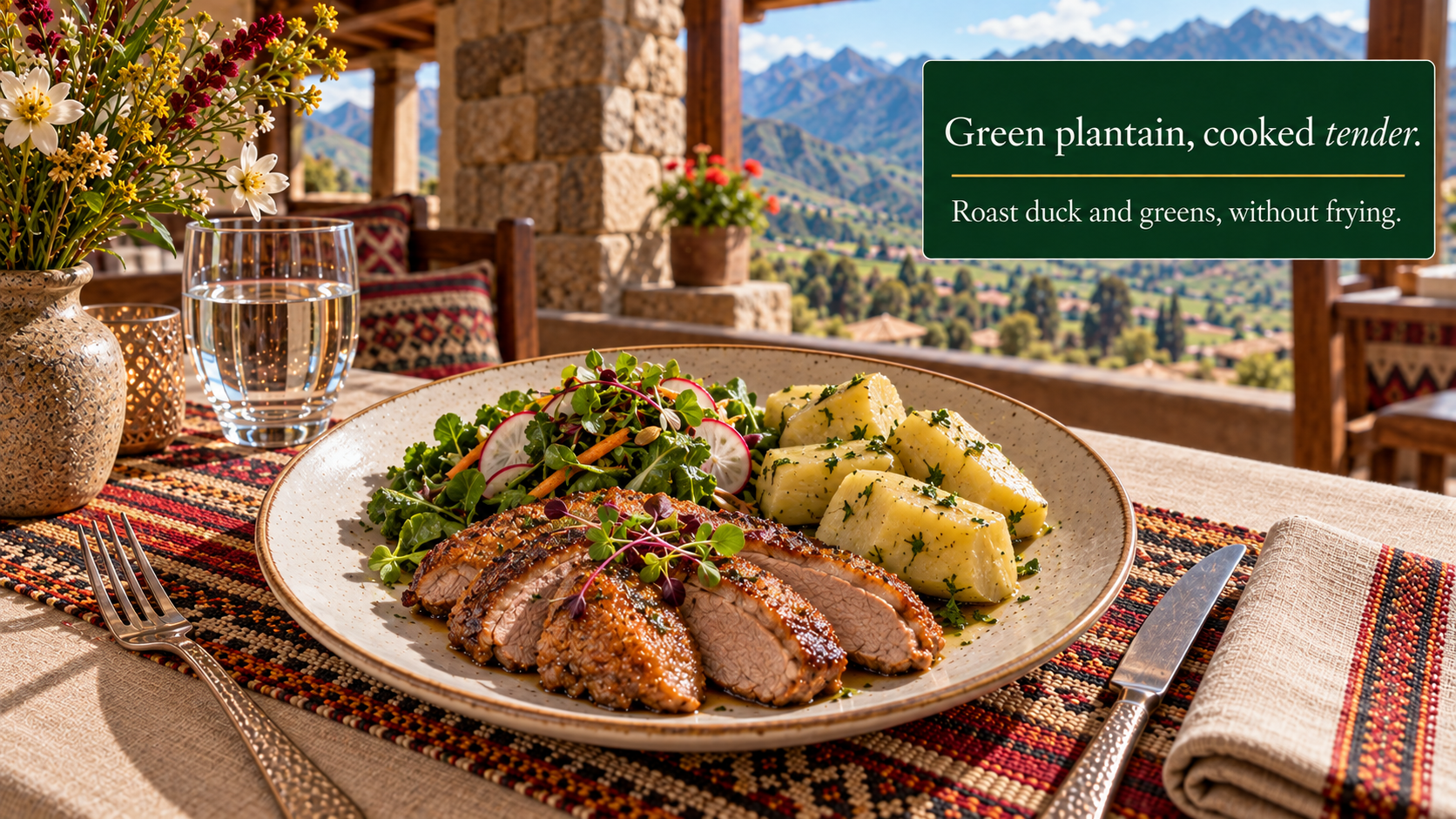
Use the food name, not the silhouette
Bananas and plantains belong to the cultivated Musa group, with considerable diversity. A larger size or thicker peel may suggest a cooking plantain, but appearance alone is not a reliable cultivar identification. Buy an identified edible product and ask whether it is intended for fresh eating or cooking. The word plantain also has unrelated botanical uses, so a food context matters.
UF/IFAS describes plantains as higher in starch than dessert bananas and ordinarily cooked before eating. That supports the kitchen distinction here. Confirm the actual food type with the supplier, especially when regional common names differ.
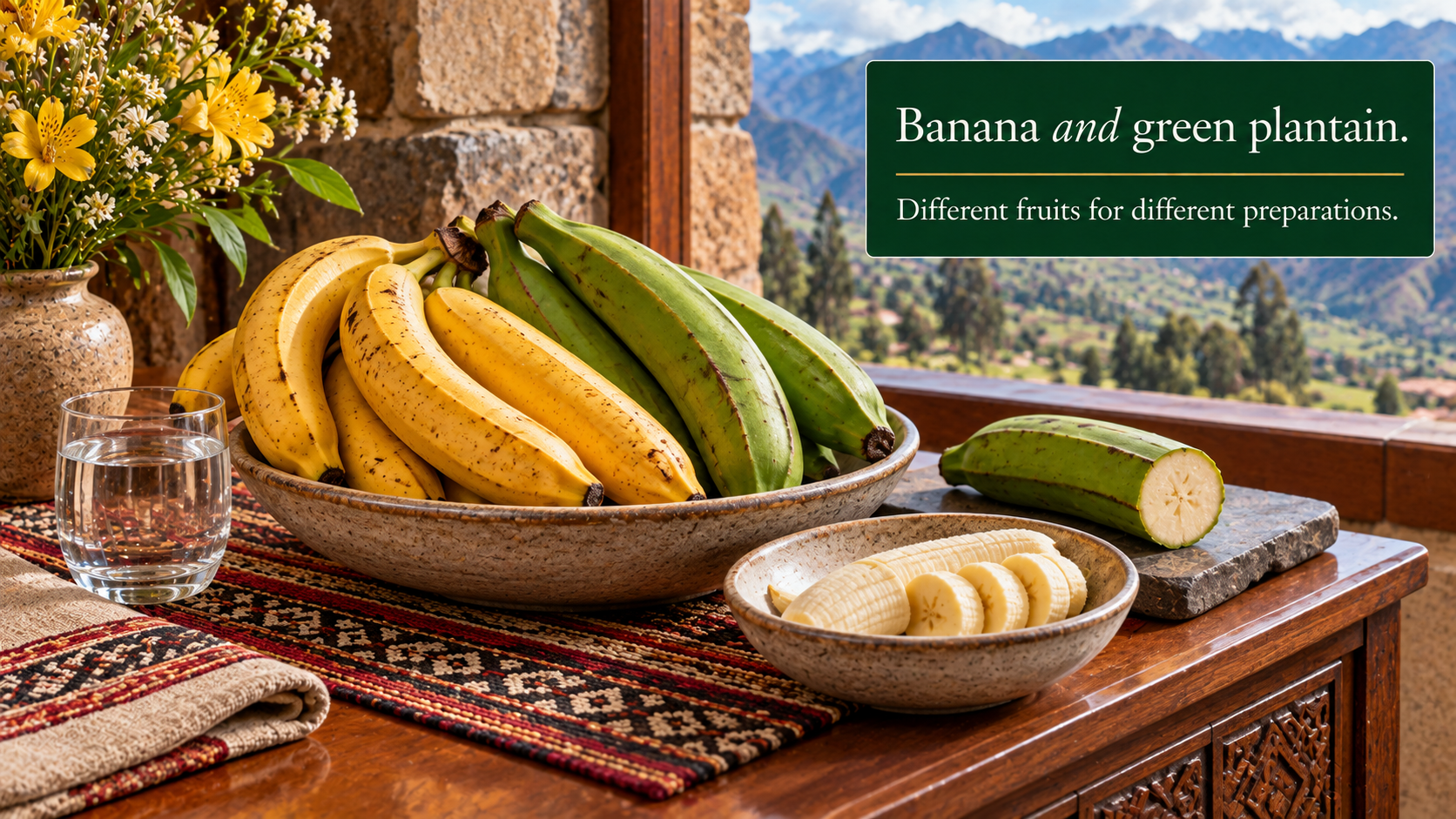
Show ripe banana as plain fresh fruit
For the fresh serving, peel a sound ripe dessert banana and show its flesh separately from the discarded peel. A whole peeled fruit or broad cut pieces make the edible form easy to understand. This serving does not need a sauce or a sweet preparation to justify its place in the collection. Its familiar soft texture is the subject.
Taste and aroma are more helpful than an absolute skin-color rule across varieties. Do not assume that a green exterior means the same thing for every named banana. Where the particular cultivar is unconfirmed, keep the description general. Peel a sample and check its flavor before preparing the fresh portion.
Prepare green plantain for a savory starch
Use identified green cooking plantain for the duck meal. Remove the ends and score the thick peel carefully along its length, then work it away from the flesh. The green peel can cling tightly, so stabilize the fruit and use deliberate cuts. Remove any remaining peel strips rather than leaving them for the guest to discover.
Cut the plantain into pieces of similar size and cook in water or steam until tender through the center. Check a piece with a fork and then taste for a fully cooked texture. A fixed time is less helpful than that test because size and product vary. The interior should no longer feel hard, chalky or unpleasantly raw.
Choose pieces or a simple mash
Tender cooked pieces preserve the shape of the plantain and make it easy to compare with a familiar potato accompaniment. Drain them and serve while pleasantly warm. For a softer plate, mash the cooked flesh with a little of its cooking water until it gathers easily on the fork. Keep the seasoning savory and restrained.
Neither form needs frying to become a complete starch. If the mash feels dry, loosen it a little rather than adding a large amount of oil. If pieces remain dense in the middle, continue cooking them. Surface browning is not proof that the center is ready, and it is not required for the moist preparation proposed here.
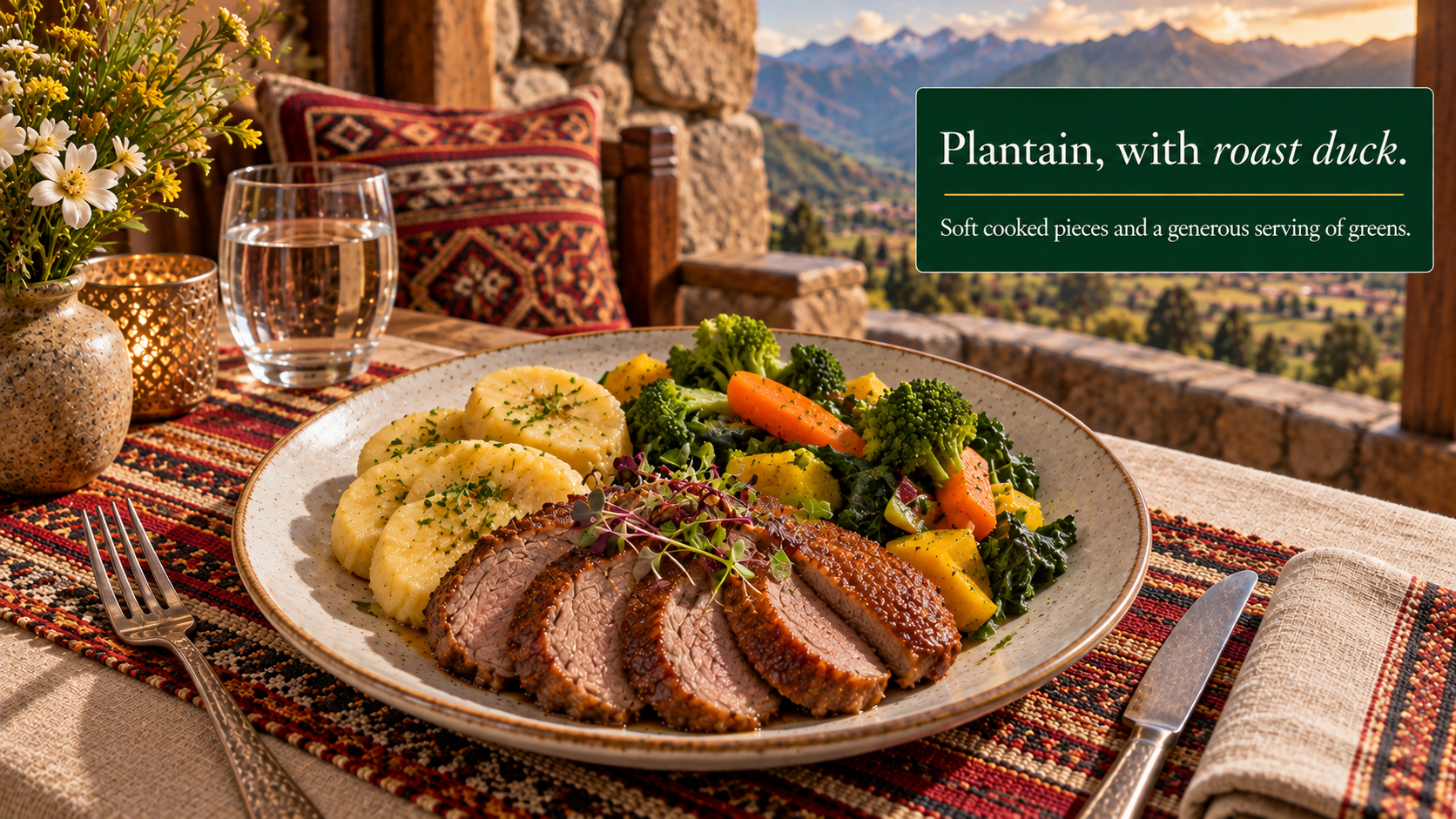
Serve with duck and greens
Place the cooked green plantain beside roast duck and tender greens. Allow the meat juices to meet part of the starch, while keeping another portion plain enough to taste on its own. The plantain should carry the starch position on the plate. Another large grain or potato portion is unnecessary for demonstrating how it works.
Begin with a modest serving and offer more separately if wanted. That is a practical arrangement for a guest learning an unfamiliar ingredient, not a prescribed portion. Keep any ripe banana serving on another dish. Combining fresh dessert banana and green plantain indiscriminately on the duck plate would obscure the very food-form distinction the guide is meant to explain.
Adjust the flavor with the meal in mind
A little salt and chopped parsley can be sufficient for the cooked plantain. If the duck is rich, use a restrained squeeze of lemon on the greens and taste a combined bite. The plantain can remain mild. There is no need to sweeten it or add a fruit puree merely because the raw ingredient resembles a banana.
A yellow or very ripe plantain will produce another texture and a sweeter flavor. It may have culinary uses, but it should not quietly substitute for the green savory version in this plate. If that is the fruit available, rename and retest the dish. A menu should tell the guest what is actually served.
Choose the starch before choosing another side
When ordering the duck plate, ask for green plantain cooked until tender and tell the kitchen whether you prefer pieces or a soft mash. It fills the starch position, so greens can provide the contrasting accompaniment without automatically adding another large grain portion. If the plantain offered is sweet-ripe, decide whether you want that different flavor before the meal is prepared.
For the fresh banana serving, ask for the actual ripe fruit served plain. Seeing its peeled flesh separately from cooked green plantain makes the comparison easy to understand. One is a fresh fruit serving; the other has been transformed by moist cooking into a savory accompaniment. Neither needs an elaborate preparation to be useful. A guest can enjoy one and decline the other, and the cook can explain the difference without insisting that every banana-like fruit behaves the same way.
The images are editorial illustrations of ingredients and serving ideas. They do not document a named restaurant, a current harvest or an included retreat meal. Preparation guidance is not a tested recipe.
Leave room for the Sacred Valley
A visit to Machu Picchu can leave time for a good meal and a quieter stay in the valley. Ask Florian about The SoulSearching Experience, his five-day Sacred Valley seminar for 8-15 participants. Discuss dates, venue and meal arrangements directly.
Questions readers ask
Why are ripe banana and green plantain treated separately?
The fresh dessert banana is introduced as fruit; identified green cooking plantain is prepared as a savory starch. Similar shape does not make the servings interchangeable.
Does plátano always identify the same food form?
Regional names differ. Ask whether the actual fruit is for fresh eating or cooking instead of relying on a single translated common name.
When should the green plantain peel be removed?
For this preparation remove the thick peel before cutting and cooking. Keep peel strips out of the served starch; other methods are separate preparations.
Why can green plantain taste starchy rather than sweet?
Food type and ripeness affect the result. For this green savory serving expect a mild starch, then cook until the center is genuinely tender.
Can cooked plantain remain in pieces?
Yes. Cut similar-size pieces and cook gently until tender through the center. Check a piece instead of depending on color or a fixed time.
What if the cooked plantain is dry or hard in the middle?
Continue an appropriate moist cooking method until tender. Also confirm that green savory plantain is the intended product; it will not taste like ripe sweet fruit.
Does a cooking plantain have to become sweet-ripe first?
No. Identified green cooking plantain is used at its green stage for this starch. Thorough cooking, rather than waiting for sweetness, is the relevant preparation.
Does freezing preserve the same firm plantain presentation?
Not necessarily. Thawed texture can change, and freshness requires actual handling information. Do not use a short description to certify a questionable product.
How can a mild boiled plantain fit dinner?
Let a little duck juice meet part of it and season the greens lightly. Its quiet starch role does not require a sweet sauce.
Must green plantain be fried?
No. The proposal uses boiling or steaming until tender. Follow a dependable method for the actual product instead of assuming browning is required.
Can the cooked plantain become a mash without dairy?
Yes. Mash tender cooked flesh with a little cooking water until spoonable. Keep it savory and serve beside duck and greens.
Does a green dessert banana automatically identify cooking plantain?
No. Confirm the food product and intended use. Ripeness and cultivar group both matter; color alone cannot settle the difference.
Can ripe plantain silently replace the green savory version?
It makes a different, sweeter plate. Name the change and retest the pairing instead of presenting it as the same green plantain preparation.
Can cooked plantain be prepared as a separate stored component?
Keep the cooked starch separate from the assembled duck plate and use appropriate prompt cooling and storage. Follow a dependable freezing method for the actual cooked product.
How should duck doneness be checked?
Use a food thermometer in the thickest part, avoiding bone. USDA recommends 165 F for duck and other poultry; color alone cannot establish safety.
Should one thermometer reading stand for the whole duck?
No. Breast and leg portions differ in thickness. Follow a suitable roast method and check the relevant thickest parts rather than relying on one surface reading.
What flavor does duck bring to a fruit plate?
Duck supplies the richer savory center. Keep the fruit modest and optional so the diner can taste the meat on its own before combining bites.
Does pink color alone decide whether duck is ready?
No. Use the thermometer endpoint recommended for poultry. A color impression cannot replace a proper temperature check.
Does the duck need a large coating of sauce?
For this meal, begin with the small fruit accompaniment beside the meat. More can be offered separately after the guest tries the combination.
Is duck classified as red meat because it looks dark?
USDA classifies duck as poultry. Its darker appearance does not change the need to follow appropriate poultry cooking and handling guidance.