Achachairu and jaboticaba invite different first bites. One usually presents an orange shell around pale flesh; the other resembles a dark grape with a firmer skin. A clear opened example helps a visitor decide what to eat. The comparison below introduces culinary fruit forms while leaving unresolved property identifications unresolved.
Achachairu and Jaboticaba: Open, Identify and Taste
Open each identified fruit separately, remove seeds from the prepared serving, and taste its flesh plain. A small fresh portion can sit beside quinoa and greens.
Achachairu: keep the common name and the uncertainty visible
The orange fruit sold as achachairu or achacha is commonly identified in horticultural literature as Garcinia humilis. UF/IFAS uses that name in its fruit guide. However, published sources are not fully consistent: Puerto Rico research also uses Garcinia gardneriana for achachairu, and Kew's current range for G. humilis complicates simplified origin claims. A common name alone therefore does not settle a property tree's species.
For a guest serving, use a reliably identified culinary achachairu food product, with its identity confirmed by the supplier. The menu can retain the ordinary fruit name. The exact local botanical identification should be confirmed from a specimen or trustworthy planting record before it becomes a cultivar or provenance claim.
UF/IFAS: Achachairu · Kew: Garcinia humilis · University of Puerto Rico: Postharvest quality of achachairu, Garcinia gardneriana
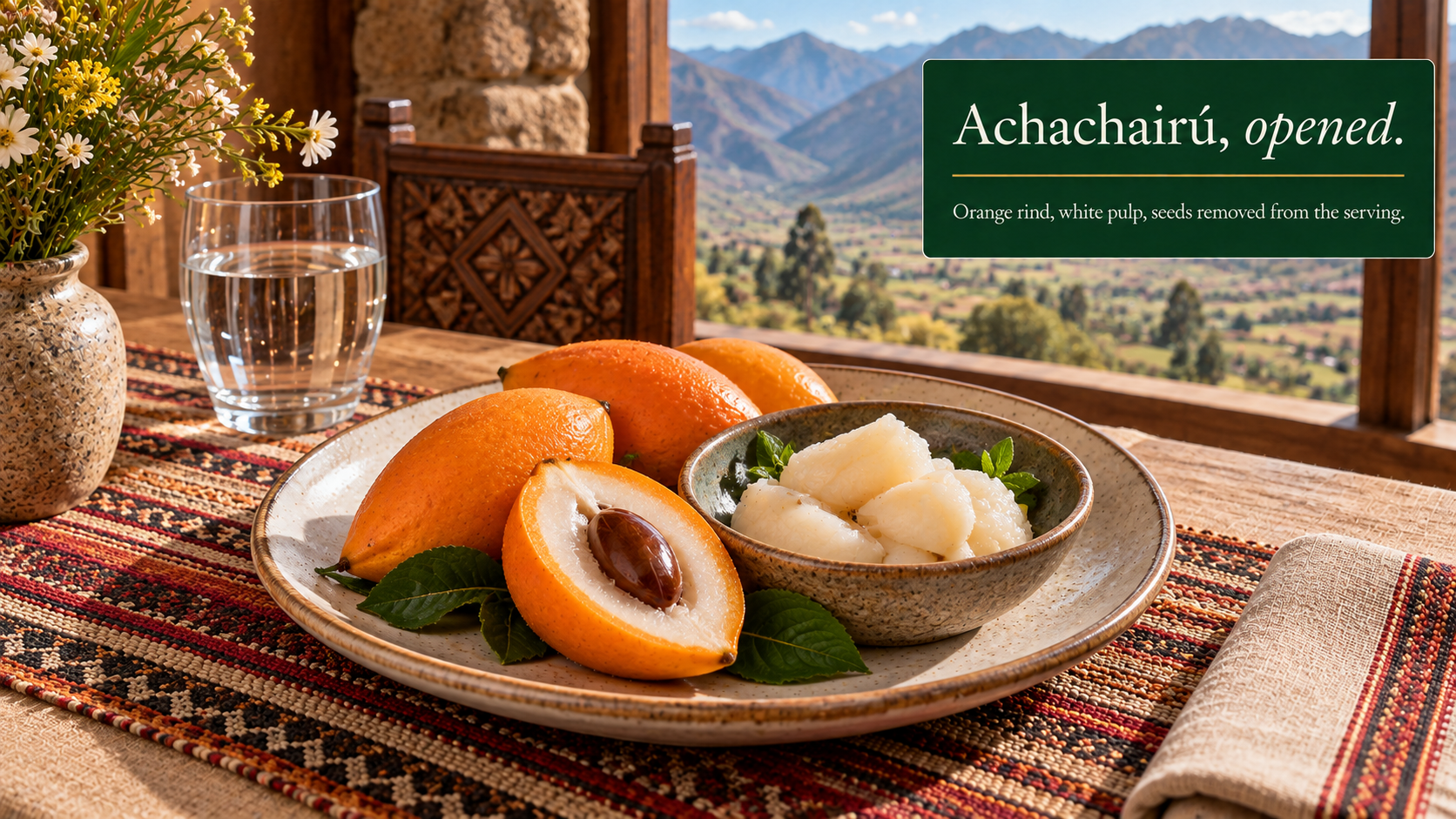
Open achachairu to show the flesh clearly
Ask the supplier or kitchen to demonstrate opening the actual food fruit. Make a shallow opening through the outer shell and separate it without cutting deeply through the flesh. The pale pulp around the seed is the target of this fresh serving. Keep shell and seeds apart from the prepared edible portion.
Taste a little plain pulp before pairing it with anything else. Its sweet-tart character can vary, and the amount that works beside grain depends on the fruit. Do not begin with a large mixed bowl. A small separate dish lets the visitor learn the texture and tells the kitchen whether the guest would enjoy more.
UF/IFAS: Achachairu · University of Hawaii: Achachairu food preparations
Jaboticaba: a grape-like appearance with its own structure
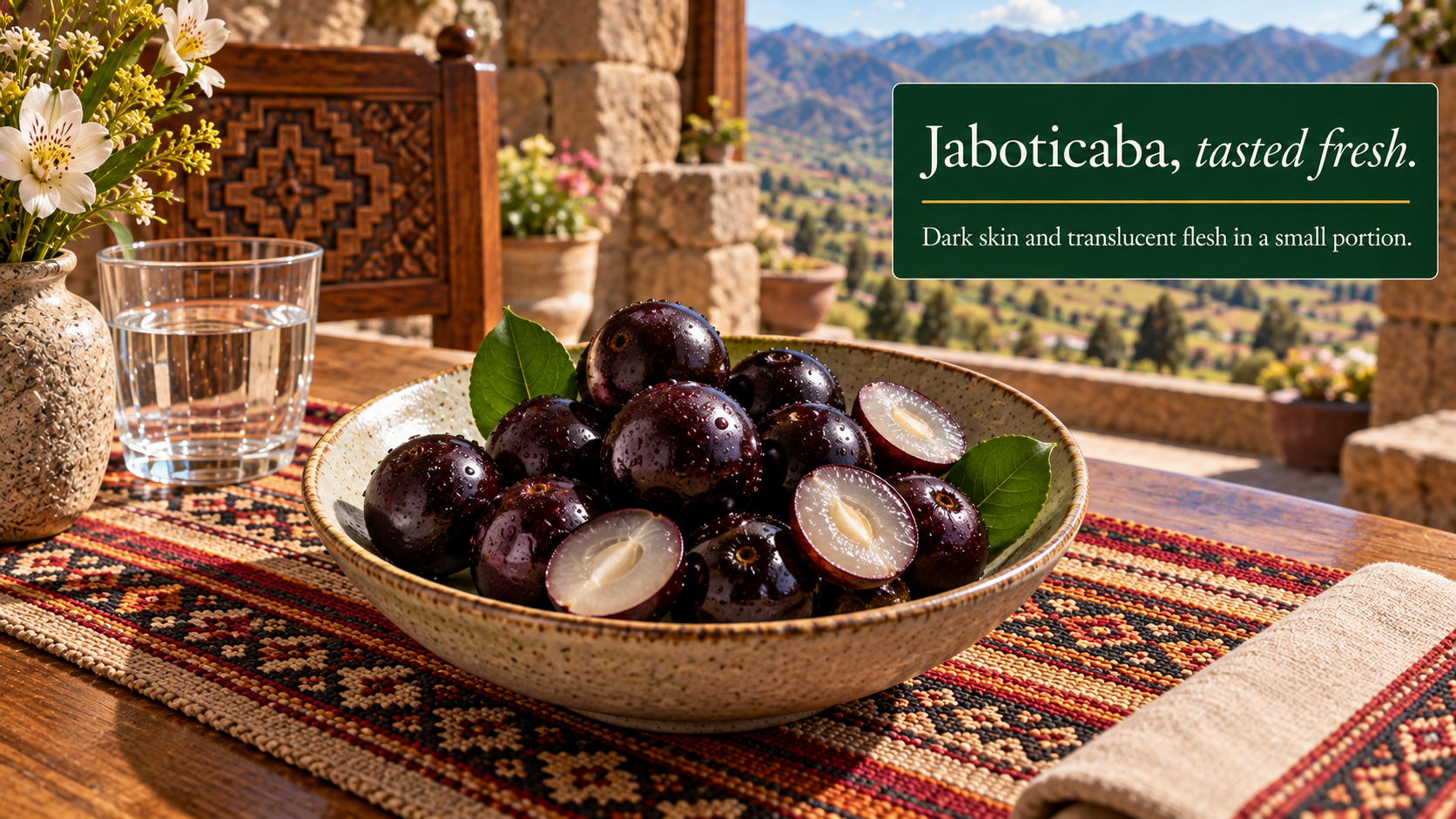
Jaboticaba is commonly discussed as Plinia cauliflora, with Myrciaria cauliflora appearing in older accounts. Other Plinia food fruits and selections also occur, so the common name does not prove a particular cultivar. UF/IFAS describes dark-skinned fruit with pale flesh and seeds inside. That makes an opened sample especially helpful.
Wash a sound fruit, open it and show the contrast between the thicker outer skin and the softer flesh. Separate the seeds from a prepared tasting portion. The resemblance to a grape should not encourage a visitor to swallow the fruit whole without understanding what is inside. Give the fruit its own name and its own small place on the table.
Decide how much jaboticaba skin suits the guest
Jaboticaba skin can be noticeably more tannic than its pale interior. Some people enjoy the whole fruit texture, while others prefer the flesh. For an introductory service, offer opened fruit and explain that the skin gives a different bite. A prepared portion of flesh with seeds removed makes a gentler starting point.
Do not grind all the skin into a strong dressing merely to avoid discarding it. The question is whether the guest enjoys that part of the fruit in this serving. A small taste answers it more honestly than broad claims about beneficial compounds. Edible food use and a promised therapeutic effect are separate matters.
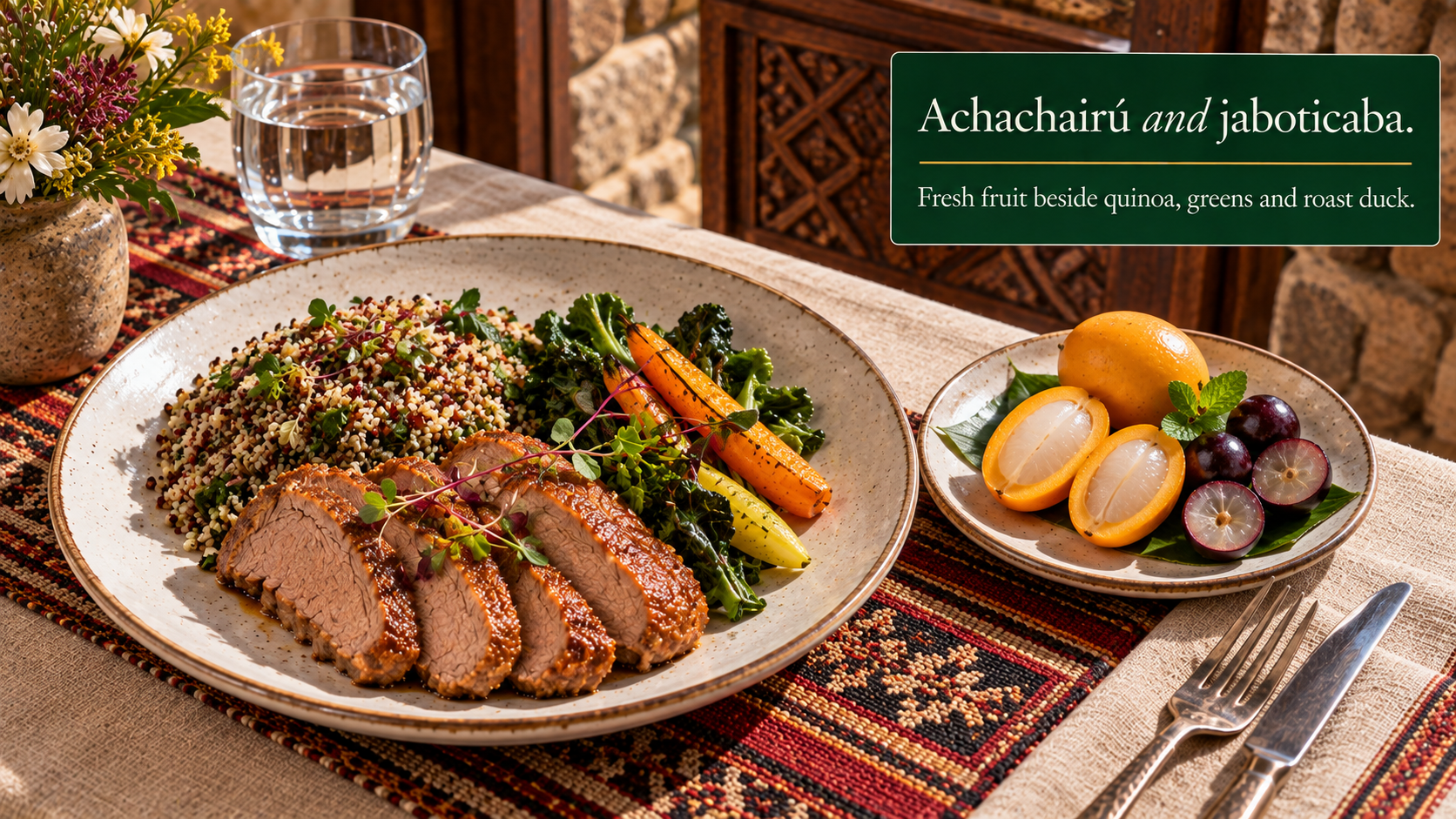
Offer a fresh accent beside quinoa and greens
The savory proposal is a simple quinoa and greens plate with a small fresh fruit accompaniment on the side. Use achachairu or jaboticaba according to availability and the guest's preference. A comparison need not become a recipe combining both fruits. Their different textures are easier to understand when they remain separate.
Keep the cooked quinoa and greens mildly seasoned, then taste a bite with a little fruit. The tartness may make additional lemon unnecessary. Set the fruit in a small dish or a clearly defined part of the plate so its juice does not run through every grain. Offer more after the first few bites if wanted.
Keep delicate fruit service short and specific
Jaboticaba is particularly perishable, and a fresh-looking exterior does not justify a long wait on the table. Use sound fruit promptly and follow appropriate supplier storage instructions. Do not borrow a Florida harvest calendar to promise availability in Peru. The condition of the fruit supplied today matters more to the diner than a general seasonal description from another country.
Prepare opened samples close to service and keep shell fragments and seeds out of the edible portions. Small dishes make it easy to replenish fresh fruit without leaving a large cut display standing. The setting can be an ordinary Andean hotel table with clean crockery; the fruit itself supplies enough visual interest.
Choose the fresh accompaniment from a small taste
For a quinoa and greens meal, ask to try a little identified achachairu pulp or jaboticaba flesh before adding it to the plate. The fruit's acidity may be enough to season a combined bite without lemon. Keep the first portion small and separate. If the flavor appeals, another spoonful can follow; if it does not, the grain and greens remain a comfortable savory meal.
For jaboticaba, specify whether you want the skin included or offered separately. For achachairu, ask for the seed removed from the eating portion. These simple requests deal with the actual textures a visitor encounters. There is no requirement to combine both fruits or make a sauce from them. A carefully opened fruit, a clean small dish and a clear explanation are enough to make a first tasting feel welcoming and easy.
The images are editorial illustrations of ingredients and serving ideas. They do not document a named restaurant, a current harvest or an included retreat meal. Preparation guidance is not a tested recipe.
Leave room for the Sacred Valley
A visit to Machu Picchu can leave time for a good meal and a quieter stay in the valley. Ask Florian about The SoulSearching Experience, his five-day Sacred Valley seminar for 8-15 participants. Discuss dates, venue and meal arrangements directly.
Questions readers ask
Does an orange shell alone prove an achachairu species?
No. Use a reliably identified culinary food fruit. The common name has inconsistent botanical treatment, so property species confirmation remains separate.
Should achachairu be expected to taste exactly like mangosteen?
No. Taste the identified fruit plain. Its own sweet-tart balance can make a small fresh accompaniment without pretending the two fruits are identical.
How can achachairu be opened for a flesh-only serving?
Open the shell shallowly and separate it, then lift out the pale flesh and remove seeds from the prepared portion. Leave the shell out of this fresh accompaniment.
What food form is introduced by the jaboticaba study?
Identified jaboticaba is eaten as fresh food fruit. An opened fruit shows pale flesh, thicker skin and seeds before a prepared portion is served.
Does jaboticaba have a mild or a tart bite?
Its pale flesh and thicker skin give different sensations. Taste each separately; a guest may enjoy the flesh while finding the skin more tannic.
Must jaboticaba skin be included in the first serving?
No. Offer opened fruit or prepared flesh with seeds removed, and let the guest try the skin separately if desired.
Should jaboticaba seeds stay hidden in the tasting bowl?
No. Remove them from the prepared flesh and show the opened structure separately. A grape-like appearance does not establish that the fruit is seedless.
How can the kitchen show jaboticaba clearly?
Open a sound fruit carefully to reveal its skin, flesh and seed. Present the opened fruit beside a separate prepared eating portion.
Is jaboticaba simply another name for grape?
No. Its grape-like look is a comparison, not an identity. Use the name jaboticaba and the supplier's actual product information.
Why might a guest prefer jaboticaba flesh without much skin?
The thicker skin can feel more tannic or mouth-drying. A small separate taste lets the guest decide without turning the meal into a health claim.
Does an attractive dark berry establish the property cultivar?
No. Confirm the supplied culinary fruit and its record. The serving guide does not identify unknown fruit from a picture.
How can jaboticaba sit with a savory meal?
Offer a small fresh portion beside quinoa and greens, rather than stirring it through every grain. Let the guest combine bites gradually.
Does the quinoa need rinsing?
Prepare the quinoa according to its package, rinsing if needed. Taste the cooked grain plain, then try the identified fruit separately. That keeps the tart achachairu pulp or the different jaboticaba skin-and-flesh sensations easy to assess.
How can the tiny quinoa seeds be rinsed without losing them?
Use a fine-mesh strainer for quinoa. Opening the fruit is a separate preparation: remove shell and seeds from the achachairu eating portion, or prepare jaboticaba flesh with its seeds removed. The grain's rinse does not replace those fruit decisions.
How can the quinoa stay separate on this plate?
Cook and fluff the quinoa separately, then put the selected fruit in a small dish alongside. Jaboticaba flesh and achachairu pulp can be tasted against a plain grain bite without releasing juice through the whole quinoa portion.
Can the cooked quinoa be kept for another meal?
Cool and refrigerate the quinoa promptly in a shallow covered container. Prepare the fruit near the later meal and follow the supplier's handling instructions. Jaboticaba is especially perishable; do not keep an opened display merely because the grain was safely stored.
Oregon State University Food Hero: Stovetop Quinoa · University of Minnesota Extension: Safe Food Temperatures, Heating and Cooling
Can quinoa be prepared and frozen separately?
Freeze the properly handled plain quinoa separately if needed. At the later meal, use a sound, identified fruit product and prepare its edible portion for service. Frozen grain does not establish that an old opened achachairu or jaboticaba portion remains suitable.
How should this quinoa be seasoned?
Keep the quinoa and greens mildly seasoned, then taste with one fruit at a time. Achachairu pulp or jaboticaba flesh may already bring enough tartness. Try jaboticaba skin separately if its firmer, more tannic bite interests you.
Does quinoa have to become a cold salad?
Warm quinoa and greens can be served with a small fresh fruit portion alongside. Choose achachairu or jaboticaba for the first comparison. There is no need to combine both fruits or blend them into a grain salad.
Can fresh fruit sit beside warm grain?
Offer freshly prepared, seed-free pulp or flesh beside the warm grain. A separate small dish keeps the opened fruit clear of the hottest cooking juices. Explain whether jaboticaba skin is included before the guest combines a bite.